Dumitru Cornilescu

🆕Dumitru Cornilescu s-a nascut pe 10 aprilie 1891, in comuna Slasoma, judetul Mehedinti. Tatal sau era invatator, iar mama sa casnica. Bunicii lui …
Dumitru Cornilescu
Partajează asta:

Cuvântul Adevărului

Cu ajutorul Domnului, a apărut nr. 7/2021 al revistei Cuvântul Adevărului, on-line, deocamdată… Ediţia tipărită peste o săptămână! http://…
Cuvântul Adevărului
Partajează asta:

Convorbire cu Iosif Țon pe tema corespondenței lui Dumitru Cornilescu
Emanuel Conțac despre convorbirea avută cu Iosif Țon pe tema corespondenței lui Cornilescu și vizita pe care Iosif Țon i-a făcut-o lui Cornilescu în Elveția.


Săptămâna trecută l-am sunat pe Iosif Țon pentru a-i pune câteva întrebări în legătură cu vizita pe care i-a făcut-o lui Dumitru Cornilescu în Elveția. Din vorbă în vorbă, am ajuns la subiectul relației dintre Cornilescu și Societatea Biblică Britanică. Iosif Țon nu știa că cele 550 de scrisori din arhiva BFBS, privitoare la versiunea Cornilescu, au apărut în traducere încă din 2014. Fiindcă volumul a fost republicat anul acesta, i-am trimis un exemplar din noua ediție, împreună cu NT și Pentateuhul EDCR.
De îndată ce a primit cărțile, Iosif Țon m-a sunat foarte bucuros: „Ai făcut un lucru cu adevărat extraordinar. Eu am văzut aceste scrisori la Bible House, dar n-am avut răgazul să le public”. Apoi a adăugat râzând: „Aproape că sunt invidios…”
„Ideea studierii și publicării acestor documente mi-a fost sugerată de dvs.”, i-am supus eu.
„Da, am văzut că ai menționat acest fapt. Mulțumesc!”
În toamna…
Vezi articolul original 250 de cuvinte mai mult
Partajează asta:

Hotnews.ro – Experimentul Kentler: Berlinul a plasat intenționat copii în grija unor pedofili timp de aproape 30 de ani
O prezentare succintă a acestui experiment găsiți in acest material
https://hotnews.ro/stire/24928033?amp
O traducere a articolului apărut în The New Yorker găsiți publicat de HotNews sub titlul
Experimentul Kentler . Cum a fost posibil să se întâmple?
Deși nu se menționează, ca unul care am citit articolul din The New Yorker, semnalat și de mine AICI, articolul celor de la HotNews este o traducere a articolului celor din America!
Partajează asta:
The New Yorker – The German Experiment That Placed Foster Children with Pedophiles
With the approval of the government, a renowned sexologist ran a dangerous program. How could this happen?

In 2017, a German man who goes by the name Marco came across an article in a Berlin newspaper with a photograph of a professor he recognized from childhood. The first thing he noticed was the man’s lips. They were thin, almost nonexistent, a trait that Marco had always found repellent. He was surprised to read that the professor, Helmut Kentler, had been one of the most influential sexologists in Germany. The article described a new research report that had investigated what was called the “Kentler experiment.” Beginning in the late sixties, Kentler had placed neglected children in foster homes run by pedophiles. The experiment was authorized and financially supported by the Berlin Senate. In a report submitted to the Senate, in 1988, Kentler had described it as a “complete success.”
Marco had grown up in foster care, and his foster father had frequently taken him to Kentler’s home. Now he was thirty-four, with a one-year-old daughter, and her meals and naps structured his days. After he read the article, he said, “I just pushed it aside. I didn’t react emotionally. I did what I do every day: nothing, really. I sat around in front of the computer.”
Marco looks like a movie star—he is tanned, with a firm jaw, thick dark hair, and a long, symmetrical face. As an adult, he has cried only once. “If someone were to die in front of me, I would of course want to help them, but it wouldn’t affect me emotionally,” he told me. “I have a wall, and emotions just hit against it.” He lived with his girlfriend, a hairdresser, but they never discussed his childhood. He was unemployed. Once, he tried to work as a mailman, but after a few days he quit, because whenever a stranger made an expression that reminded him of his foster father, an engineer named Fritz Henkel, he had the sensation that he was not actually alive, that his heart had stopped beating, and that the color had drained from the world. When he tried to speak, it felt as if his voice didn’t belong to him. (…)
Nentwig had assumed that Kentler’s experiment ended in the nineteen-seventies. But Marco told her he had lived in his foster home until 2003, when he was twenty-one. “I was totally shocked,” she said. She remembers Marco saying several times, “You are the first person I’ve told—this is the first time I’ve told my story.” As a child, he’d taken it for granted that the way he was treated was normal. “Such things happen,” he told himself. “The world is like this: it’s eat and be eaten.” But now, he said, “I realized the state has been watching.” (…)
As a young boy, Marco liked to pretend he was one of the Templars, an order of knights that protected pilgrims to the Holy Land. He was a lively child who occasionally wandered around his Berlin neighborhood unsupervised. At five, in 1988, he crossed the street alone and was hit by a car. He was not seriously injured, but the accident attracted the attention of the Schöneberg youth-welfare office, which is run by the Berlin state government. Caseworkers at the office observed that Marco’s mother seemed “unable to give him the necessary emotional attention.” She worked at a sausage stand, and was struggling to manage parenthood on her own. Marco’s father, a Palestinian refugee, had divorced her. She sent Marco and his older brother to day care in dirty clothes, and left them there for eleven hours. Caseworkers recommended that Marco be placed in a foster home with a “family-like atmosphere.” One described him as an attractive boy who was wild but “very easy to influence.”
Marco was assigned to live with Henkel, a forty-seven-year-old single man who supplemented his income as a foster father by repairing jukeboxes and other electronics. Marco was Henkel’s eighth foster son in sixteen years. When Henkel began fostering children, in 1973, a teacher noticed that he was “always looking for contact with boys.” Six years later, a caseworker observed that Henkel appeared to be in a “homosexual relationship” with one of his foster sons. When a public prosecutor launched an investigation, Helmut Kentler, who called himself Henkel’s “permanent adviser,” intervened on Henkel’s behalf—a pattern that repeats throughout more than eight hundred pages of case files about Henkel’s home. Kentler was a well-known scholar, the author of several books on sex education and parenting, and he was often quoted in Germany’s leading newspapers and on its TV programs. The newspaper Die Zeit had described him as the “nation’s chief authority on questions of sexual education.” On university letterhead, Kentler issued what he called an “expert opinion,” explaining that he had come to know Henkel through a “research project.” He commended Henkel on his parenting skills and disparaged a psychologist who invaded the privacy of his home, making “wild interpretations.” Sometimes, Kentler wrote, an airplane is not a phallic symbol—it is simply a plane. The criminal investigation was suspended.
Read more here
Partajează asta:

George Topârceanu – „Moartea se plimbă printre noi cu mâinile la spate”
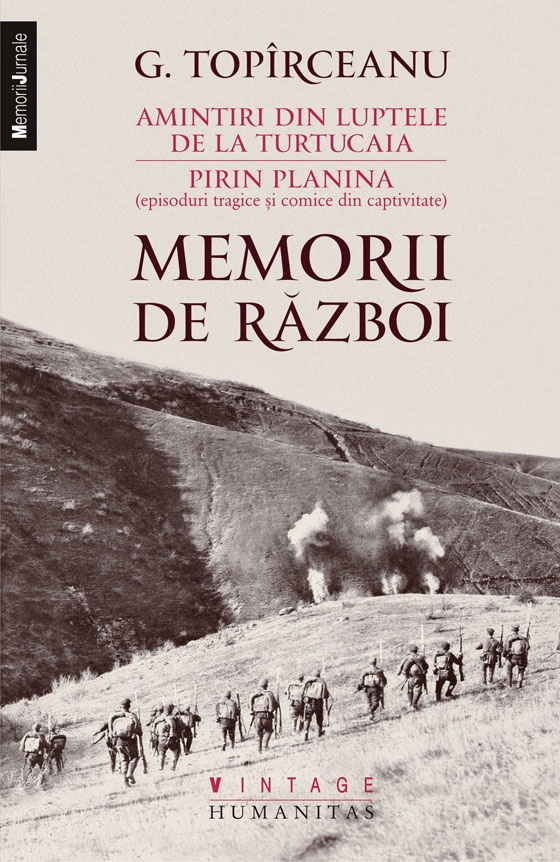
„Moartea se plimbă printre noi cu mâinile la spate; se distrează după ospățul cel mare ca o curtezană sătulă, apucând ici-colo câte o nouă victimă, pe ales.”
G. Topîrceanu, Memorii de război
Amintiri din luptele de la Turtucaia. Pirin Planina
https://pressone.ro/g-top-ne-uimeste-cu-niste-memorii-memorabile-de-top
Partajează asta:

Școala vieții
La începutul anilor ’50, la un examen cu Tudor Vianu. Se vorbește despre Dante, iar un student afirmă că „Dante este slab”. La întrebarea lui Vianu „…
Școala vieții
Partajează asta:
Omul evanghelic – partea a 2-a – Hermeneutica și teologia

Cine sunt creștinii evanghelici români? Sunt ei cunoscuți potrivit unor criterii larg acceptate, sau identitatea lor este aproximată, confuză chiar? …
Omul evanghelic – partea a 2-a – Hermeneutica și teologia
Partajează asta:

Revoluție și petiție

Cum s-a desfășurat revoluția de la 1848 în Anglia: în aprilie 1848 s-a convocat un miting la Kennington Common. Era o zi ploioasă. Au fost 25.000 de …
Revoluție și petiție
Partajează asta:

Despre pastorul Cristian Vasile Roske –

Pastorul Cristian Vasile Roske – fratele Sile, cum l-am știut și îndrăgit noi toți – a fost și va rămâne o prezență de marcă în istoria Mișcării …
Despre pastorul Cristian Vasile Roske –








 Istorie Evanghelica