CELEBRATING 75 YEARS OF NARNIA | Christian World News
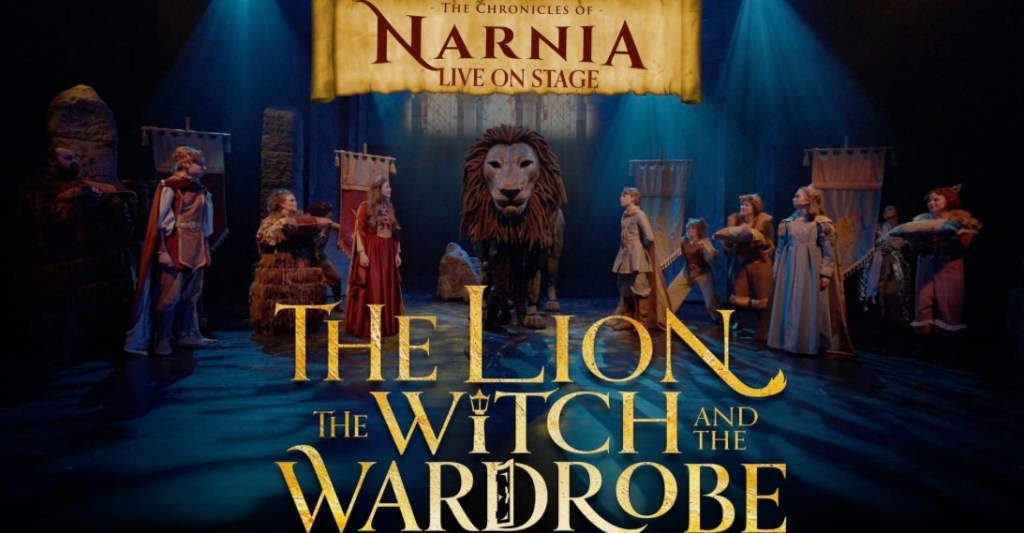
This year marks the 75th anniversary of a modern Christian classic. The Lion, the Witch and the Wardrobe by C.S. Lewis continues to captivate readers of all ages around the world.
Partajează asta:

Maxima zilei – 7 august 2017
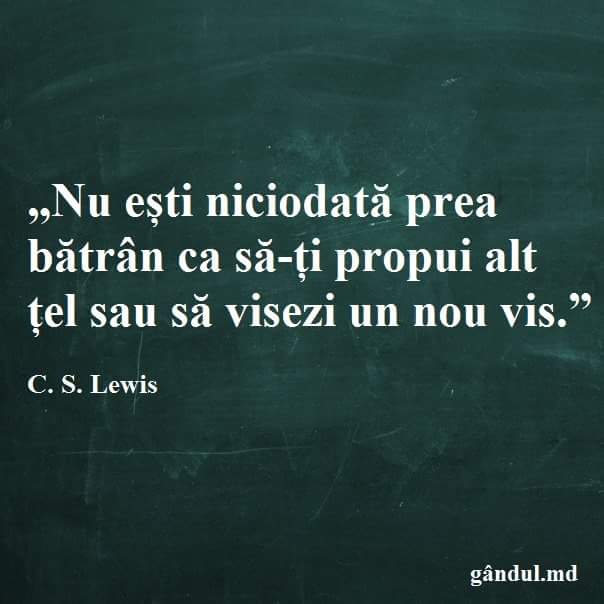
Un om cu brațele pline de pachete nu poate primi un dar.
C. S. Lewis
Partajează asta:

TheGospelCoalition.org : 9 Things You Should Know About C. S. Lewis
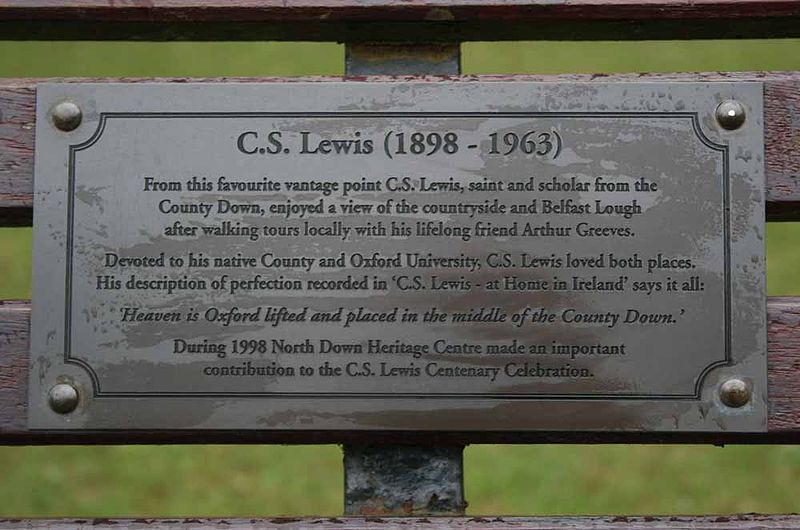
Today (22 November) is the fifty-third anniversary of the death of Clive Staples Lewis, one of the most well known, widely read, and frequently quoted Christian authors of modern times. Here are nine things you should know about the author and apologist who has been called “The Apostle to the Skeptics.”
1. Lewis is best known for his seven children’s books, The Chronicles of Narnia. But he wrote more than 60 books in various genres, including poetry, allegorical novel, popular theology, educational philosophy, science-fiction, children’s fairy tale, retold myth, literary criticism, correspondence, and autobiography.
2. Lewis’s close friend Owen Barfield, to whom he dedicated his book The Allegory of Love, was also his lawyer. Lewis asked Barfield to establish a charitable trust (“The Agape Fund”) with his book earnings. It’s estimated that 90 percent of Lewis’s income went to charity.
3. Lewis had a fondness for nicknames. He and his brother, Warnie, called each other “Smallpigiebotham” (SPB) and “Archpigiebotham” (APB), inspired by their childhood nurse’s threat to smack their “piggybottoms.” Even after Lewis’s death, Warnie still referred to him as “my beloved SPB.”
4. In 1917, Lewis left his studies to volunteer for the British Army. During the First World War, he was commissioned into the Third Battalion of the Somerset Light Infantry. Lewis arrived at the front line in the Somme Valley in France on his 19th birthday and experienced trench warfare. On April 15, 1918, he was wounded, and two of his colleagues were killed by a British shell falling short of its target. Lewis suffered from depression and homesickness during his convalescence.
5. Lewis was raised in a church-going family in the Church of Ireland. He became an atheist at 15, though he later described his young self as being paradoxically “very angry with God for not existing.”
6. Lewis’s return to the Christian faith was influenced by the works of George MacDonald, arguments with his Oxford colleague and friend J. R. R. Tolkien, and G. K. Chesterton’s The Everlasting Man.
7. Although Lewis considered himself to an entirely orthodox Anglican, his work has been extremely popular among evangelicals and Catholics. Billy Graham, who Lewis met in 1955, said he “found him to be not only intelligent and witty but also gentle and gracious.” And the late Pope John Paul II said Lewis’s The Four Loves was one of his favorite books.
8. After reading Lewis’s 1940 book, The Problem of Pain, the Rev. James Welch, the BBC Director of Religious Broadcasting, asked Lewis to give talks on the radio. While Lewis was at Oxford during World War II he gave a series of BBC radio talks made between 1942 and 1944. The transcripts of the broadcasts originally appeared in print as three separate pamphlets—The Case for Christianity (1942), Christian Behaviour (1943), and Beyond Personality (1944) — but were later combined into the book Mere Christianity. In 2000, Mere Christianity was voted best book of the 20th century by Christianity Today.
9. On November 22, 1963, exactly one week before his 65th birthday, Lewis collapsed in his bedroom at 5:30 p.m. and died a few minutes later. Media coverage of his death was almost completely overshadowed by news of the assassination of President John F. Kennedy, who was killed less than an hour earlier. In 2003, Lewis was added to the list of saints commemorated on the church calendar of the Episcopal Church.
Partajează asta:

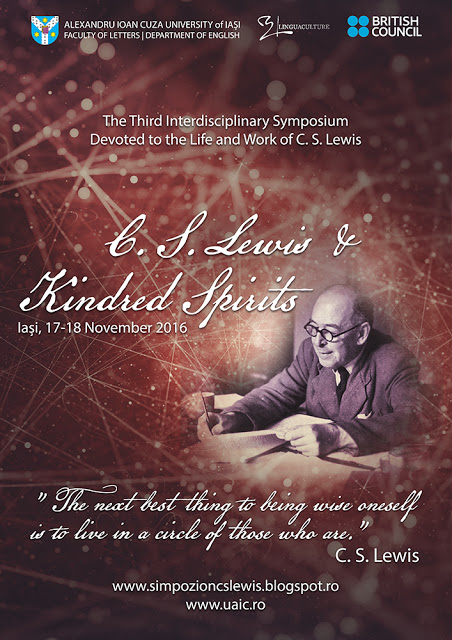
International Symposium : C. S. Lewis and Kindred Spirits – Iasi, 17-18 November 2016
Partajează asta:

Maxima zilei – 30 septembrie 2016
Partajează asta:


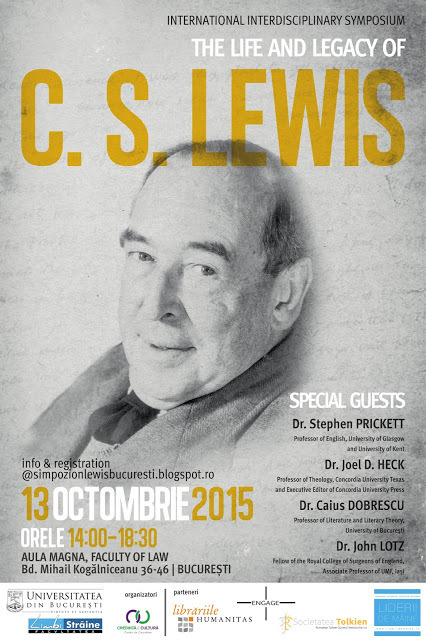
Simpozionul internațional C. S. Lewis Life and Legacy – București, 13.10.2015 (1)
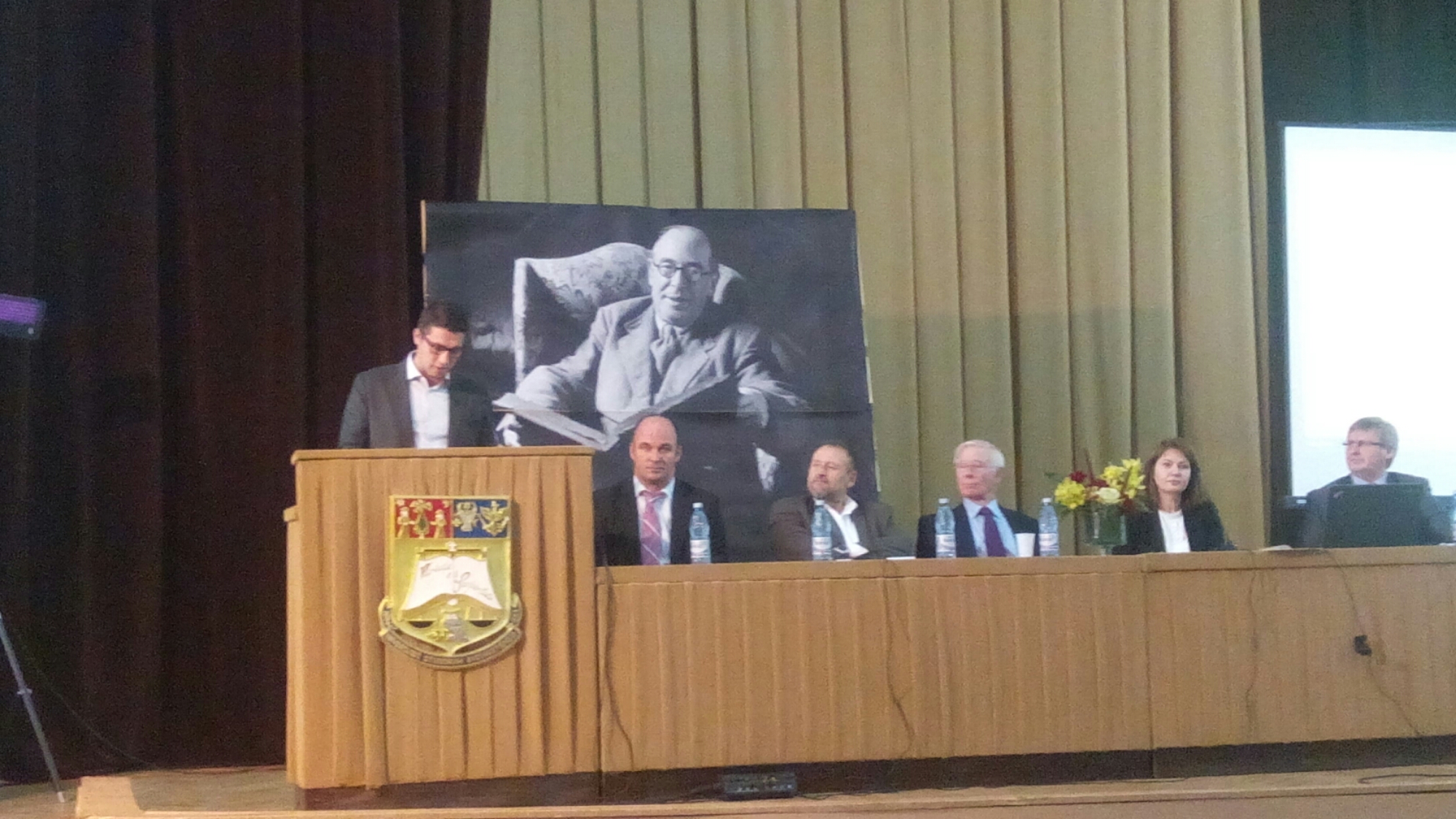
În aceste momente la Universitate din București, sala Aula Magna se desfășoară Simpozionul internațional C. S. Lewis Life and Legacy.
În deschiderea simpozionului, Lect. Dr. Sorin Bărăgan, Facultatea de Teologie Baptistă, a prezentat invitații și a facut oficiile de gazdă.
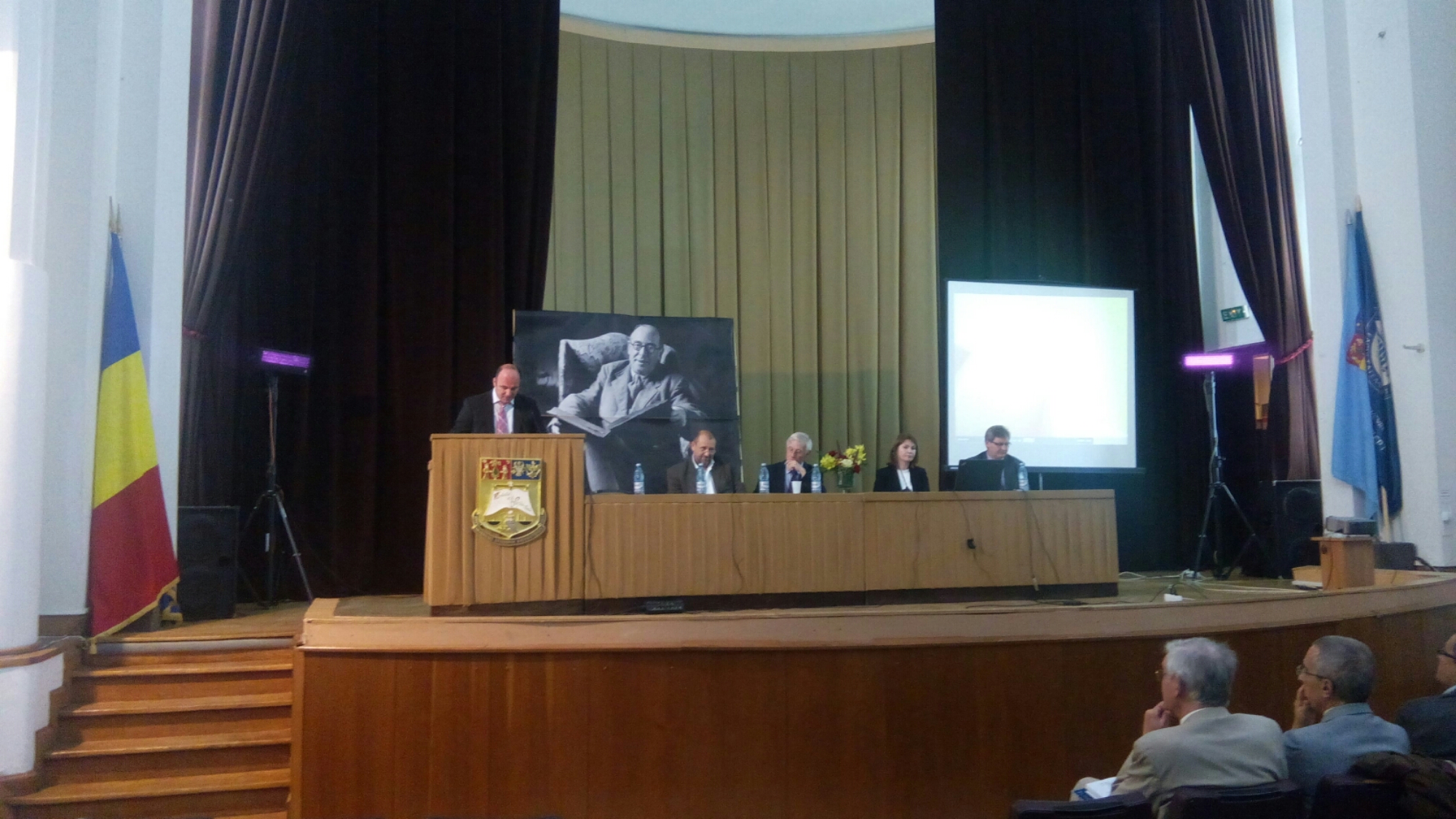
O imagine cu auditoriul acestui eveniment.
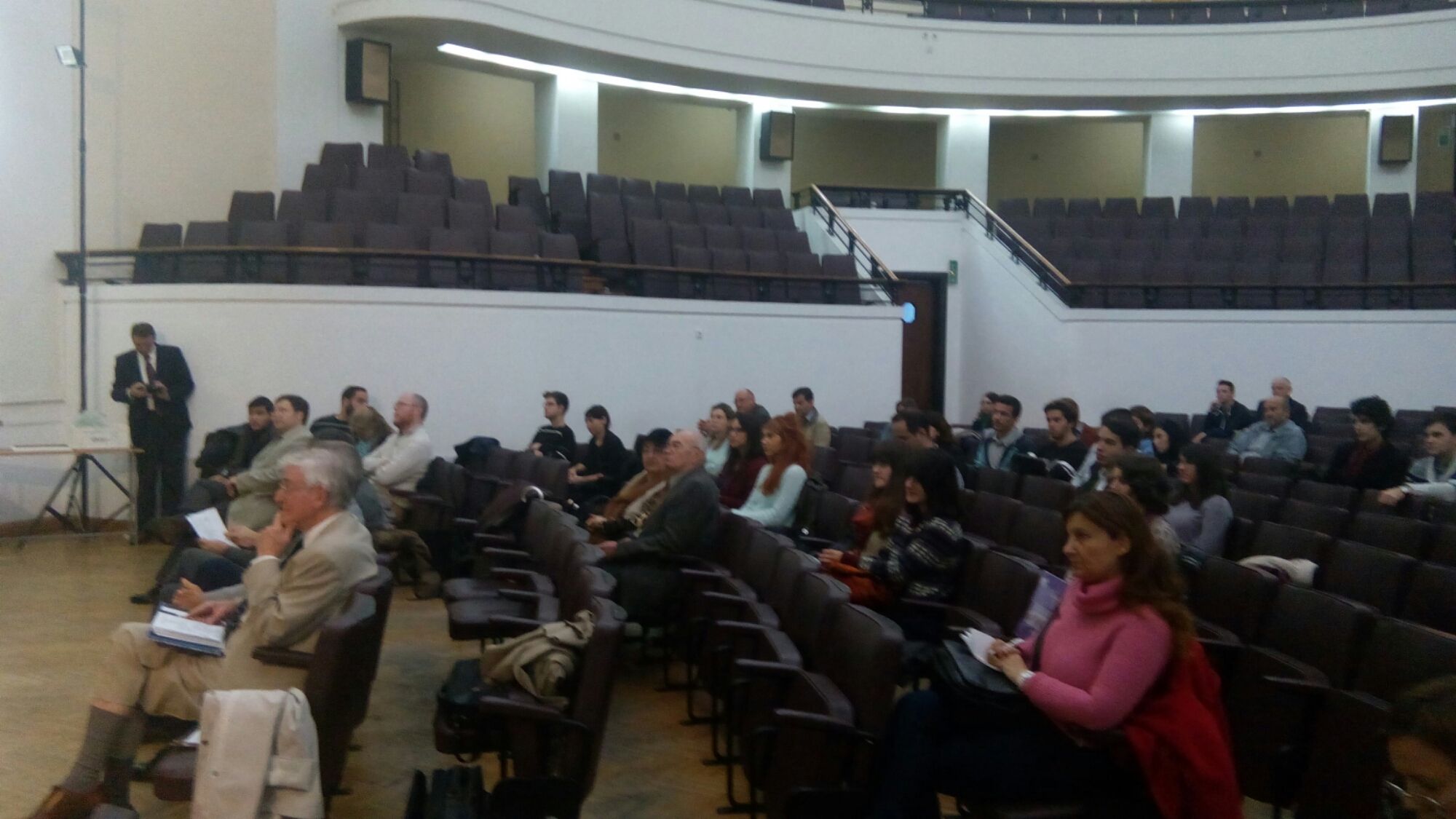
Prof. Dr. Bogdan Ștefănescu, prodecan al Facultății de Limbi și Literaturi Străine, Universitatea București a prezentat câteva caracteristici despre C. S. Lewis și acest simpozion.
*
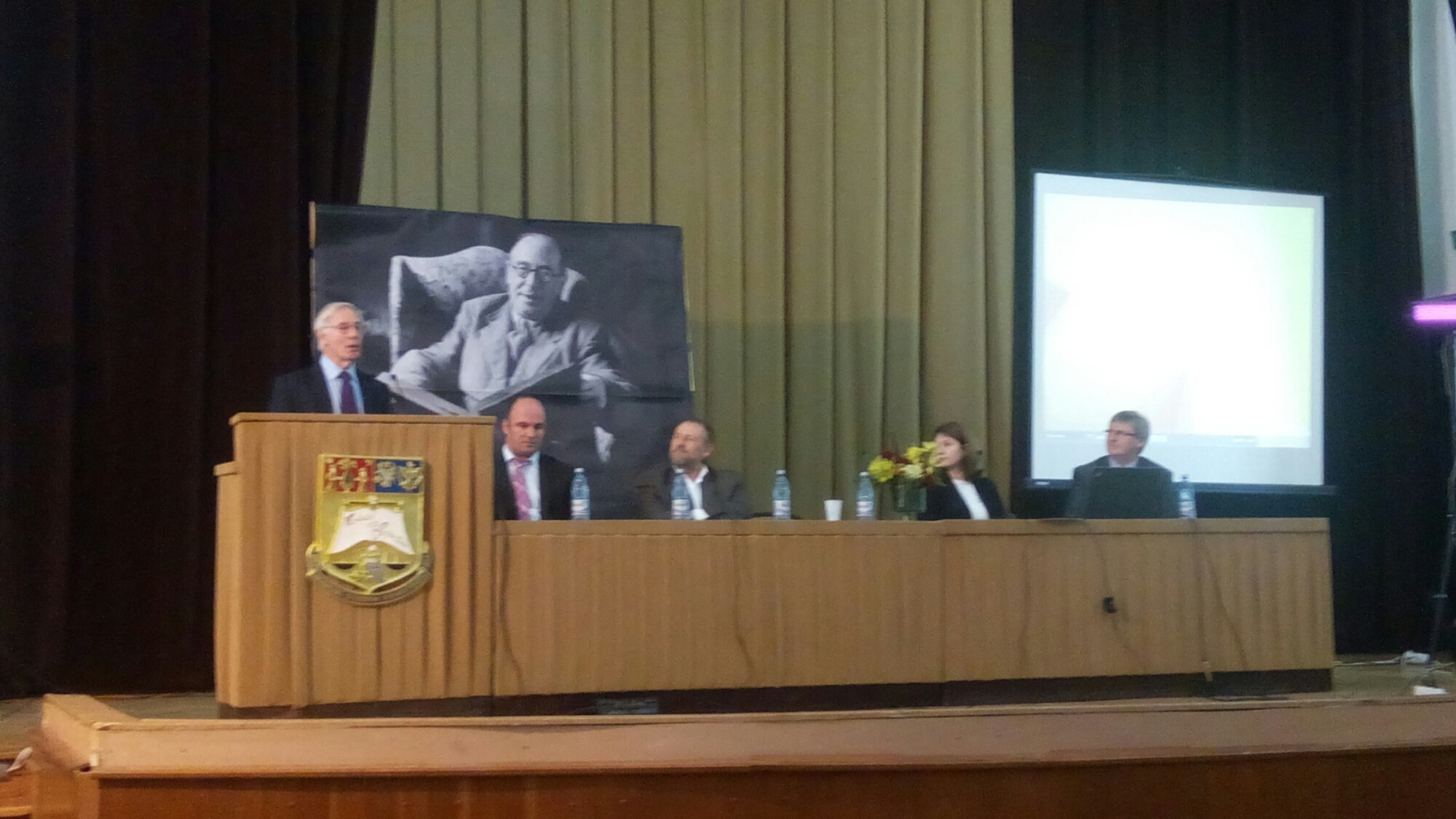
După domnul profesor Ștefănescu la tribună a venit Prof. Stephen Prickett (University of Kent, England)
Domnia sa a prezentat câteva considerații despre C. S. Lewis și opera sa, realizând în acest fel o introducere în subiect. Profesorul Pickett a menționat și faptul că C. S. Lewis i-a fost profesor de limba engleză. Profesorul Prickett a primit titlul de Doctor Honoris Causa din partea Universității București.
Următorul vorbitor în partea introductivă a simpozionului a fost Conf. dr. Daniel Mariș din partea Facultății de Teologie Baptistă, București și a Centrului de Cercetare al Credinței și Culturii din Universitatea București.
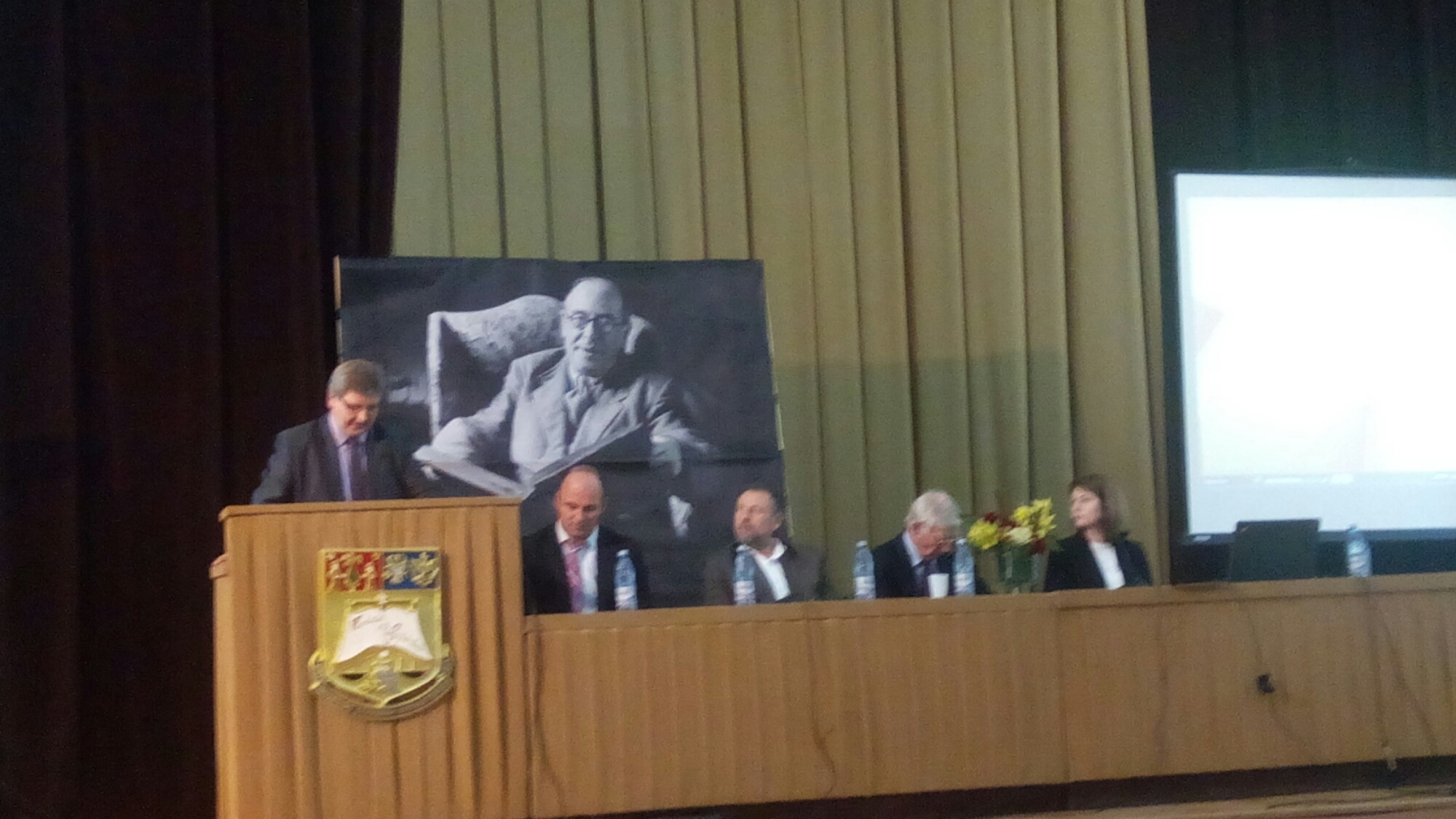
Domnia sa a salutat profesorii și auditoriul, iar apoi a prezentat scopul și obiectivele Centrului de Cercetare al Credinței și Culturii din cadrul Universității București, coorganizator al acestui eveniment.
În mesajul său, acesta a salutat realizarea acestui eveniment, precum și parteneriatul dintre Universitatea București, Universitatea Alexandru Ioan Cuza din Iași și Regent’s Park College din cadrul Universității Oxford.
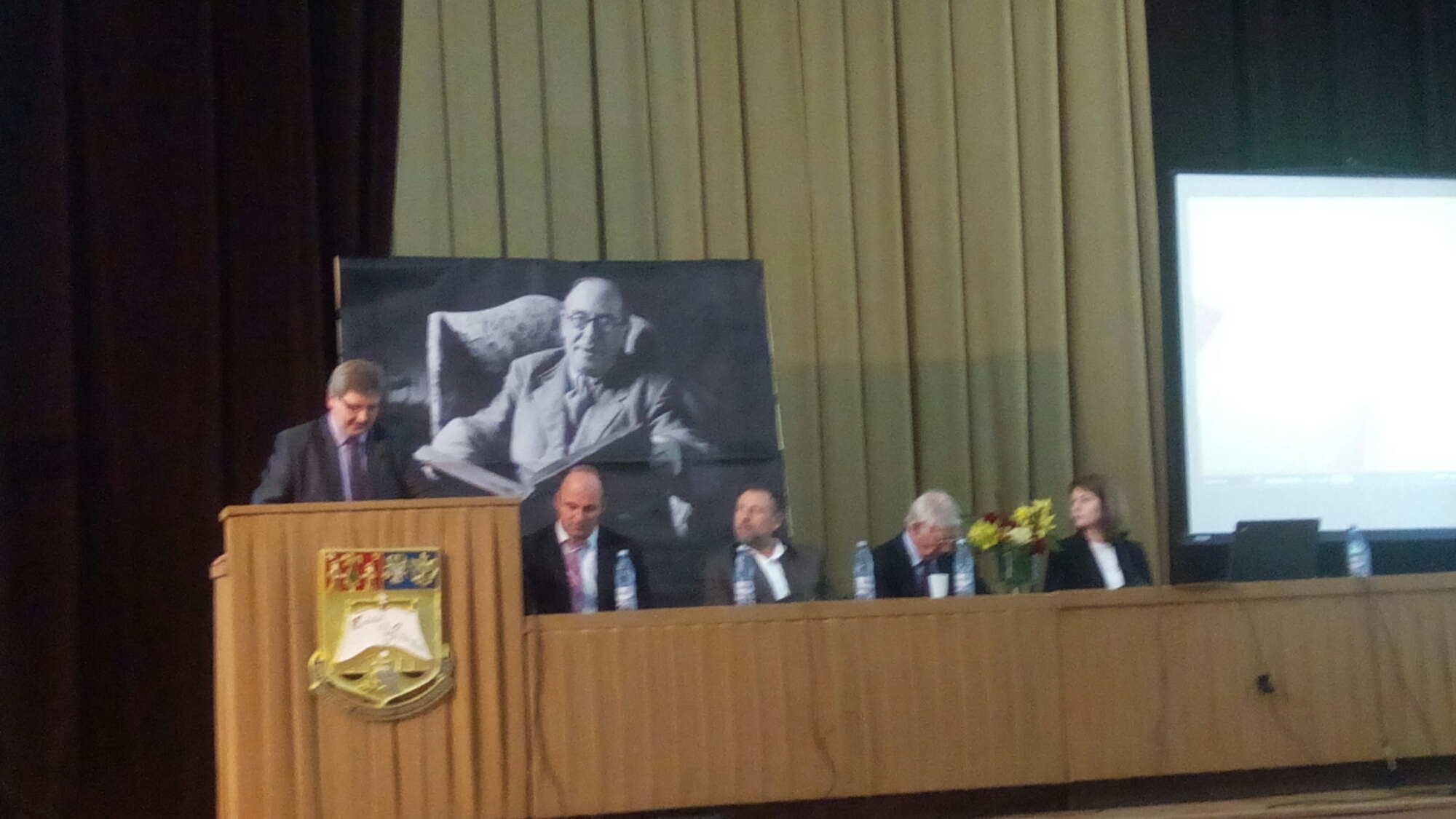
După profesorul Daniel Mariș a prezentat un mesaj de salut, Lect. dr. Deniela Vasiliu (Universitatea „Alexandru Ioan Cuza” Iași.
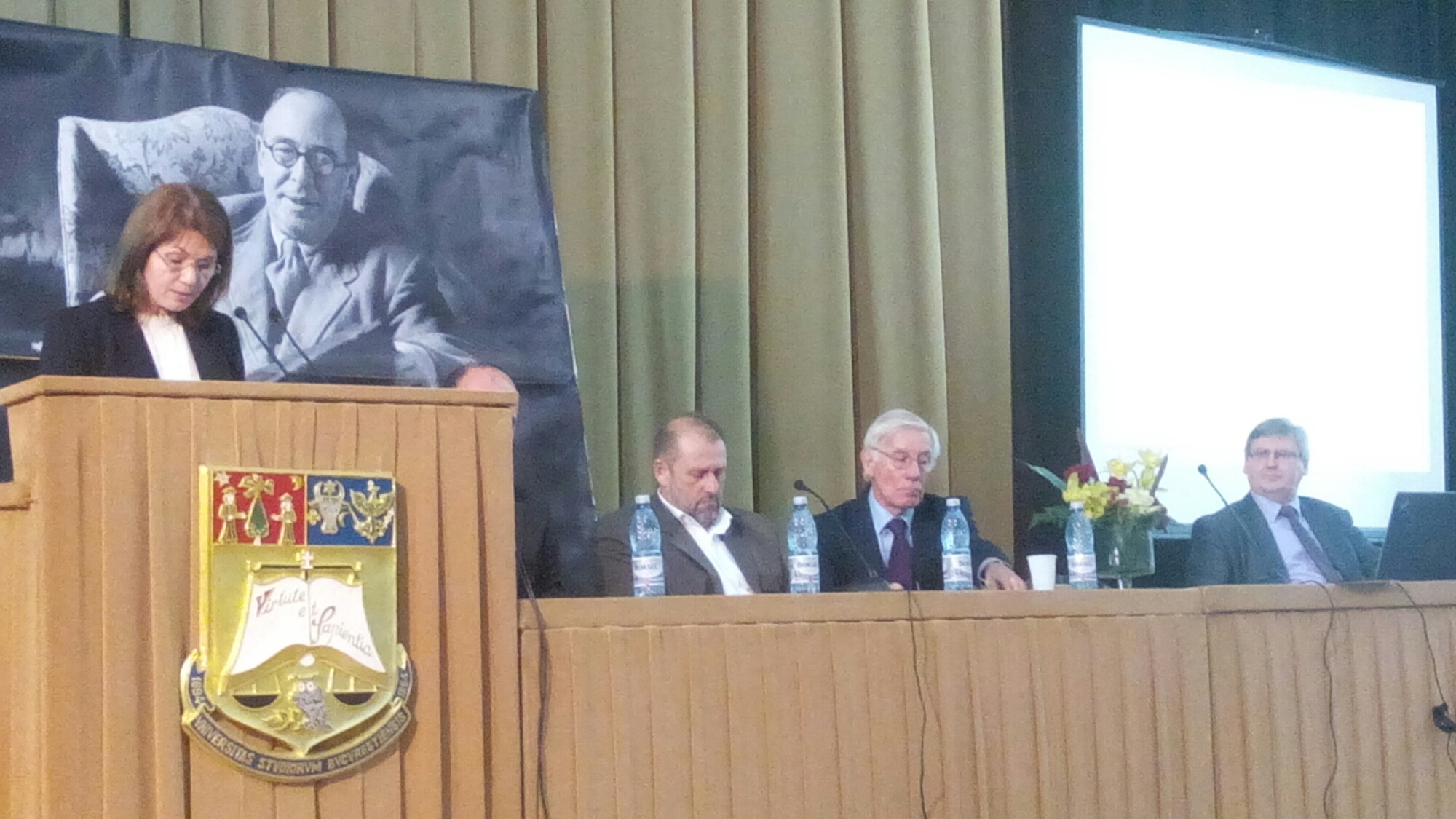
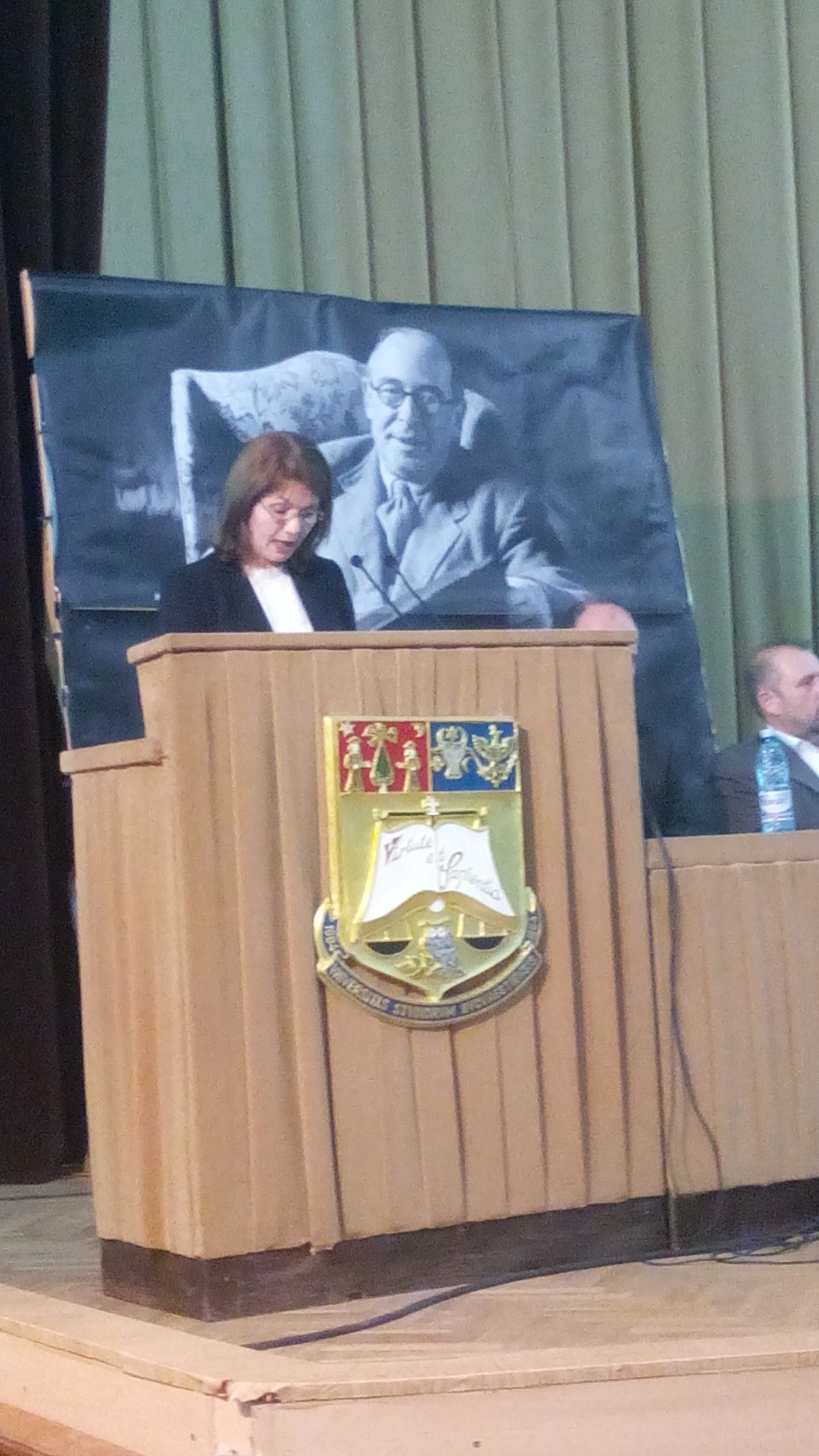
În cuvântul său, domnia sa, cea care a fost „sufletul” acestui eveniment, după cum menționa domnul profesor Sorin Bădrăgan, a evocat personalitatea lui C. S. Lewis și a apreciat realizarea unui astfel de eveniment. Ne-am bucurat de faptul că doamna Denis Vasiliu, proaspăt doctor în filologie a Universității Alexandru Ioan Cuza din Iași cu o teză despre C. S. Lewis a putut fi alături de noi la acest eveniment.
Partea de final a secțiunii introductive a aparținut prezentării biografiei lui C. S. Lewis scrisă de Alister McGrath. Prezentarea a fost realizată de către Vlad Crîznic (Ravi Zacharias International Ministries)
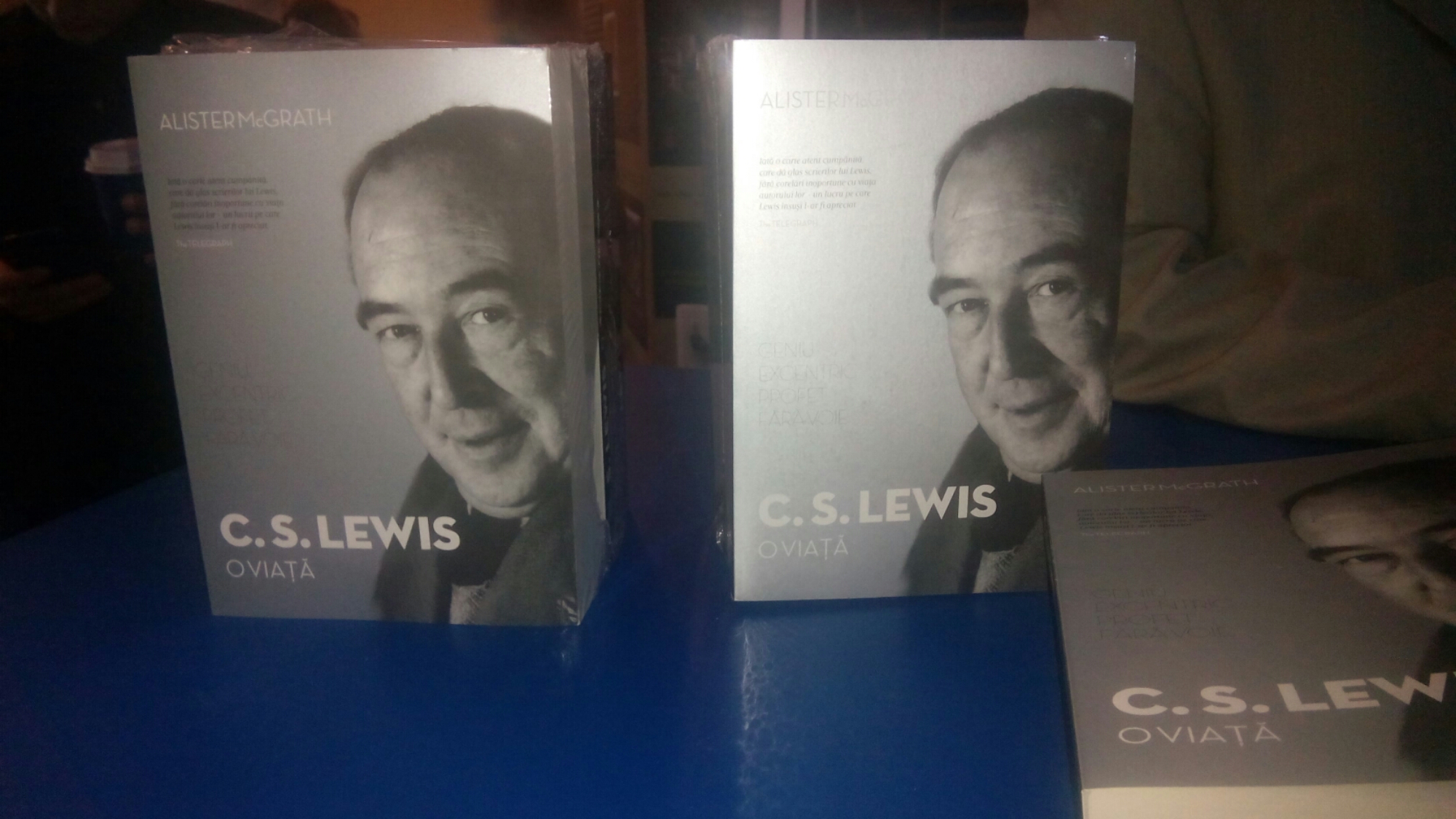
Accentul a fost pus pe credința lui C. S. Lewis în Dumnezeu și felul în care „nu C. S. Lewis l-a găsit pe Dumnezeu, ci Dumnezeu l-a găsit pe C. S. Lewis”
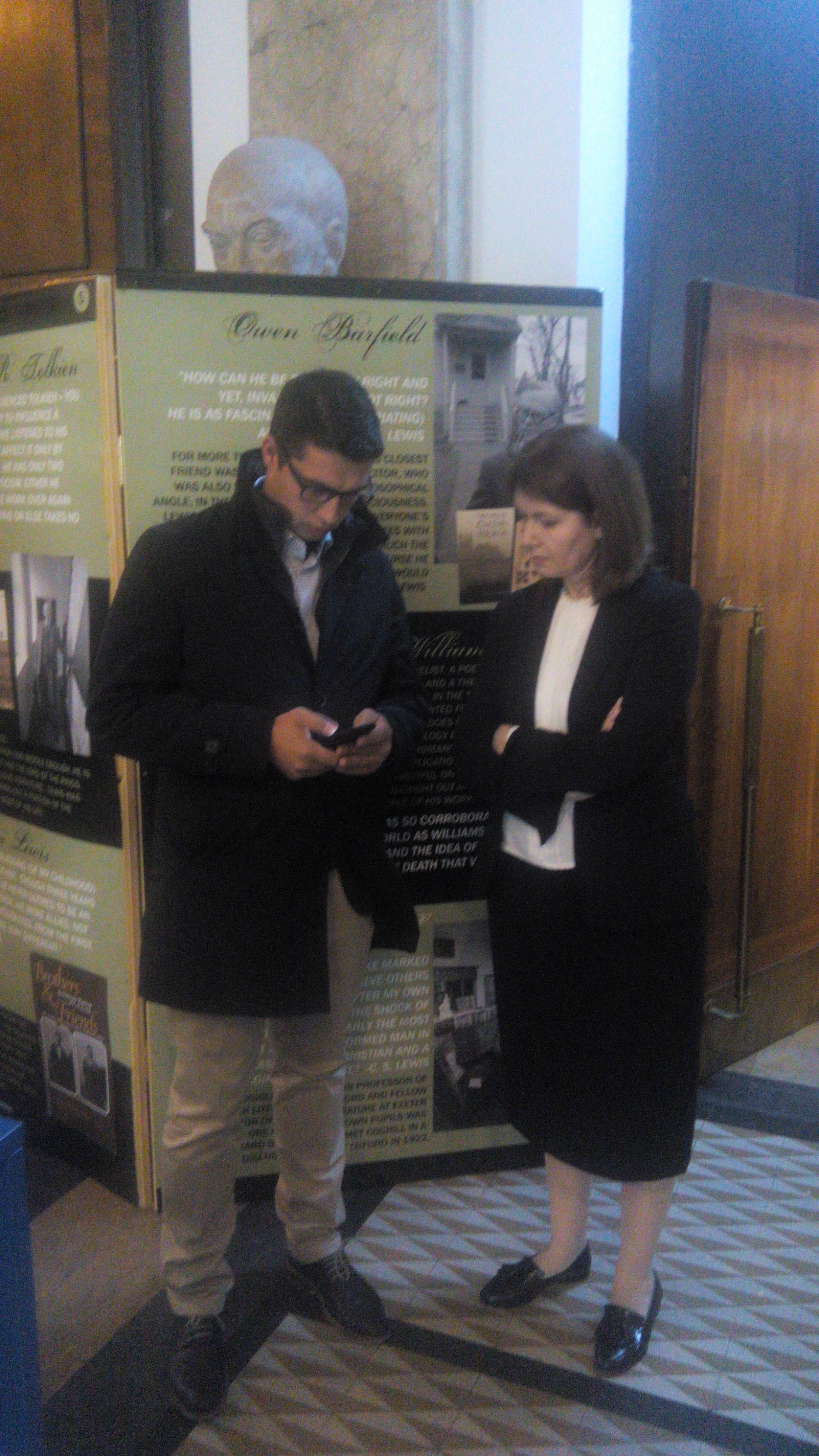
Vlad, fiind studentul lui McGrath, ne-a oferit și o perspectivă în viața autorului cărții prezentate.
Partajează asta:


Daniela Denise Vasiliu va susține teza de doctorat : C.S.Lewis – La granița dintre spiritualitatea creștină și ficțiune

Denise Vasiliu la Simpozionul Simpozionul International Interdisciplinar C.S. Lewis Life and Legacy – ITBB (10.11.2014) Foto: Marius Silveșan
La data de 28.09.2015, ora 09:00, în Sala III 15 dna. BOTEZATU G. DANIELA CĂSĂTORITĂ VASILIU va susţine, în şedinţă publică la Universitatea „Alexandru Ioan Cuza” din Iași, teza de doctorat cu titlul.
C.S.LEWIS – LA GRANIŢA DINTRE SPIRITUALITATEA CREŞTINĂ ŞI FICŢIUNE
în vederea obţinerii titlului ştiinţific de doctor în domeniul FILOLOGIE.
Citește mai mult din acest articol
Partajează asta:

Maxima zilei – 11 iunie 2015

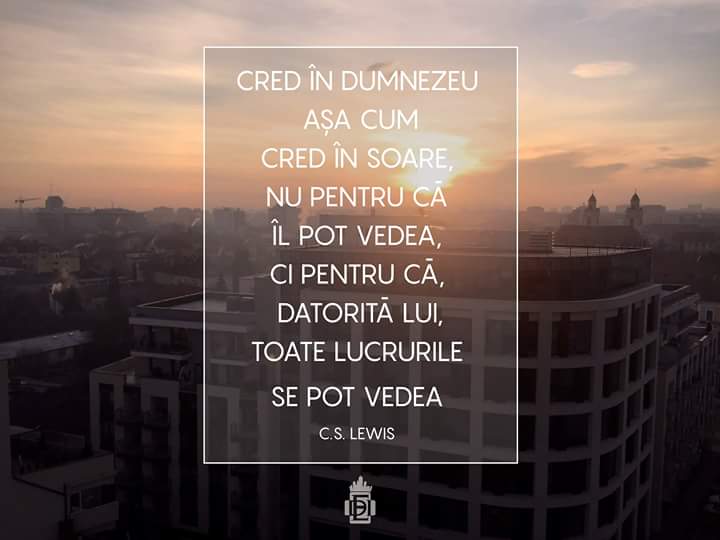
Sunt convins de existența lui Dumnezeu din același motiv pentru care nu mă îndoiesc de existența soarelui: nu doar pentru că îl văd, ci pentru că datorită lui văd toate celelalte lucruri.
C. S. Lewis







 Istorie Evanghelica