Give Band, Doar Tu ești vrednic
Partajează asta:



Cornel Dărvășan, Nebuni după cancan
Un mesaj interesant al celui care a fost pastor al Bisericii Adventiste Excelsis.
Partajează asta:

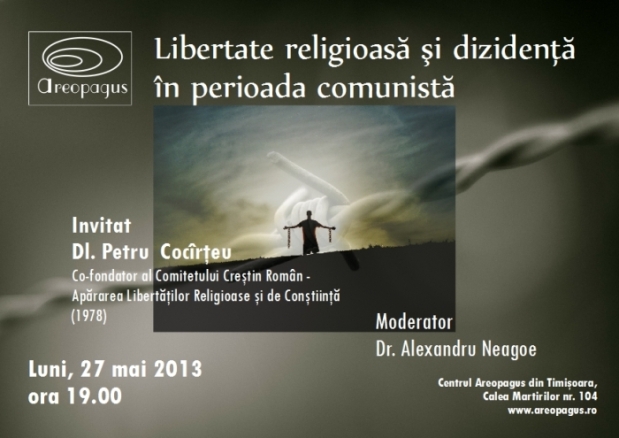
Petru Cocirteu – Libertate religioasă şi dizidenţă în perioada comunistă
Dragi prieteni,
Vă invităm luni, 27 mai, de la ora 19.00, la o masă rotundă având ca temă Libertate religioasă şi dizidenţă în perioada comunistă. Invitatul special al serii este domnul Petru Cocîrţeu, cunoscut pentru eforturile depuse, în perioada comunistă, pentru apărarea libertăţilor religioase ale credincioşilor din România.
În aprilie 1978, în Bucureşti, împreună cu alţi lideri religioşi, studenţi, intelectuali şi muncitori, pune bazele organizaţiei interconfesionale Comitetul Creştin Român – Apărarea Libertăţilor Religioase şi de Conştiinţă, afiliată la Solidaritatea Creştină Internaţională cu sediul la Zürich, având totodată reprezentanţă în Naţiunile Unite. La 15 octombrie 1978 este arestat şi condamnat la 1 an de închisoare pentru activitate religioasă şi de conştiinţă, iar în ianuarie 1979 devine membru al organizaţiei Solidaritatea Creştină Internaţională. La 8 februarie 1981,împreună cu familia părăseşte ţara, obligat de regimul communist, fiind considerat persona non grata, iar în 1981 devine membru al organizaţiei Amnesty International de la Geneva. Printre poziţiile ocupate de domnul Petru Cocîrţeu a fost şi cea de Chairman al Academiei Româno-Americane de Ştiinţă şi Artă.
Vă aşteptăm cu drag la acest eveniment.
Cu preţuire,
Paulian Petric
Coordonator – Departamentul educaţional
Centrul Areopagus Timişoara
www.areopagus.ro
Partajează asta:

La mulți ani, Bogdan Emanuel Răduț!

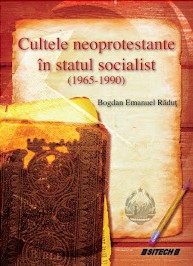
Bogdan Emanuel Răduț este istoric și slujitor în cadrul Bisericii Creștine după Evanghelie din Craiova.
El este autorul a două cărți privind cultele evanghelice din România comunistă.
Statul şi Biserica în România Comunistă (1948-1965)

CULTELE NEOPROTESTANTE ÎN STATUL SOCIALIST (1965-1990)
Îl veți cunoaște urmărindu-i blogul. Pas cu pas… urmărește şi descoperă…
Partajează asta:

Joe Carter, Will the Pentagon Prohibit the Great Commission?

The Situation: According to theAssociated Press, a group called the Military Religious Freedom Foundation is urging the Pentagon to court martial officers whose subordinates feel they’re being proselytized. MRFF founder Mikey Weinstein says even a Christian bumper sticker on an officer’s car or a Bible on an officer’s desk can amount to „pushing this fundamentalist version of Christianity on helpless subordinates.” Weinstein and other leaders of his foundation met with top officials at the Pentagon last week.
The Backstory: Weinstein and his group met privately with Pentagon officials on April 23. He told Fox News that U.S. troops who proselytize are guilty of sedition and treason and should be punished to stave off what he called a „tidal wave of fundamentalists.” „Someone needs to be punished for this,” Weinstein told Fox News. „Until the Air Force or Army or Navy or Marine Corps punishes a member of the military for unconstitutional religious proselytizing and oppression, we will never have the ability to stop this horrible, horrendous, dehumanizing behavior.”
„If a member of the military is proselytizing in a manner that violates the law, well then of course they can be prosecuted,” he said. „We would love to see hundreds of prosecutions to stop this outrage of fundamentalist religious persecution.”
„[Proselytizing] is a version of being spiritually raped and you are being spiritually raped by fundamentalist Christian religious predators,” Weinstein told Fox News.
The Pentagon confirmed to Fox News that Christian evangelism is against regulations. „Religious proselytization is not permitted within the Department of Defense, LCDR Nate Christensen said in a written statement. He declined to say if any chaplains or service members had been prosecuted for such an offense.
Threat Level: Unclear. Michael L. „Mikey” Weinstein, who served as White House Counsel in the Reagan administration and general counsel to H.Ross Perot, is an anti-religion extremist who is not taken seriously by anyone that is not on the secular political left. But if Pentagon officials become convinced that his peculiar anti-evangelism perspective is indeed within the bounds of military regulations, it could mean that members of the military could be prosecuted from sharing their faith—or even having a faith-based bumper sticker on their car.
Why It Matters: In a recent article for The Huffington Post, Weinstein provides an example of his bizarre hatred of Christianity,
I founded the civil rights fighting organization the Military Religious Freedom Foundation (MRFF) to do one thing: fight those monsters who would tear down the Constitutionally-mandated wall separating church and state in the technologically most lethal entity ever created by humankind, the U.S. military.
Today, we face incredibly well-funded gangs of fundamentalist Christian monsters who terrorize their fellow Americans by forcing their weaponized and twisted version of Christianity upon their helpless subordinates in our nation’s armed forces.
And as with most threats to religious freedom, at the core is the incompatibility between Christianity and normalization of homosexuality:
We should as a nation effusively applaud Lt. Col. Rich for his absolutely correct characterization of anti-gay religious extremist organizations as „hate groups” with no place in today’s U.S. military. But we are compelled to venture even further. We MUST vigorously support the continuing efforts to expose pathologically anti-gay, Islamophobic, and rabidly intolerant agitators for what they are: die-hard enemies of the United States Constitution. Monsters, one and all. To do any less would be to roll out a red carpet to those who would usher in a blood-drenched, draconian era of persecutions, nationalistic militarism, and superstitious theocracy. Human history is all too festooned and replete with countless examples of such bleak and forlorn tragedies.
If these fundamentalist Christian monsters of human degradation, marginalization, humiliation and tyranny cannot broker or barter your acceptance of their putrid theology, then they crave for your universal silence in the face of their rapacious reign of theocratic terror. Indeed, they ceaselessly lust, ache, and pine for you to do absolutely nothing to thwart their oppression. Comply, my friends, and you, too, become as monstrously savage as are they. I beg you, do not feed these hideous monsters with your stoic lethargy, callousness and neutrality. Do not lubricate the path of their racism, bigotry, and prejudice. Doing so directly threatens the national security of our beautiful nation.
There was a time—just a few years ago, in fact—when we could laugh off such views by extremists like Weinstein. But the political climate has become increasingly hostile to religious liberties and all threats must be watched more carefully.
The issue, of course, is not that Weinstein’s views will be adopted wholesale by the military. The concern is that when the outer boundary of what is considered legitimate opinion expand, what is considered the „center” shifts away from commonsense and rationality. When folks like Weinsten are taken seriously when they call evangelicals „pathologically anti-gay, Islamophobic, and rabidly intolerant agitators” it makes it easier for the public to say, „That’s going a bit far. Why not just call them bigots?”
http://thegospelcoalition.org/blogs/tgc/2013/05/01/will-the-pentagon-prohibit-the-great-commission/
Știrea a fost preluată și de cei de la semneletimpului.ro cu titlul bombastic Decizie incredibilă a Pentagonului: interzicerea prozelitismului religios
„Pentagonul a confirmat pentru sursa citată că, în cazul adoptării noilor reglementări, prozelisimul ar fi scos în afara legii, ceea ce i-ar cataloga drept trădători ai Statelor Unite ale Americii pe credincioşii care vorbesc despre credinţa lor la locul de muncă.”
Deci, chiar în cadrul articolului, care este unul în care nu se precizează clar faptul că este vorba de un grup care se intitulează the Military Religious Freedom Foundation și nu de unul care apără libertatea religioasă, scrie că Pentagonul nu a adoptat încă noile reglementări.
Mi-a atras atenția numele acelui grup precum și pretextul lor de a lupta pentru libertate religioasă, când în fapt aceasta este îngrădită.
Partajează asta:

Bogdan Emanuel Răduț, Un pelerin – un destin – o Patrie

Partea de început a acestei prezentări a fost publicată și în numărul 2/2013 al Revistei Creștinul Azi
Partajează asta:

Citește online Revista Creștinul Azi Nr. 2/2013

Click pe coperta pentru a citi online revista Creștinul Azi
În cadrul acestui număr puteți citi la pagina 18 o prezentare a cărților Ioan Bunaciu – Pelerin spre Patria cerească și Bisericile Creștine Baptiste din România între persecuție, acomodare și rezistență.
V-ar putea interesa și
REVISTA CREȘTINUL AZI NR.1/2013
Partajează asta:

Cameron Cole, 5 Tools Needed to Reach Today’s Teens
I have ministered to adolescents for eleven years, eight of them as a youth minister. Based on my conversations with kids and observations in the culture, I consider these five theological tools essential for parents, pastors, and youth ministers hoping to minister effectively to today’s teens.
1. Knowledge about the canonization of Scripture.

Perhaps it is a result of The DaVinci Code or maybe the effects of deconstructionism and revisionism in historical studies, but one of the primary apologetic questions I receive from students involves the formation of the canon of Scripture. In no subject area have I observed more misinformation. Students have told me that their high school English teacher taught that the Gospel of Mary Magdalene was not included in the Bible because Christianity is misogynistic. A kid told me that the Gospels were actually written in fourth century.
If a student does not trust the Bible as God’s Word, ministries will have a hard time giving them any confidence in the truths of Christianity; the Bible serves as the authority and foundation for all Christian doctrine. Those ministering to youth must possess a strong understanding of the history and system by which the early church discerned certain books as authoritative and rejected other books as either uninspired or heretical.
Recommended Reading: F. F. Bruce, The Canon of Scripture
2. Developed theology of sexuality, particularly homosexuality.
Questions about premarital sex, gender, and sexuality are increasingly common in youth ministry. For many kids the make-or-break issue about Christianity is homosexuality. Many kids think the actions of anti-gay fanatics, such as Westboro Baptist Church, represent Christian theology regarding homosexuality, and, needless to say, they hold reservations about the faith. Meanwhile, other kids espouse the secular portrayal of homosexuality as a civil rights issue akin to racial segregation.
Youth ministers need a balanced, scriptural theology that neither amplifies homosexuality as worse than other forms of sexual sin nor permits it any more than we condone pornography or adultery. Equally important, they need a humble, gentle, and compassionate tone in dealing with the issue.
Recommended Reading: Wesley Hill, Washed And Waiting: Reflections on Christian Faithfulness and Homosexuality
3. Ability to teach the Bible in the greater context of redemptive history.
Earlier in my career, people said that postmodern kids had rejected metanarratives and only listened to the micro-narratives of personal storytelling. Some of my colleagues and I now agree that the fatalism of denying a defined metanarrative for life and the world seems to have bottomed out. Kids are more likely today to want to believe there is reason and design behind everything that happens in the world. Students greatly benefit from knowing salvation history.
As a way of taking students through all of redemptive history, I teach each one of my small groups a study on „Top 25 Events from the Bible” that travels from Genesis to Revelation. When teaching Scripture, I make a point to connect the content to the broader context of biblical narrative. It reinforces for kids the belief that a good, sovereign God rules the course of human history, as well as the events of their individual life, at a time when they desire it.
Recommended Reading: Vaughan Roberts, God’s Big Picture
4. Theological, not only moral, understanding of sin.
Most students—Christian and secular alike—believe morality is individually relative. Therefore, explaining sin simply in moral terms will not resonate with most teenagers. You may say that all people judge, lust, envy, and lie, but your teenage audience likely can justify any of those sins at the personal level, believing they have ultimate authority over morality.
Consequently, those ministering to teens need a theological understanding of how sin originates from the human desire to live independently from God and to be the „god” of our own lives. Most students will accept that they do not depend on God for all matters of their life, if at all, or that they do not have a relationship with him. (In truth, these matters represent our deeper issue as sinners and the source of our immorality.) Students will accept the theological argument for human sinfulness far more readily than a moral explanation.
Recommended Reading: Tim Keller, Counterfeit Gods
5. Understand adoption as an element of salvation.
I charge myself as guilty for neglecting this element of salvation, and it cost me big time. The church often exclusively preaches salvation as an individual matter. In a sense, we camp out on regeneration and justification and stop there. I know I did. The persistent teaching of my colleague, Mark Howard, and the talks from Ray Ortlund and Mary Willson at the 2012 Rooted Conference (recordings from all three can be found here) opened my eyes to this blind spot.
Far more than previous generations, today’s teenagers value community. If they do not see how groups or beliefs yield corporate fellowship, they are less likely to embrace it. Adoption represents the aspect of salvation whereby God adopts sinners as his sons and daughters. Our salvation does not simply save us individually but also makes us a part of a greater body of intimate connection. Having a fuller understanding of salvation in both individual and corporate terms will help a person ministering to teens offer the gospel in a way that appeals to their high view of fellowship and need for loving acceptance.
Recommended Reading: Trevor Burke, Adopted into God’s Family (in the NSBT series edited by D. A. Carson)
Cameron Cole is the director of youth ministries at Cathedral Church of the Advent in Birmingham, Alabama, and the chairman of Rooted: Advancing Grace-Driven Youth Ministry, which holds its next conference, Hope in a Time of Suffering, in Atlanta from October 10 to 12, 2013.









 Istorie Evanghelica