Arhive etichetă: Bogdan Emanuel Răduț

Apariții editoriale (33) – Vasile Bel, Biserica Creștină Baptistă Română din Baia Mare 1930-1990. Istorie și reflecții
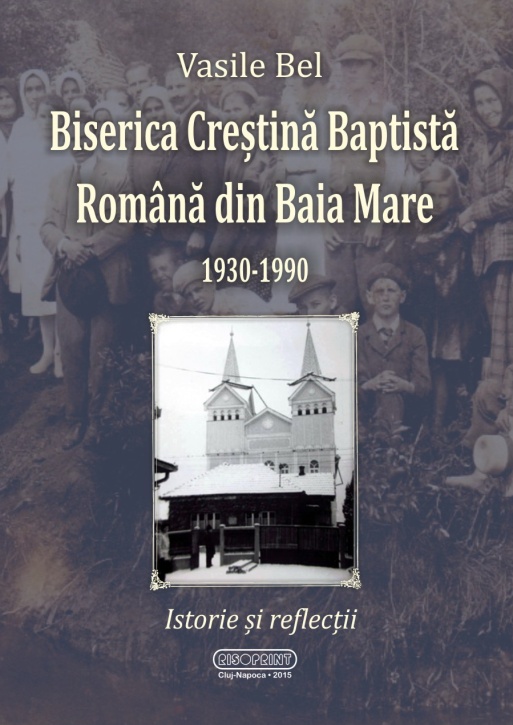

Vasile Bel, BCB Română din Baia Mare 1930-1990

Pastorul Vasile Bel, un pasionat al istoriei baptiștilor din România, autorul cărții Lupta credinței. Istoria credinței baptiste în județul Maramureș, a mai realizat o carte de istorie locală. Este vorba de lucrarea de istorie și reflecții despre Biserica Creștină Baptistă Română din Baia Mare în perioada 1930-1990.

O astfel de lucrare își găsește locul printre alte lucrări similare având rolul nu numai de a documenta istoria unei comunități locale pe parcursul unei perioade atât de îndelungate, 1930-1990, dar și acela de a aduce la lumină fapte și argumente, biografii ale unor oameni deosebiți. O astfel de lucrare este cu atât mai importantă, cu cât trăim într-o perioadă de relativism în care Adevărul nu mai este unul absolut, iar identitatea este într-o continuă definire.

Îl felicit pe această cale pentru munca depusă în finalizarea acestui proiect, unul deloc ușor, și pentru elementele de noutate pe care această lucrare le aduce atât celor interesați specific de istoria bisericii locale, cât și celor interesați de istoria unei comunități care dorește să-și afirme identitatea și prin astfel de lucrări.

De asemenea, îl felicit și pe prietenul meu, istoricul Bogdan Emanuel Răduț, pentru scrierea postfeței acestei cărți, una realizată din perspectiva unui tânăr pentru care istoria are o importanță aparte.

Cartea Biserica Creștină Baptistă Română din Baia Mare 1930-1990. Istorie și reflecții a apărut la Editura Risoprint din Cluj -Napoca, are 197 de pagini, postafță de Bogdan Emanuel Răduț (pp. 160-162), Anexe (clarificări privind data înființării biserici alături de un tabel membral cu 628 de nume ale unor persoane care au fost sau sunt membrii ai Bisericii Baptiste din Baia Mare), iar ăn partea de final se regăsește bibliografia.

Apariţii editoriale (24) Documente şi acte normative privind BCER


Uniunea Bisericilor Creştine după Evanghelie din România, Documente şi acte normative privind Biserica Creştină după Evanghelie din România, Volum editat şi îngrijit de Bogdan Emanuel Răduţ, Cuvânt înainte de Virgil Achihai, Editura Risoprint, Cluj-Napoca, 2014, 112 pag.

Sursa aici.

La mulţi ani, Virgil Achihai!


Fratele Virgil Achihai este presbiter în Biserica Creștină după Evanghelie din Târgoviște. În același timp este președintele Uniunii Bisericilor Creștine după Evanghelie din România (mandatul 2014-2018) și președinte în exercițiu al Alianței Evanghelice din România.

Bogdan Emanuel Răduț împreună cu Virgil Achihai

Virgil Achihai este o persoană interesată atât de viața religioasă cât și de cea academică. Mai jos o poză împreună cu Marius Silveșan realizată cu prilejul lansării cărții Bisericile Creștine Baptiste din România între persecuție, acomodare și rezistență (1948-1965), eveniment care a avut loc la Institutul Teologic Baptist din București în data de 5 aprilie 2013.

Virgil Achihai este o persoană interesată de cultură și de istoria comunităților evanghelice din România după cum puteți deduce și din poza de mai jos.

Astăzi împlinește 55 ani, prilej cu care îi dorim La mulţi ani şi multe binecuvântări!

Un nou blog de istorie evanghelică: Biserica Creştină după Evanghelie din România – File de istorie


Bogdan Emanuel Răduț, istoric și slujitor în Biserica Creștină după Evanghelie, a realizat un blog în care își propune să prezinte istoria acestei biserici din România.

Preiau mai jos prezentarea acestui proiect așa cum a realizat-o autorul.

Biserica Creştină după Evanghelie are o istorie şi mărturie de 115 ani în România. Celebrând acest fapt am socotit util ca, împreună cu Uniunea BCER, să avem un blog pe care să se regăsească analize, documente, fotografii şi mărturii despre istoria noastră şi identitatea noastră.
Cu speranţa că-şi va găsi utilitatea, vă invit să mergem împreună la drum, descoperind istoria Bisericii Creştine după Evanghelie din România!
Bogdan Emanuel Răduţ – Istoric
01 octombrie 2014

Revista Calea Credinţei (1/2014) – prezentarea cărții Cultele neoprotestante și drepturile omului


Revista Calea Credinței 1-2014 (coperta 1)

Cuprins:
Ce fel de evanghelie predic? – Virgil Achihai
Lacrimile pocăinţei – Grigore Fotino Constantinescu
Iubirea de oameni – David Ciucur
Cât de darbyşti sunt creştinii după Evanghelie? – Bogdan Emanuel Răduţ 
Expoziţia Biblică din România – Paul Williams
Adevăraţii păzitori – Petrică Pleşa
Sunt presbiteri şi presbiteri, deci nu fi un Diotref!… – Gusti Roşian
Misiune*Info*Ştiri
O carte document: Cultele neoprotestante şi drepturile omului în România – Bogdan Emanuel Răduţ
Cealaltă femeie din viaţa mea – Nicolae Geantă

http://emyradut.blogspot.ro

Bogdan Emanuel Răduț anunță pe blogul său apariția primului număr pe anul 2014 al Revistei Calea Credinței în paginile căreia puteți citi și două articole având ca temă istoria bisericii. Primul articol răspunde la întrebarea cât de darbyști sunt creștinii după Evanghelie din România, iar cel de-al doilea (pe care îl puteți citi mai jos) prezintă cea mai nouă apariție editorială a autorului, Bogdan Emanuel Răduț, realizată în colaborare cu mine. Cartea Cultele neoprotestante și drepturile omului: un strigăt la Radio Europa Liberă (aprilie 1977) investighează apelul din aprilie 1977 adresat de către un grup de evanghelici români postului de radio menționat, iar prin intermediul articolului din cadrul revistei Calea Credinței, Emanuel Răduț oferă informații despre subiectul central al cărții, despre semnatari,  obiectivele și consecințele „memoriului document” din aprilie 1977.
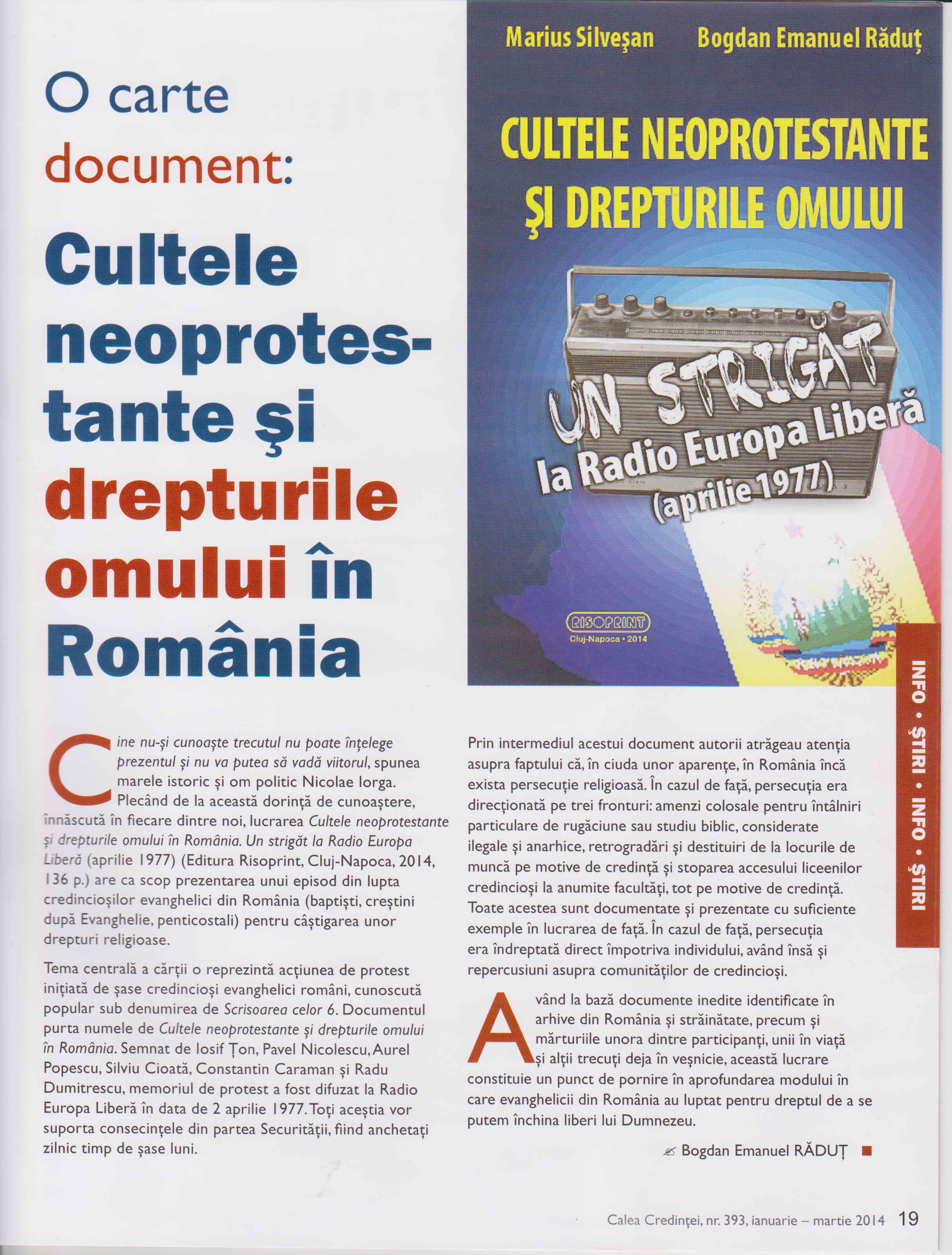
Emanuel Rădut, O carte document. Cultele neoprotestante și drepturile omului în România

Creştinii după Evanghelie în Europa – Statistici


Statistici 2

http://emyradut.blogspot.ro/2014/01/crestinii-dupa-evanghelie-in-europa.html

Lansarea cărţii Din istoria Creştinilor după Evanghelie. Culegere de documente


Emy Răduț își lansează mâine în cadrul Conferinței Naționala a UBCER ultima sa carte, Din istoria Creștinilor după Evanghelie. Culegere de documente. Eu nu voi putea fi prezent la lansare, dar cei care sunteți interesați de subiect puteți lua parte la acest eveniment.

Afis lansare carte. Din istoria Crestinilor după Evanghelie

http://emyradut.blogspot.ro/2013/10/lansarea-cartii-din-istoria-crestinilor

Apariții editoriale (15) Bogdan Emanuel Răduț, Din istoria Creștinilor după Evanghelie. Culegere de documente


Bogdan Emanuel Răduț, Din Istoria Creștinilor după Evanghelie - coperta 1

Semnalez apariția cărții prietenului meu, Bogdan Emanuel Răduţ, Din istoria creştinilor după Evanghelie. Culegere de documente, Cuvânt înainte de Virgil Achihai, Editura Cetatea de Scaun, Târgovişte, 232 pag.

După cum spune și titlul aceasta carte tratează istoria Creștinilor după Evanghelie prin prisma documentelor, specific a două categorii de documente:

1. Documente normative

2. Documente cultice

Cartea va fi lansată în cadrul Conferinţei naţionale – Simpozion a creştinilor după Evanghelie, din 03-05 octombrie 2013, la Biserica Creştină după Evanghelie Antiohia Bucureşti.

***

Cuvântul înainte este scris de către Virgil Achiahai, președintele Uniunii Bisericilor Creștine după Evanghelie și al Alianței Evenghelice din  Romînia.

  „Referitor la cartea de față trebuie subliniat încă de la început, că munca depusă de autor în strângerea documentelor, pasiunea și uneori insistența de care a dat dovadă în a-și atinge obiectivele propuse se cer apreciate, lăudate și încurajate în continuare.
            Totodată este evident încă de la început că această carte ocupă o parte din golul lăsat de înaintașii noștri care, deși aveau capacitatea intelectuală și disponibilitate pentru a se dedica scrierii unei altfel de cărți, nu au făcut-o, parcă încurajând pe tânărul Bogdan Emanuel Răduț, să se implice într-un astfel de proiect editorial.
            Trebuie subliniat că documentele ce se regăsesc în lucrare sunt de departe cele mai importante mărturii ale istoriei creștinilor după Evanghelie, și în același timp, pot deveni în mâna unui cercetător iscusit un veritabil instrument de cercetare viitoare.”
Virgil Achihai (extras din cuvântul înainte)
***

 Cine sunt Creștinii după Evanghelie? Despre istoria lor, Bogdan Emanuel Răduț, editorul cărții de față, menționează în argumentul cărții următoarele:

 „Apăruţi în România la finele secolului XIX, aceştia au cunoscut o dezvoltare spectaculoasă în perioada interbelică, au devenit în 1946 cult şi, bineînţeles, au cunoscut ororile regimului comunist. Vremurile de democraţie şi libertate de după 1989, au adus Cultului Creştin după Evanghelie posibilitatea de a înfiinţa instituţii de învăţământ, centre sociale, implicări culturale, etc. Prin urmare şi-a pus amprenta pe dezvoltarea societăţii româneşti, apărând cu consecvenţă drepturile şi demnitatea umană, dar nu în detrimentul valorilor biblice. Autoritatea în Bisericile Creştine după Evanghelie rămâne Biblia.”
Bogdan Emanuel Răduţ
***

După cum am menționat mai sus, documentele din această carte au fost împărţite în două: normative şi cultice.

La cele normative autorul a „reunit extrase din constituțiile României privind drepturile şi libertăţile religioase, cele trei legi ale cultelor din România (1928, 1948 şi 2006), decrete, decizii şi legi privind asociaţiile religioase. De mare importanţă internă sunt statutele de organizare şi funcţionare a Cultului, normă internă a creştinilor după Evanghelie. Se mai pot citi documente privind Alianţa Evanghelică din România, la care Biserica Creştină după Evanghelie este membru fondator.
La cele cultice am reunit mărturisirile de credinţă şi crezurile care definesc principiile doctrinar‐dogmatice ale Cultului. Am adăugat şi Crezul Alianţei Evanghelice, fiindcă defineşte principiile doctrinar‐dogmatice adoptate de cultele membre (baptist, creştin după Evanghelie şi penticostal).
Studiul introductiv trasează –  în linii mari – apariţia, istoria şi evoluţia creştinilor după Evanghelie în România. Era necesară scrierea lui, şi apariţia volumului de faţă totodată, pentru a completa un gol existent de prea multă vreme.
Dacă pentru celelalte biserici şi culte există astfel de lucrări de istorie, iată că acum apare şi pentru creştinii după Evanghelie.”

Bogdan Emanuel Răduț, extras din Argumentul cărții

Conferinţa Naţională – Simpozion BCER-UBCE (3-5 octombrie 2013)


Afis Conferinta Naționala BCER 2013

http://emyradut.blogspot.ro/2013/09/conferinta-nationala-simpozion-bcer-ubce.html

Bisericile Creștine Baptiste din Romania 1948-1965, recenzie în Analele Universității din Craiova 1/2013


Anale Istorie Craiova 1-2013

În cadrul Analelor Universității din Craiova, seria Istorie, Bogdan Emanuel Răduț, istoric și autor al unor cărți privind istoria evanghelicilor în comunism, a publicat o recenzie a cărții mele, Bisericile Creștine Baptiste din România între persecuție, acomodare și rezistență, 1948-1965, recenzie pe care o public și eu mai jos preluată de pe blogul autorului http://emyradut.blogspot.ro/2013/06/marius-silvesan-baptiste-christian.html.
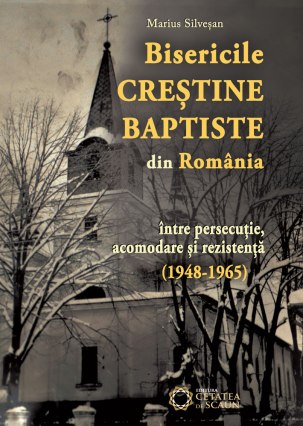
Bisericile Creștine Baptiste din România 1948-1965 - copertă fațăMarius Silveşan, The Baptiste Christian Churches from  Romania among persecution, accommodation and resistance (1948-1965), Cetatea de Scaun Publishing Press, Târgovişte, 2012, 410 pages.
   We have been witnessing lately  new historiographical ,memorial issues and, why not, some of them even journalistic about the evangelical believers in the Romanian communist regime, although they are better known  under the name of evangelicals. The weak, but promising start of  a new generation of historians gives us the  hope that over the coming years to point out, at least by and large, which was their status and  role in the post-communist Romania.
Starting from PhD thesis sustained in 2010 at the  University of Bucharest coordinated by Professor Dinu C.Giurescu, the work of the historian Marius Silveşan leads us into the Baptist community during  the years of Romanian stalinism. These were  probably the most troubled years of communism in our country, a fact that arises from  some realities face at that time:the crowded prisons with  political, and religious prisoners and the mass deportations. The years 1948-1965 were also characterized by multiple national transformations: collectivization, five year plans , nationalization and there’s no doubt that these changes affected the communities and the Baptist believers.
Still from  the title it is clearly that the volume involves three approaches: persecution accommodation and resistance. The Baptist churches had been recognized as a legal  cult  since 1944. But, between the public discourse and reality  there was a big difference. Marius Silveşan sought to emphasise this difference, proving bringing proofs in order to sustain the idea of persecution. The slogans according to which there was religious freedom are in total contrast with the historical realities of that period. The regulations, assignations, dismissals, the investigations, assassinations- to list only a few of them- were realities faced by the Baptist believers  and others like them, although the legal denominations had religious rights recognised  by the Constitution, and the Decree no. 177 ( 1948).
Starting from the sources of the archives, most of them revolutionary, dr. Marius Silveşan has carried out a summary of great necessity for both the Baptist believers as well as for other evangelical denominations  and historians interested in this period..
The complexity of the book  is apparent both in the contents, as well as its bibliography, a fact that proves the  professionalism with which it was approached..
The volume is structured in several sections with different approaches. Chapter I –„Social, political, institutional and legislative changes in the first decades of communism in Romania”, „Social, political, institutional and legislative changes in the first decades of communism in Romania”, introduces the reader into the social, political and cultural life of the period.
When we refer to the religious life,  we have in mind  the Constitution that guaranteed  religious freedom, at least de jure. In Chapter II – „Baptist Christian Churches  and the dynamics of the religious life between the years 1948-1965”, – the author  shows us who are the Baptist believers, as well as their dynamics. Following the history line until 1856 when the first Baptists were recorded in  Romania, Silveşan emphasizes their development over time, until the  end ‘ of 1980s. In this section, any reader  can get acquainted with the internal mechanisms of the Baptist denomination. Chapter III – „The Baptist pastors – A life dedicated to ministry?” – is a collection of five portraits preceded by a historical approach on the rules of the entitlement to preach at that time. Chapter IV – „The Theological Education”,- presents the institution  that prepared the Baptist pastors  for ministry,  in this case the Baptist Theological Institute in Bucharest. In that period some Baptist pastors (such as Alexa Popovici and Ioan Bunaciu) completed their theological studies at other theological centers such as the Othodox Theological Seminary from Bucharest or the Protestant Theological Seminary from Cluj-Napoca. In Chapter V – „The harmony between religious denominations –a factor of popular democracy”,  -we find the relationships of the Baptist denomination with the Romanian Orthodox Church and other Evangelical denominations (in 1950 the state united all Evangelical denominations in the Federation of Evangelical Denominations from The Popular Republic of Romania; this federation included the following denominations: Baptist Church, Adventist Church, Pentecostal Church , Evangelical Church)and similar churches from abroad (the external relations were carefully monitored and governed by authorities). Chapters VI –„The Baptist churches  between persecution and accomodation”,   – and VII – „The response of the Christian Baptist churches  to  the constraints of the state. Actions of questioning and response” – defines the idea of oscillation of the Baptist leaders between accommodation and resistance. The biographies, portraits, personal histories that the author emphasizes with their lights and shadows, are very interesting and presented in an authentic style on the principle sine Ira et studio. Some of the Baptist  leaders had  to endure persecution for their beliefs, while others  made compromises. From the actions of questioning of the oppressive system that limited the freedom of faith proclaimed by the Constitution, we can mention various reports of the pastors , illegal baptisms, the founding of the Committee for the Defense of Religious Freedom and of Conscience (A. L. R. C. ), and so on. It is important to mention the fact that these actions did not register only  between the years 1948-1965, but also during the Socialist regime and, in particular, in the years ’70 and ’80. The impressive  work of dr. Silveşan ends with conclusions and opinions of some key figures from the Baptist community and not only. The bibliography is followed by 10 annexes with documents and photos, as well as an index meant to help the  reader in finding  the information he looks for.
I do not intend to end my paper without presenting a few opinions of some well-known  historians, as they are presented in the book. The introduction is written by PhD Ecaterina Lung (University of Bucharest), who emphasises that „It must be stated from the beginning that the book is about a denominational history,  written by a member of the Baptist community, but at the same time, it should be stressed that it is a history written with scientific objectivity and in compliance with all the requirements of professional ethics. The insight that  Marius Silveșan can have into the subject allows him to understand better  the phenomena and to explain them to those less familiar with these. At the same time, the status of historian, acquired at the University of Bucharest, helps him to overcome easily  the fact that he is a member of the Baptist denomination and „do his job” correctly and well-balanced. PhD Adrian Cioroianu (University of Bucharest): „The main merit of work consists, I believe, in the theme itself: there’s no doubt that the history of this  religious minority from  Romania is one of the chapters of national history which must be known and investigated better, in the context of the religious life in the first two decades of Communist Regime”. PhD Alexandru Neagoe (The West University of Timişoara):”The purpose of the thesis is to establish the historical truth about the relationship between the communist State and the Baptist churches as it can be reconstituted by means of an attentive analysis of genuine documents  [ … ] and the scarce bibliography available in books and magazines”. PhD Cristian Barta (Babeş-Bolyai University, Cluj Napoca ): „The subject treated by Mr. Marius Silveşan is of high interest and completes with professionalism the stage of the research in the relationships between the state and Christian churches in Romania in the first two decades from the issuing of the Law on religious denominations by the communist regime (1948). Academist Dinu C. Giurescu, the scientific counsellor of the doctoral thesis that represents the starting point of the present work  states that: „an orderly exposure follows the plan of a work designed to present and analyze a theme which had not been the studied before, in this case the Baptist church between the years 1948-1965.”
 Even though the book is addressed to a certain public that is acquainted with this subject, we appreciate the historical magnitude and complexity of the volume and its framing in the  Romanian historiography on the relationships  between the state and churches during the Communist regime. Baptist churches have always militated in favor of religious freedom,  faith and conscience, and also for the separation between church and state. These principles made them to endure courageously  the post-communist years of oppression, an on the other hand, to oppose the State’s interference in the internal affairs of the Church.
I congratulate PhD Marius Silveşan, hoping that the issuing of this work will bring clarity in the relationships between the Romanian communist state and Romanian Evangelical churches, and the Baptist church in particular.
In conclusion PhD Otniel Ioan Bunaciu, the president of the The Baptist Union of Romania  considers that „the work of Mr. Marius Silvesan represents an important contribution in the research and understanding of a complex past. The author uses a balanced historical approach of the events from the  post-communist period and in consequence, this work avoids the subjectivity of personal interpretations, by trying to clarify and to lead the reader to a better understanding of a past that has left its mark on the religious life of the Baptists from Romania up to the present. „

Bogdan Emanuel Răduţ