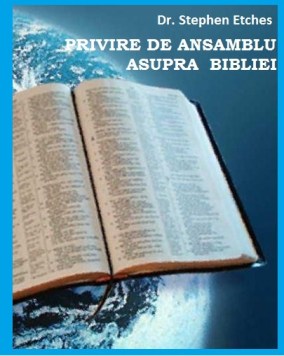
Dr. Stephen Etches, Privire de ansamblu asupra Bibliei
Partajează asta:

9 Things You Should Know About the Council of Trent
Yesterday (4 December) marked the 450th anniversary of the closing of the Council of Trent (1545-1563), one of the most significant series of meetings in Christian history. Here are nine things evangelicals should know about the Council and the decrees that it issued:
 1. The Council of Trent was the most important movement of the Catholic Counter-Reformation, the Catholic Church’s first significant reply to the growing Protestants Reformation. The primary purpose of the council was tocondemn and refute the beliefs of the Protestants, such as Martin Luther and John Calvin, and also to make the set of beliefs in Catholicism even clearer.Approximately forty clergymen, mainly Catholic bishops, were in attendance during the twenty-five times over the next eighteen years that the Council convened.
2. Protestants endorse justification by faith alone (sola fide) apart from anything (including good works), a position the Catholic Church condemned as heresy. During the the sixth session, the Council issued a decree saying that, „If any one saith, that the justice received is not preserved and also increased before God through good works; but that the said works are merely the fruits and signs of Justification obtained, but not a cause of the increase thereof; let him be anathema.”
3. The Protestant Reformers rejected the Apocrypha as part of the biblical canon. (The term Apocrypha (Gr., hidden) is a collection of ancient Jewish writings and is the title given to these books, which were written between 300 and 30 B.C., in the era between the Old and New Testaments.) During the the fourth session, the Council issued a decreedamning anyone who rejected these books:
. . . if any one receive not, as sacred and canonical, the said books entire with all their parts, as they have been used to be read in the Catholic Church, and as they are contained in the old Latin vulgate edition; and knowingly and deliberately contemn the traditions aforesaid; let him be anathema.
Many doctrines unique to Catholicism, such as the teachings of purgatory, prayers for the dead, and salvation by works, are found in these books.
4. During the Protestant Reformation, the doctrine of transubstantiation was heavily criticized as an Aristotelian „pseudophilosophy.” The 13th session reaffirmed and defined transubstantiation as „that wonderful and singular conversion of the whole substance of the bread into the Body, and of the whole substance of the wine into the Blood – the species only of the bread and wine remaining – which conversion indeed the Catholic Church most aptly calls Transubstantiation.”
5. Protestants claimed that the only source and norm for the Christian faith was Holy Scripture (the canonical Bible without the Apocrypha). The doctrine of Sola Scripturawas rejected at Trent. The Council affirmed two sources of special revelation: Holy Scripture (e.g., all the books included in the Latin Vulgate version) and traditions of the church (including the „unwritten traditions”).
6. In Catholic theology, an indulgence is a remission of temporal punishment due to sin, the guilt of which has been forgiven. Under Catholic teaching, every sin must be purifiedeither here on earth or after death in a state called purgatory. The selling of indulgences was not part of official Catholic teaching, though in Martin Luther’s era, the practice had become common. (Luther was appalled by the sermon of an indulgence vendor named John Tetzel who said, „As soon as the coin in the coffer rings, the soul from purgatory springs.”) The Council called for the reform of the practice, yet damned those who „say that indulgences are useless or that the Church does not have the power to grant them.”
7. In Catholic theology, purgatory is a place or condition of temporal punishment for those who denied yet were not free from „venial” sins (a lesser sin that does not result in a complete separation from God and eternal damnation in hell). The council affirmed the doctrine of purgatory and damned anyone who claimed „that after the grace of justification has been received the guilt is so remitted and the debt of eternal punishment so blotted out for any repentant sinner, that no debt of temporal punishment remains to be paid.”
8. In the 24 session, the council issued decrees on marriage which affirmed the excellence of celibacy, condemned concubinage, and made the validity of marriage dependent upon the wedding taking place before a priest and two witnesses. In the case of a divorce, the right of the innocent party to marry again was denied so long as the other party was alive, even if the other party had committed adultery.
9. At the request of Pope Gregory XIII, the Council approved a plan to correct the errors to the Julian calendar that would allow for a more consistent and accurate scheduling of the feast of Easter. The reform included reducing the number of leap years in four centuries from 100 to 97. Although Protestant countries in Europe initially refused to adopt the „Gregorian calendar” (also known as the Western or Christian calendar), it eventually became the most widely accepted and used civil calendar in the world.
(Note: The declarations and anathemas of the Council of Trent have never been revoked. The decrees of the Council of Trent are confirmed by both the Second Vatican Council (1962-1965) and the official „Catechism of the Catholic Church” (1992).)
Partajează asta:

Maxima zilei – 6 decembrie 2013
Înțelepciunea face pe om răbdător și este o cinste pentru el să uite greșelile
Proverbe 19: 11
Partajează asta:

Maxima zilei – 11 octombrie 2013
Nu te îngrijora cu privire la ce nu înțelegi din Biblie ; fii îngrijorat pentru ce înțelegi și nu împlinești
Partajează asta:

Maxima zilei – 2 septembrie 2013

Am ajuns la cunoștința că tot ce face Dumnezeu dăinuiește în veci, și la ceea ce face El nu mai este nimic de adăugat şi nimic de scăzut, și că Dumnezeu face asa pentru ca lumea să se teamă de El
Eclesiastul 3:14
Partajează asta:

Iosif Țon despre Dumitru Cornilescu: „Un om de o umilință desăvârșită”
În cadrul cercetării mele am găsit într-unul din dosare interceptarea unei scrisori adresată de Iosif Țon, probabil din Anglia, pastorului Pascu Geabou din Alexandria. Scrisoarea a fost expediată în primăvara anului 1971, posibil luna martie. În cadrul acestei scrisori, Iosif Țon prezintă o scurtă biografie a lui Dumitru Cornilescu, relatează câteva aspecte privitoare la întâlnirea sa de 4 zile cu Cornilescu în Elveția în anul 1970, vizita lui Cornilescu în SUA (1965). Se amintește și despre pastorul Dănilă Pascu din Clevland, ca fiind primul baptist preocupat de activitatea lui Dumitru Cornilescu.
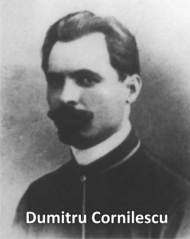 În partea de final a scrisorii, Iosif Țon militează pentru ca baptiștii români să-și exprime public recunoștința față de faptul că Dumitru Cornilescu a dat românilor posibilitatea de a citi Biblia în limba română modernă, aspect care permite și înțelegerea acesteia.
Acesta este contextul în care Iosif Țon realizează o scurtă caracterizare a lui Dumitru Cornilescu, care în aprilie 1971 urma să împlinească 80 de ani.
„În acele 4 zile [în care am stat la Cornilescu], am mai cunoscut ceva: în Cornilescu l-am cunoscut pe cel mai smerit creștin pe care l-am întâlnit vreodată. O simplitate și o umilință cum nu mi-am putut închipui că poate să existe. Eu sunt convins că omul acesta a fost unul dintre cei mai de seamă lucrători din via Domnului în țara noastră în acest veac, dar sunt de asemenea convins că ultimul care ar admite acest lucru ar fi Cornilescu însuși. Dacă mi s-ar cere să-l caracterizez pe scurt, cred că aceasta este cea mai bună caracterizare: „Un om de o umilință desăvârșită.”
Partajează asta:

Maxima zilei – 26 iunie 2013
Biblia nu este o carte cu sute de istorii diferite, Biblia este o carte a unei singure istorii: lucrarea și persoana Domnului Isus.
Partajează asta:

București: Muzeul Crucii – Sala Dalles 28 aprilie – 2 mai 2013

http://romaniaevanghelica.wordpress.com
Expoziția Muzeul Crucii este organizată de Departamentul de Tineret al Bisericii Adventiste în colaborare cu asociația studențească AMICUS

Personajele biblice interpretate de actori, costumele de epocă, scenele bine realizate, versetele din Biblie atent alese și muzica tulburătoare, toate i-au impresionat profund pe vizitatori.
1. Scopul proiectului
Ca și în toate celelalte proiecte misionare, dorim ca să atragem atenția locuitorilor Bucureștiului către dragostea lui Dumnezeu. De asemenea, dorim să folosim acest moment în care oamenii sunt mai predispuși să asculte cuvintele Evangheliei
2. Câteva date
Perioada desfășurării proiectului este 28 aprilie – 2 mai 2013. Locația: Universitatea Populară Dalles. Sala a fost închiriată pentru întreaga perioadă iar celelalte activități ale instituției au fost anulate. Mulțumim bisericii Excelsis pentru facilitarea tratativelor.
Pe data de 28 aprilie va fi montat Muzeul, începând cu ora 13:00 iar pe 3 mai, vineri, va fi demontat.
3. Desfășurarea proiectului
În zilele de Luni, Marți, Miercuri și Joi, între orele 10:00 și 21:00, Muzeul va fi deschis vizitatorilor. Forma de vizitare va fi un traseu pe urmele Mântuitorului de la Casa lui Simon la Cina cea de Taină, apoi în Ghetsemani, la judecată, pe dealul Golgota, în mormânt si încheind cu Marea Trimitere.
http://odatapeluna.ro/proiecte/muzeul-crucii
Partajează asta:

Iosif Dragomir, Semnele adevăratului ucenic
Duminică, 30 martie 2013, pastorul Iosif Dragomir a predicat la Biserica Creștină Baptistă Nădejdea din București despre Semnele adevăratului ucenic.
În cadrul mesajului său, pastorul Iosif Dragomir a accentuat faptul că există două categorii de ucenici. Ucenici care doar cunosc despre Domnul Isus și ucenici care-l cunosc și-L urmează cu adevărat pe Dumnezeu.
Partajează asta:

MISTERUL VICTORIEI ÎN LUPTELE SPIRITUALE
Pastor Dr. COSTEL GHIOANCĂ

Biserica Creștină Baptista ADONAI
BUCUREȘTI (România)
MISTERUL UNITĂȚII
MISTERUL DRAGOSTEI
MISTERUL CREȘTERII SPIRITUALE
MISTERUL TRĂIRII CREȘTINE PRACTICE







 Istorie Evanghelica