Beneficiile cititului asupra corpului uman

Te ajuta sa reduci stresul și îți schimbă starea de dispoziție – Cititul unei cărți este cea mai bună modalitate de a reduce stresul și de a te relaxa.
Îmbunătățește capacitatea de memorare – Oamenii de știință susțin că persoanele care citesc în mod frecvent au un risc mai mic de a suferi de probleme cognitive.
Reduce riscul de a dezvolta Alzheimer – Un hobby precum cititul îmbunătățește capacitățile cognitive, scăzând riscul de a suferi de Alzheimer.
Te ajută să dormi mai bine – Întrucât reduce nivelul stresului din organism și contribuie la relaxarea psihică, cititul te ajută să ai un somn mai liniștit.
Sursa: http://www.kfetele.ro
Partajează asta:

9 THINGS YOU SHOULD KNOW ABOUT THE SOUTHERN BAPTIST CONVENTION
Joe Carter for http://thegospelcoalition.org/
This week the Southern Baptist Convention meets in Baltimore, Maryland for its 156th annual meeting. Here are nine things you should know about America’s largest Protestant denomination.
1. The name Southern Baptist Convention refers to both the the annual two-day convention and the decentralized organization comprised of 46,034 autonomous, local churches and 15.9 million members.
2. The Southern Baptist Convention (SBC) is a network of autonomous churches voluntarily banded together at state, regional, and national levels to engage in missions and ministry activities designed to fulfill the Great Commission (Matthew 28:19-20). Each church in the SBC is an autonomous local congregation of baptized believers that makes their own decisions on staffing, budget, programs, etc.
 3. In 1814, Baptist churches in the U.S. joined together to create the General Missionary Convention of the Baptist Denomination. By 1845 the churches were divided over the issue of slavery. As church historian Miles Mullin explains, southern Baptists desired to make slavery a non-issue, while abolitionist forces in the North (and among northern Baptists) desired the convention to take a moral stand against it. The following year group of representatives from Southern churches created a new denomination, the Southern Baptist Convention.
4. In 1995, on the denomination’s 150th anniversary, the Convention voted to adopt a resolution on racial reconciliation that apologized for its racist roots, for condoning and perpetuating individual and systemic racism, and committed to eradicate racism in all its forms from Southern Baptist life and ministry. At its annual convention in 2012, the SBC elected as president Fred Luter Jr., the first African American to hold the position.
5. The SBC is directed by representatives of Southern Baptist churches, called messengers, who meet once a year for two days to adopt a unified missions and ministry budget called the Cooperative Program allocation budget, elect trustees to oversee the ministry entities of the Convention, receive reports from the SBC entities, and transact the business of the Convention.
6. The primary doctrinal statement for the SBC is the Baptist Faith and Message 2000, which outlines what the denomination believes about eighteen topics, including the Scripture, God, man, Jesus, salvation, baptism, and the church.
7. The principal means by which Southern Baptist churches fund their respective state convention ministries and the missions and ministries of the SBC is through the Cooperative Program (CP). Established in 1925, the CP depends upon the undesignated gifts given to it by Southern Baptist churches. By unifying the funding, the CP provides a workable way through which tens of thousands of like-minded churches can cooperate for the advancement and application of the gospel.
8. The SBC is comprised of the following entities: six seminaries; an International Mission Board, which sends and supports missionaries all over the world; an Ethics and Religious Liberty Commission, providing resources and leadership on ethical issues; Guidestone Financial Resources providing financial planning, insurance, and annuities for church and denomination staff members; a North American Mission Board, supporting the state conventions in evangelism, missions, and ministry, such as disaster relief; the Women’s Missionary Union, which serves as an auxiliary in promoting missions; LifeWay Christian Resources, the SBC publishing house; and anExecutive Committee coordinating the day-to-day functions of the SBC.
9. A name change was first proposed in 1903, though never adopted. In 2012, a task force was appointed to once again study a possible name change to reflect that the denomination was national and international, and no longer just „Southern.” The task force recommend the convention maintain its legal name but adopt an informal, non-legal name for those who want to use it: „Great Commission Baptists.”
Joe Carter is an editor for The Gospel Coalition and the co-author of How to Argue Like Jesus: Learning Persuasion from History’s Greatest Communicator. You can follow him on Twitter.
Partajează asta:

Jurnal teologic – Vol. 13, Nr. 1 / 2014
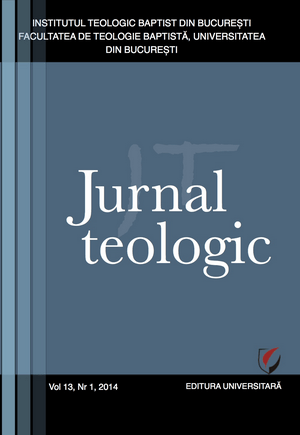
Vezi aici
COLDA, Teodor-Ioan. ‘Utopia libertății religioase în România postbelică. Baptiștii din România în perioada de tranziție de la Monarhie la Republică (1945-1953) II / The Utopia of Religious Freedom in Postbelic Romania. Romanian Baptists in transition from Monarchy to Republic (1945-1953) II.’ Jurnal teologic Vol 13, Nr 1 (2014): 157-189.
Baptist Theological Institute of Bucharest; Academic Visitor Attached to Ballioll College, University of Oxford
Abstract
In this paper the author tries to give a fair description and interpretation of the life of Baptist Churches in the period of transition from Monarchy to Republic in postbellic Romania, based on many unprecedented archive documents. The main focus of the paper is the problem of religious freedom in this very shifty period. Because of the persecution endured between the two world wars and during the nationalist and fascist regime of Antonescu, the self proclaimed absolute leader of Romania between 1940 and 1944, the Romanian Baptists tried to cope with the new situation established in their country at the end of the war, which seemed to be far better than before. Religious freedom was granted for all, first by His Royal Majesty King Michael and afterwards by the communists who managed to force the King into exile and transformed Romania into a republic. Though the communists were granting religious freedom through a new constitution they weren’t really committed to the idea of freedom, because of their proletarian revolutionary believes. This reluctance to offer religious freedom was encouraged by historical precedents in which the Orthodox Church managed to drive the state into a sinister partnership of persecuting those who were considered sects, dangerous for an Orthodox nation. In these circumstances, and tired from being persecuted, Baptist leaders and Baptist churches were forced into an unusual relationship with the communists. First it seemed that there couldn’t be any wrong or any danger in having a relationship with the state which is willing to grant religious freedom even for religious minorities. But in an atheistic and communist state religious freedom becomes a utopia.
Keywords: Baptist, Orthodox, Church, State, Persecution, Communism, Second World War
Celelalte articole din jurnal sunt:
SABOU, Sorin. ‘Human Nature and Moral Principles.’ Jurnal teologic Vol 13, Nr 1 (2014): 5-16.
BABAN, Octavian. ‘„Cuvântul este aproape de tine“: teologia invocării cerului și mării ca martori ai credinței și ai prezenței divine / The Word is Near You: The Theology of Invoking the Heavens and the Sea as Witness of Faith and Divine Presence.’ Jurnal teologic Vol 13, Nr 1 (2014): 17-43.
BARTOȘ, Emil. ‘Note apologetice despre învierea trupească / Apologetical Notes on Bodily Resurrection.’ Jurnal teologic Vol 13, Nr 1 (2014): 44-79.
SCHEETZ, Jordan M. ‘Cannonical Approaches, New Trajectories, and the Book of Daniel.’Jurnal teologic Vol 13, Nr 1 (2014): 81-110.
SWEIS, Khaldoun. ‘Is a Fetus a Human Person?: Thinking Deeply on a Complex and Politically Charged Question.’ Jurnal teologic Vol 13, Nr 1 (2014): 111-127.
RUSU, Timotei. ‘Amenințări laice ale conducerii bisericii / The Secular Threats upon the Church Government.’ Jurnal teologic Vol 13, Nr 1 (2014): 129-155.
GHIOANCĂ, Constantin. ‘Predicarea expozitivă și relevanța ei contemporană / Expository Preaching and its Contemporary Relevance.’ Jurnal teologic Vol 13, Nr 1 (2014): 191-205.
FRANDEȘ, Dorin. ‘Sonorul: un aspect marginalizat în lectura și predicarea Bibliei / Sound: a Marginalized Issue in the Reading and Preaching of the Bible.’ Jurnal teologicVol 13, Nr 1 (2014): 207-217.
Partajează asta:

9 THINGS YOU SHOULD KNOW ABOUT JOHN CALVIN
JOE CARTER for The Gospel Coalition.org
27 may 2014 marked the 450th anniversary of the death of John Calvin. Here are nine things you should know about the French theologian and Reformer.

1. From an early age, Calvin was a precocious student who excelled at Latin and philosophy. He was prepared to go to study of theology in Paris, when his father decided he should become a lawyer. Calvin spend half a decade at the University of Orleans studying law, a subject he did not love.
2. Calvin wrote his magnum opus, The Institutes of the Christian Religion, at the age of 27 (though he updated the work and published new editions throughout his life). The work was intended as an elementary manual for those who wanted to know something about the evangelical faith—”the whole sum of godliness and whatever it is necessary to know about saving doctrine.”
3. Calvin initially had no interest in being a pastor. While headed to Strasbourg he made a detour in Geneva where he met the local church leader William Farel. Calvin said he was only staying one night, but Farel argued that it was God’s will he remain in the city and become a pastor. When Calvin protested that he was a scholar, not a preacher, Farel swore a great oath that God would curse all Calvin’s studies unless he stayed in Geneva. Calvin later said, „”I felt as if God from heaven had laid his mighty hand upon me to stop me in my course—and I was so terror stricken that I did not continue my journey.”
4. Calvin was a stepfather (he married a widow, Idelette, who had two children) but had no surviving children himself. His only son, Jacques, was born prematurely and survived only briefly. When his wife died he wrote to his friend, Viret:
I have been bereaved of the best friend of my life, of one who, if it has been so ordained, would willingly have shared not only my poverty but also my death. During her life she was the faithful helper of my ministry. From her I never experienced the slightest hindrance.
5. During his ministry in Geneva, Calvin preached over two thousand sermons. He preached twice on Sunday and almost every weekday. His sermons lasted more than an hour and he did not use notes.
6. Around 1553, Calvin began an epistolary relationship with Michael Servetus, a Spanish theologian and physician. Servetus wrote several works with anti-trinitarian views so Calvin sent him a copy of his Institutes as a reply. Servetus promptly returned it, thoroughly annotated with critical observations. Calvin wrote to Servetus, „I neither hate you nor despise you; nor do I wish to persecute you; but I would be as hard as iron when I behold you insulting sound doctrine with so great audacity.” In time their correspondence grew more heated until Calvin ended it.
7. In the 1500s, denying the Trinity was a blasphemy that was considered worthy of death throughout Europe. Because he had written books denying the Trinity and denouncing paedobaptism, Servetus was condemned to death by the French Catholic Inquisition. Servetus escaped from prison in Vienne and fled to Italy, but stopped on the way in Geneva. After he attended a sermon by Calvin, Servetus was arrested by the city authorities. French Inquisitors asked that he be extradited to them for execution, but the officials in Geneva refused and brought him before their own heresy trial. Although Calvin believed Servetus deserving of death on account of what he termed as his „execrable blasphemies”, he wanted the Spaniard to be executed by decapitation as a traitor rather than by fire as a heretic. The Geneva council refused his request and burned Servetus at the stake with what was believed to be the last copy of his book chained to his leg.
8. Within Geneva, Calvin’s main concern was the creation of a collège, an institute for the education of children. Although the school was a single institution, it was divided into two parts: a grammar school called the collège and an advanced school called the académie. Within five years there were 1,200 students in the grammar school and 300 in the advanced school. The collège eventually became the Collège Calvin, one of the college preparatory schools of Geneva, while the académie became the University of Geneva.
9. Calvin worked himself nearly to death. As Christian History notes, when he could not walk the couple of hundred yards to church, he was carried in a chair to preach. When the doctor forbade him to go out in the winter air to the lecture room, he crowded the audience into his bedroom and gave lectures there. To those who would urge him to rest, he asked, „What? Would you have the Lord find me idle when he comes?”
Partajează asta:

SONDAJ Portretul adolescentului român

FOTO: Shutterstock
Tinerii născuţi la şapte-opt ani după Revoluţie sunt consideraţi generaţia „digitală“, sunt pragmatici şi îşi definesc mai greu valorile, au ca principal model părinţii, urmaţi de profesori, dar relaţia cu ei nu este una apropiată. Aşa arată liceanul român în 2014, potrivit unei cercetări.
Nu mai puţin de 62% din elevii de liceu au ca model de viaţă unul dintre părinţi, 25% – o altă persoană din familie, 15% sunt influenţaţi colegi sau de prieteni şi doar 0,5% urmează modelul unei persoane publice din România. Întrebaţi care sunt cele trei valori după care se ghidează, 20% n-au dat niciun răspuns, în timp ce 42% au reuşit să enumere câteva valori, în principal onestitatea, ambiţia şi perseverenţa. În ceea ce priveşte viitorul lor, peste 80% din tineri spun că vor să meargă mai departe la facultate, însă jumătate dintre aceştia nu ştiu pentru ce profesie se vor pregăti. Deşi 23% spun că sunt inspiraţi oamenii de la catedră, peste 30% din tineri se declară nemulţumiţi de faptul că profesorii nu organizează activităţi extraşcolare şi nu-i consiliază, limitându-se la a le transmite informaţii. Cât despre petrecerea timpului liber, 75% din elevi ies cu prietenii, 68% navighează pe internet, iar 44% citesc. Acestea sunt principalele concluzii ale studiului realizat în aprilie 2014 de Şcoala de Valori, în parteneriat cu Ipsos Research România şi cu sprijinul Ministerului Educaţiei Naţionale. Sondajul a vizat un eşantion de 1.000 de elevi din toţi anii de liceu. Deşi par dezorientaţi, tinerii din ziua de azi se dovedesc însă foarte pragmatici şi vor de fapt să fie independenţi, se simt mai conectaţi la lume şi la tot ce ne înconjoară prin noile tehnologii, însă au nevoie de sprijin, de consiliere, mai ales din partea părinţilor, explică Ştefan Pălărie, preşedintele Şcolii de Valori, care încearcă să ducă principiul valorilor sănătoase în şcoli şi licee. „Am sesizat o foarte scăzută educaţie a valorilor şi pentru viaţă, gândiţi-vă că 20% nu au ştiut să enumere nicio valoare, 28% au trecut idei neinteligibile, iar 9% au fost stângaci în exprimare. Partea bună este că aproape jumătate îşi aleg modelul de viaţă din familie, nu din spaţiul public, aşa cum s-a tot vehiculat. Am descoperit o adevărată oportunitate dacă educaţia se petrece în casă. Problema e însă că părinţii nu petrec suficient timp cu tinerii, care sunt în esenţă miniaturi ale adulţilor din familie”, spune Pălărie.
Citeste mai mult: http://adevarul.ro/educatie/scoala/sondaj-portretul-adolescentului-roman-1_53873a0f0d133766a81c9bdd/index.html
Partajează asta:

Costel Ghioancă, Barbă și pedeapsă
Din când în când suntem zguduiți de câte o calamitate naturală. Cutremurele, tsunami, alunecările de teren, inundaţiile, incendiile şi alte dezastre naturale sunt dovadă că lumea aceasta nu este niciodată „sigură”. Spre exemplu, Serbia a fost lovită, de curând, cu cele mai grave inundații din ultimul secol.
De ce? De ce se întâmplă așa? De ce au loc atât de multe nenorociri pe pământ?
Se pare că patriarhul Serbiei a intuit o legătura între… barbă și pedeapsă! Da, la ea mă refer, la „femeia cu barbă”, câștigătoare a Euro-ghinionului de anul acesta. Conform The Economist, în viziunea patriarhului, nenorocirile care au venit peste Serbia sunt pedeapsa divină pentru păcatele homo(sexualității), cu exponenți precum Conchita Wurst, femeia-cu-barbă.
Da, putem gândi și în felul acesta… Barba, în cazul mult mediatizat, nu e la locul ei, e de-a-ndoaselea. E pe invers. Încalcă legile naturii(ale). Este un dezastru (ne)natural. Și atunci, cum o nenorocire nu vine niciodată singură, te poți aștepta și la alte dezastre, la o legătură între „barbă și pedeapsă”!
Cu toate acestea, aș spune că deși patriarhul are întrucâtva dreptate, este mult prea reductiv și selectiv în analiza domniei sale. Oare de ce nu vede și alte „bărbi” care nu sunt la locul lor? „Barba” lăcomiei, cea a corupției, a minciunii, a furturilor, a idolatriei, a fățărniciei, a nedreptății sociale, a divorțurilor, a avorturilor și câte altele! Oare aceste „bărbi” nu atrag și ele după sine tot felul de nenorociri? Răul din lume este o consecință a păcatului, fără îndoială, dar nu ține doar de barba Conchitei, ține de „barba” noastră a tuturor. Toți avem nevoie de pocăință și este bine ca atunci când vorbim despre păcat să avem curajul să-l denunțăm în toate formele sale.
Cred că până și patriarhul, care este și el om, trebuie să fie atent și să nu incrimineze doar anumite păcate, ci tot ceea ce Sfânta Scriptură numește păcat. La urma urmei, chiar și domnia sa pare-mi-se că are are… barbă!
Costel Ghioancă
Partajează asta:

Ziarul Adevărul: Tată arestat în timpul unei şedinte cu părinţii pentru că a cerut explicaţii profesoarei
William Baer, un tată din orașul Gilford (New Hampshire, SUA) a fost arestat în timpul unei ședințe cu părintii după ce a ridicat problema unei cărți, considerată nepotrivită ca lectură, care i-a fost dată de citit fiicei sale. Nemulțumit de atitudinea profesoarei, el a continuat să-şi exprime nemulțumirea cu privire la abordarea problemei de către corpul profesoral. A fost, însă, întrerupt de ofițerul de politie care venise să-l aresteze pentru nesupunere în sala de clasă.

sursa foto: timebank.ro
Înregistrarea video poate fi văzută accesând link-ul de mai jos
Din comentariile la această înregistrare video prezint un fragment scris de Dinescu Darius:
„Mi se pare penibil, sa fii arestat doar pentru atât. Omul nu a fost vulgar, nu a jignit pe nimeni, doar i s-a părut absurd conținutul cărții și și-a exprimat liber și civilizat ideea. Unde mai este libertatea de exprimare, unde mai este LIBERTATEA ?”
Partajează asta:

Cum să reţii mai eficient ceea ce citeşti
Mădălina Bătrînca pentru adevărul.ro
Iată câteva trucuri care te vor ajuta să reţii majoritatea informaţiilor din cărţile pe care le citeşti:
1. Citeşte inclusiv prima pagină, cu titlul şi numele autorului, cuprinsul şi prefaţa. Te va ajuta să te identifici mai bine cu cartea.
2. Dacă simţi că nu e momentul potrivit să începi o carte, nu o începe.
3. Citeşte o singură carte o dată.
4. Nu citi o carte care nu îţi menţine interesul viu.
5. Subliniază pasajele importante şi scrie observaţii pe măsură ce citeşti.
6. Fă asocieri între ceea ce citeşti şi întâmplări, persoane sau orice alte elemente familiare.
7. Ia notiţe la sfârşitul fiecărui capitol. Dacă ai probleme de înţelegere, reciteşte capitolul. Această tehnică este cunoscută sub numele de tehnica Feynman.
8. Uită de carte pentru o săptămână, iar apoi, după această perioadă, reciteşte toate notiţele, observaţiile şi pasajele subliniate.
Totuşi, un detaliu de reţinut ar fi faptul că, majoritatea oamenilor nu îşi aminteşte cu exactitate ceea ce citeşte, iar informaţia se denaturează. De cele mai multe ori, dăm greş în a ne aminti acele informaţii care nu sunt bazate pe cunoştinţe deja dobândite sau, pentru că ne concentrăm pe lucruri complexe, când nu am parcurs nici măcar detaliile elementare, avem deficit de înţelegere şi memorare.
Partajează asta:


Rusia, mon amour, my Love, meine Liebe

Europenii vorbesc cu totul altă limbă faţă de americani în privinţa sancţiunilor economice impuse Moscovei. Explicaţia problemei lingvistice ţine de algebră şi puţină economie: companiile şi statele europene au schimburi comerciale cu Rusia de 460 de miliarde de dolari pe an, adică de zece ori mai mult decât americanii.
Citeste mai mult pe adevarul.ro
Un articol interesant pentru că arată diferența dintre afirmațiile politice și deciziile politice, respectiv ce anume determină sau împiedică transpunerea în practică a deciziilor politice. Pot spune că acest articol luminează într-o anumită măsură pentru publicul larg relațiile complexe dintre Europa-America și Rusia evidențiind faptul ca dincolo de politică mult mai importante sunt relațiile comerciale.








 Istorie Evanghelica