TGC : 5 ‘Fake News’ Stories People Believe About Early Christianity
“Fake news” isn’t a new phenomenon, though. There’s quite a bit of fake news out there regarding the person of Jesus, the origins of the church, and the development of the Bible. Even though such “news” has no factual basis, it’s believed by an uncomfortably large number of people.
Here’s a sampling of five leading stories
1. Jesus was married to Mary Magdalene.
Perhaps there’s no conspiracy theory about early Christianity more sensational and captivating than the claim that Jesus was married and had children. It’s not only fodder for books like The Da Vinci Code, but it seems to pop up again and again in the mainstream media.
2. The deity of Jesus wasn’t decided until the Council of Nicea in the fourth century.
Another widespread conviction is that Jesus was merely an ordinary human who was exalted to divine status by the council of Nicea. They then suppressed (and oppressed) all who insisted otherwise.
3. Christians didn’t have a ‘Bible’ until the time of Constantine.
Also making our top-five list is the oft-repeated claim that early Christians, at least for the first four centuries, didn’t have a Bible. They were reliant merely on ever-changing oral tradition. And this problem wasn’t resolved until Constantine commissioned the production of a Bible in the fourth century (containing only the books he preferred).
4. The ‘Gnostic’ Gospels like Thomas were just as popular as Matthew, Mark, Luke, and John.
Ever since the discovery of the so-called Gnostic Gospels at Nag Hammadi in 1945, it’s been popular to insist that these “lost” Gospels were once more popular than our canonical ones. During the first few centuries, we’re told, Christians read the Gospel of Thomas with equal (if not more) regularity than the books that made it into our Bibles.
This whole narrative has a clear purpose behind it: to convince people that all Gospels are pretty much the same, and no Gospel is more valid than another.
5. The words of the New Testament were radically changed and corrupted in the earliest centuries.
Rounding out our top-five fake news stories is the claim that the text of the New Testament has been so radically corrupted, edited, and changed that we can’t really know what the original authors said. Made famous by Bart Ehrman’s bestseller Misquoting Jesus, this story has been repeated ad infinitum.
But there’s no evidence for this level of radical corruption. Can we see scribal changes and mistakes in our New Testament manuscripts? Of course, but that’s true for every document of antiquity. The New Testament.
These five examples of “fake news” about early Christianity get repeated so often people believe they must be true. Just like in the political world, however, we need to carefully examine the facts before we repeat the claims.
https://www.thegospelcoalition.org/article/5-fake-news-stories-people-believe-about-early-christianity
Partajează asta:

Ana Blandiana : Cea mai mare victorie a comunismului a fost crearea omului fără memorie
„Cea mai mare victorie a comunismului – o victorie relevată dramatic abia după 1989 – a fost crearea omului fără memorie, a omului nou cu creierul spălat, care nu trebuie să-şi amintească nici ce a fost, nici ce a avut, nici ce a făcut înainte de comunism” – Ana Blandiana
Partajează asta:
Maxima zilei – 20 iunie 2017
Cei care cred că harul face sfințirea opțională se înșeală amarnic.
John MacArthur, Adevărul despre domnia lui Cristos, p. 65.
Partajează asta:
Maxima zilei – 17 iunie 2017
Calea lui Cristos spre glorie a fost calea suferinței pe nedrept.
John MacArthur, Adevărul despre domnia lui Cristos, p. 55.
Partajează asta:
Maxima zilei – 16 iunie 2017
Suferința nu doar că ne face mai puternici acum – ea ne face capabili să suportăm cu răbdare, ne crește credința, ne învață să ne încredem în Dumnezeu și ne călăuzește să depindem de Cristos și de Cuvântul Său – dar totodată ne influențează felul în care vom funcționa mai târziu.
John MacArthur, Adevărul despre domnia lui Cristos, p. 54.
Partajează asta:
Maxima zilei – 9 iunie 2017

A fi martir nu te mantuiește.
John MacArthur, Adevărul despre domnia lui Cristos, p. 40.
Partajează asta:

John MacArthur despre scopul bisericii
„Dar la fel de importante ca părtășia, învățătura și lauda, principala menire a bisericii este aceea [de] a-L glorifica pe Dumnezeu”.
John MacArthur, Adevărul despre domnia lui Cristos, p. 20.
Partajează asta:

Maxima zilei – 3 iunie 2017
Oamenii devin asemenea celor a căror influență îi domină.
John MacArthur, Adevărul despre domnia lui Cristos, p. 19
Partajează asta:

Maxima zilei – 28 mai 2017

Înainte de a te deschide spre ceilalți, nu se cuvine oare să te cunoști pe tine însuți? Cum să știi unde începe diferența, dacă nu știi unde anume se oprește identitatea?
Jean Sévillia, Incorectitudinea istorică, p. 12.
Partajează asta:

Lucian Boia – Astăzi nu mai e politic corect să definim proiectul european drept „creștin”
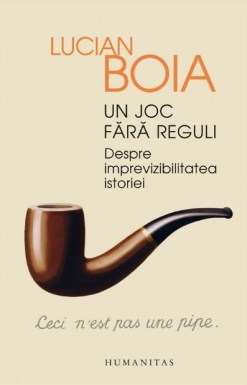
E clar că astăzi nu mai e politic corect – și nici măcar sociologic sau cultural corect – să definim proiectul european drept „creștin“; altele sunt trăsăturile sale definitorii. Dar asta nu poate schimba trecutul, sau nu trebuie să-l schimbe. Civilizația Europeană s-a înălțat pe un fundament creștin; și a ocoli acest adevăr, pe diverse motive de oportunitate politică (cum ar fi să nu-i jignim pe „ceilalți“) corespunde pur și simplu unui fals prin omisiune.
Lucian Boia, Un joc fără reguli. Despre imprevizibilitatea istoriei, Editura Humanitas, București, 2016, p. 23.







 Istorie Evanghelica