

Versetul zilei – 14 februarie 2016

Partajează asta:

Maxima zilei – 13 februarie 2016
Și-au pus în gând să înscăuneze dreptatea în lume; dar, lepădându-se de Hristos, vor ajunge până la urmă să scalde pământul în sânge, căci sângele cheamă alt sânge după sine, și cel ce trage sabia de sabie va pieri.
F. M. Dostoievski, Frații Karamazov, vol. I, p. 544.
Partajează asta:

Agerpres : Mize religioase și politice ale întâlnirii dintre Papa Francisc și Patriarhul Kirill al Bisericii Ortodoxe Ruse (DW)
 Întâlnirea istorică, pe aeroportul din Havana, între Papa Francisc și Patriarhul Kirill al Bisericii Ortodoxe Ruse este prima întrevedere la acest nivel între cele două Biserici care are loc după Marea Schismă din 1054, care a împărțit creștinismul între catolicism și ortodoxie. Este un mare eveniment în plan religios, care are însă și numeroase aspecte politice, comentează DW.
Sursa :
Articolul original poate fi citit aici :
http://m.dw.com/ro/întâlnire-istorică-la-havana/a-19044478
Partajează asta:

Maxima zilei – 12 februarie 2016
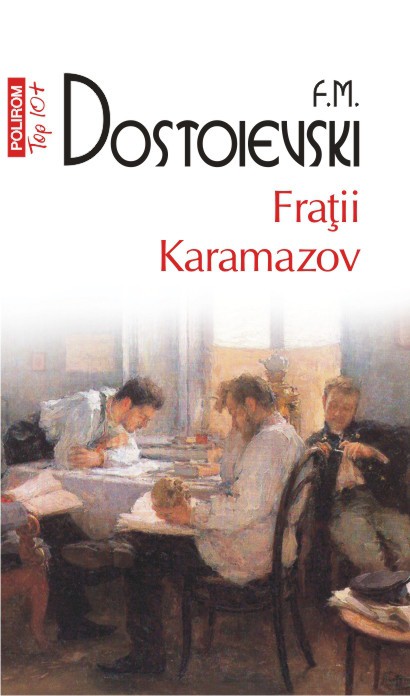
Egalitatea stă mai înainte de toate în demnitatea morală a oamenilor.
F. M. Dostoievski Frații Karamazov, vol. I, p. 540.
Partajează asta:

ActiveNews.ro : Cine se teme de Referendum?

În ceea ce privește confesionalitatea demersului, Biserica ortodoxă a fost de la început alături de inițiatori, de asemenea principalele culte creștine din România. Doar în București există 20 de comitete de confesiune ortodoxă, catolică, greco-catolică, baptistă, penticostală. Dar la campania pentru familie s-au alăturat de asemenea și Federația Națională a Asociațiilor de Părinți din Învățământul Preuniversitar sau asociații care promovează patrimoniul național. A confunda societatea civilă cu administrația eclezială este manipulare grosieră și rea-voință din partea presei. În biserici sau capele, pe scara blocului sau în piețe, cetățenii au dreptul să strângă semnături pentru a susține prin legea specială a inițiativei cetățenești valorile în care cred.
În Europa majoritatea statelor au luat o poziție tranșantă în apărarea valorilor familiei. În 16 state dintre care Italia, Polonia sau Ungaria, familia este definită și în Constituție. Fiecare stat european are dreptul să își definească valorile sale în Constituție iar România nu este obligată de vreun for exterior să accepte ceea ce nu este în acord cu legea sa fundamentală. În urmă cu doar două luni 63,47% dintre slovenii ce au participat la referendum au votat pentru Familie. Un vot de poveste în care Parlamentul a încercat blocarea referendumului.
În acest context rămâne întrebarea: cine se teme de voința românilor?
http://www.activenews.ro/stiri-social/Cine-se-teme-de-Referendum-129960
Partajează asta:

Maxima zilei – 11 februarie 2016
Cum se poate dezbăra de năravurile sale și unde poate să meargă cel care a căzut rob poftelor sale, de vreme ce s-a obișnuit să-și îndestuleze fără zăbavă atâtea nevoi pe care el însuși le-a scornit ? Ferecat cum este în singurătatea lui, nici nu-i mai pasă de ceilalți. Așa că oamenii au ajuns să agonisească o mulțime de bunuri, în schimb li s-au împuținat bucuriile.
Cu totul deosebit este drumul duhovniciei. Lumea își bate joc când aude de ascultare, de post de rugăciune, și totuși, ele sunt cărările ce duc spre adevărata libertate.
F. M. Dostoievski, Frații Karamazov, vol. I, pp. 536-537.
Partajează asta:

Maxima zilei – 10 ianuarie 2016
În loc de a cucerii libertatea, oamenii au căzut în robie.
F. M. Dostoievski, Frății Karamazov, vol. I, p. 536
Partajează asta:

Video : Horia-Roman Patapievici, Partea nevăzută decide totul

Horia – Roman Patapievici într-o discuție la Digi 24 despre cartea Partea nevăzută decide totul
Vezi și
https://alonewithothers.wordpress.com/2016/01/18/astept-sa-oboseasca-nedreptatea/
Partajează asta:

The Gospel Coalition : 3 Ways Our Culture Is Different than Every Other Culture in History
We live in a turbulent cultural moment. The world around us is rapidly changing, and we face many challenges unprecedented in the history of the church. Augustine fought the Pelagians; Aquinas synthesized Aristotle; Luther strove with his conscience; Zwingli wielded an axe; but probably none of them ever dreamed of a world in which people could choose their gender. Secularizing late-modernity is a strange, new animal.
Identifying the historical and global isolation of our culture does not discredit it. “Weird” does not always equal “wrong.” Nonetheless, seeing ourselves in a broader perspective can go a long way toward humbling and opening us up to where Scripture wants to transform our thinking. I say “our” thinking because our first impulse in cultural critique shouldn’t be bashing others, but searching our own hearts. Since culture isn’t what we see but what we see through—the glasses, not the landscape—we’re often more “conformed to this world” (Rom. 12:2) than we realize.
Three Modern Eccentricities

Here are three ways our culture is eccentric in its basic instincts about God, morality, and life—ways we tend to see things differently not only than Solomon, Jesus, and Paul, but also Aristotle, the Aztecs, and Attila the Hun.
1. God is in the dock.
I’m currently writing my doctoral dissertation on Anselm (1033–1109). I’m always amazed by how exercised he was by the problem of divine mercy. Throughout his writings he labored over the question: how can a just and righteous God pass over sins and spare the undeserving?
Today we have the opposite problem. Divine mercy is assumed, and divine justice must be explained. How could a good and loving God ever judge people? (This is one of the top seven objections to Christianity Tim Keller tackles in The Reason for God.)
What’s so striking to me isn’t that Anselm and American culture have different answers, but that they’re asking different questions. For an 11th-century monk, it simply never occurred to him that God, rather than man, would be the one needing to be justified. C. S. Lewis captured this distinction well: “The ancient man approached God (or even the gods) as the accused person approaches his judge. For the modern man, the roles are quite reversed. He is the judge: God is in the dock.”
Perhaps the greatest example of this role reversal is the rise of atheism, a relatively rare phenomenon before the modern West. There are some scattered examples in pre-modern times of various kinds of materialism or agnosticism, but they’re strikingly sparse. For every one Lucretius or Democritus, you can find entire centuries and nations that know nothing but priests, monks, imams, lamas, shamans, sages, and sorcerers.
2. Morality is about self-expression.
In most cultures throughout history it was assumed that external reality is fixed—and that the basic point of life is to conform ourselves to it in some way. Buddha and Plato agree on this point; they only differ on what the conforming process looks like.
Our culture, by contrast, tends to exalt human desire and aspiration such that the point of life is for external reality to be conformed to it. To paraphrase Lewis: For the wise men of old the cardinal problem had been how to conform the soul to reality; today it’s how to subdue reality to the wishes of men.
In the late-modern West we’ve reduced truth to a personal construct and lost confidence in reason’s ability to access external reality. Thus the only foul in ethics is “harm,” and the only requirement for sexual behavior is “consent.” Basically, for many in our culture, you should be able to do anything you want so long as you don’t inhibit someone else’s self-expression.
Plato could have at least understood Buddha’s four noble truths. Buddha would have comprehended Plato’s advocacy for reason and justice. Both would be only perplexed and exasperated with the modern mantra “be true to yourself.”
3. Life is starved of transcendence.
In most ancient cultures, life and meaning were relatively stable. You didn’t have people like Albert Camus contemplating whether the absurdity of human existence necessitated suicide among the ancient Mongols, Mayans, or Vikings. As Brother Lippo Lippi put it in Robert Browning’s poem, “This world’s no blot for us, nor blank; it means intensely, and means good: to find its meaning is my meat and drink.”
Many today lack this sense of objective meaning; we are starved of transcendence, community, stability; we’re aching to find something big to live for; we feel listless, adrift, barren. Think of Nietzsche’s anguish in proclaiming the death of God in the late 19th century—in a milder, semiconscious way, this is how many feel today.
Our standard of living has risen, but so have our suicide rates; we are smarter, but more uncertain; surrounded with pleasure, but less fulfilled; able to do almost anything but uncertain whether to do anything.
I believe much of the sexual confusion and brokenness in our culture is the result of this deeper, existential void. We use things like sex and money to address basic questions of identity and fulfillment. As Kellerrecently observed, “In ancient cultures people had sex and made money to build a community; today, they do so to build an identity.” Or as Trevin Wax puts it, “One reason our culture is so sex-saturated is that we are so transcendence-starved.”
How Should We Respond?
Gospel faithfulness demands we engage our culture with both truth and love, yielding neither to compromise on the one side nor escapism on the other. This means we cannot simply bemoan the encroaching cultural darkness, swatting at the errors around us with our theological club. As TGC’sTheological Vision for Ministry puts it, “It is not enough that the church should counter the values of the dominant culture. We must be a counterculture for the common good.”
In responding to these metaphysical, ethical, and existential Copernican revolutions in our culture, I believe we must work hard to establish the corresponding subversive biblical doctrine in each of three areas: (1) a high view of God, (2) a thoroughgoing notion of repentance, and (3) a transcendent vision of worship.
1. God is transcendent.
2. Life comes through death.
3. Beholding God is our goal
http://www.thegospelcoalition.org








 Istorie Evanghelica