Iași: Conferința Rolul religiei în prăbușirea comunismului
Vineri, 24 mai 2013, Rev. Canon dr. Michael Bourdeaux va susţine la Iaşi conferinţa
Rolul religiei în prăbușirea comunismului

Centrul de Studii asupra Comunismului şi Postcomunismului (CSCP) în parteneriat cu Institutul de Investigare a Crimelor Comunismului şi Memoria Exilului Românesc (IICCMER), Fundaţia Konrad Adenauer și Facultatea de Istorie a Universității „Alexandru Ioan Cuza” din Iași vă invită la conferinţa Rolul religiei în prăbușirea comunismului, susţinută de Rev. Canon dr. Michael Bourdeaux*.
Evenimentul va avea loc vineri, 24 mai 2013, orele 17.00, la Universitatea „Alexandru Ioan Cuza” din Iaşi, în Corpul H (Casa Catargi), Sala H1, Bd. Carol I, nr. 11, Iaşi.
* Michael Bourdeaux este Canon Emeritus al Bisericii Angliei, specialist în istoria Rusiei și în chestiuni religioase. După ce a studiat în URSS, în anii ’50, și-a dedicat viața cercetării situației creștinilor din țările comuniste. În acest scop a și fondat, în 1969, Centre for the Study of Religion and Communism, devenit apoi cunoscut sub numele de Keston College sau Keston Institute. Stabilindu-și sediul la Oxford, Marea Britanie, așadar într-un binecunoscut loc al excelenței academice, institutul s-a remarcat prin cercetările făcute de o echipă care lucra profesionist, în același timp neascunzându-și empatia cu creștinii persecutați în țările comuniste, în special cu cei din URSS și din estul Europei. Cum s-a spus, cu îndreptățire, Keston Institute a devenit „vocea celor fără voce”. În timp și pentru susținerea activităților specifice, dar și pentru prezervarea surselor, a datelor istorice, a mărturiilor ș.a.m.d. s-a constituit o arhivă impresionantă, o bibliotecă bine dotată, au fost publicate cărți și a fost editată o revistă (Religion in Communist Lands, din 1973; în 1992 si-a schimbat numele inReligion, State and Society), devenite de referință pentru înțelegerea problemelor religioase în țările aflate sub dominația totalitarismului de esență marxist-leninistă. Puțini oameni au
făcut atât de mult pentru informarea opiniei publice occidentale despre viața creștinilor din țări care păreau uitate și pentru susținerea libertății relligioase în acele spații lipsite decenii la rând de libertăți, într-un timp în care nu mulți credeau că regimurile comuniste vor avea un sfârșit.
Rev. Michael Bourdeaux a publicat numeroase cărți și articole. Dintre volumele sale amintim: Opium of the people: the Christian religion in the USSR (1965), Religious Ferment in Russia: Protestant opposition to Soviet policy (Macmillan, 1968), Faith on Trial in Russia (Hodder&Stoughton, 1971), Risen Indeed: Lessons in Faith from the USSR (Darton, Longman and Todd, 1983), Gorbachev, Glasnost & the Gospel (Hodder& Stoughton, 1990), The Gospel’s Triumph over Communism (1991) etc. Pentru activitatea sa, rev. Bourdeaux a primit în 1984 prestigiosul Premiu Templeton.
http://www.studiulcomunismului.ro via http://danutm.wordpress.com
Partajează asta:

Hristos a înviat!

Partajează asta:

Timothy George about the magisterial Reformers
The magisterial Reformers* both taught the faith and preached it.
Exactly. There was a symbiotic relationship between what they preached and what they wrote in their commentaries. The Reformation was a preaching movement. They did what they did to advance the proclamation of the Word of God.
–––––––––-
The Magisterial Reformation is a phrase that „draws attention to the manner in which the Lutheran and Calvinist reformers related to secular authorities, such as princes, magistrates, or city councils”, i.e. „the magistracy”.[1] While the Radical Reformation rejected any secular authority over the Church, the Magisterial Reformation argued for the interdependence of the church and secular authorities, i.e. „The magistrate had a right to authority within the church, just as the church could rely on the authority of the magistrate to enforce discipline, suppress heresy, or maintain order.”[1]
In addition, the term magister relates to the emphasis on authoritative teachers. Often this is seen in the names of theological schools descending from magisterial reformers (I.E. Lutheran, Calvinist, Zwinglian, etc.)[2]
The magisterial reformation stands in contrast to the radical reformation, which denied that civil authorities had any place or authority within the Church.[3]
References
- ^ a b McGrath, Alister (1998), Historical Theology, Oxford: Blackwell Publishers, p. 159, ISBN 0631208437
- ^ Gstohl, Mark (2004), The Magisterial Reformation, retrieved 2012-11-17
- ^ Saint-Clair, Geoffrey (2001), Who’s Who in the Reformation, The Radical Reformation, retrieved 2012-11-17
Partajează asta:

Joe Carter, Will the Pentagon Prohibit the Great Commission?

The Situation: According to theAssociated Press, a group called the Military Religious Freedom Foundation is urging the Pentagon to court martial officers whose subordinates feel they’re being proselytized. MRFF founder Mikey Weinstein says even a Christian bumper sticker on an officer’s car or a Bible on an officer’s desk can amount to „pushing this fundamentalist version of Christianity on helpless subordinates.” Weinstein and other leaders of his foundation met with top officials at the Pentagon last week.
The Backstory: Weinstein and his group met privately with Pentagon officials on April 23. He told Fox News that U.S. troops who proselytize are guilty of sedition and treason and should be punished to stave off what he called a „tidal wave of fundamentalists.” „Someone needs to be punished for this,” Weinstein told Fox News. „Until the Air Force or Army or Navy or Marine Corps punishes a member of the military for unconstitutional religious proselytizing and oppression, we will never have the ability to stop this horrible, horrendous, dehumanizing behavior.”
„If a member of the military is proselytizing in a manner that violates the law, well then of course they can be prosecuted,” he said. „We would love to see hundreds of prosecutions to stop this outrage of fundamentalist religious persecution.”
„[Proselytizing] is a version of being spiritually raped and you are being spiritually raped by fundamentalist Christian religious predators,” Weinstein told Fox News.
The Pentagon confirmed to Fox News that Christian evangelism is against regulations. „Religious proselytization is not permitted within the Department of Defense, LCDR Nate Christensen said in a written statement. He declined to say if any chaplains or service members had been prosecuted for such an offense.
Threat Level: Unclear. Michael L. „Mikey” Weinstein, who served as White House Counsel in the Reagan administration and general counsel to H.Ross Perot, is an anti-religion extremist who is not taken seriously by anyone that is not on the secular political left. But if Pentagon officials become convinced that his peculiar anti-evangelism perspective is indeed within the bounds of military regulations, it could mean that members of the military could be prosecuted from sharing their faith—or even having a faith-based bumper sticker on their car.
Why It Matters: In a recent article for The Huffington Post, Weinstein provides an example of his bizarre hatred of Christianity,
I founded the civil rights fighting organization the Military Religious Freedom Foundation (MRFF) to do one thing: fight those monsters who would tear down the Constitutionally-mandated wall separating church and state in the technologically most lethal entity ever created by humankind, the U.S. military.
Today, we face incredibly well-funded gangs of fundamentalist Christian monsters who terrorize their fellow Americans by forcing their weaponized and twisted version of Christianity upon their helpless subordinates in our nation’s armed forces.
And as with most threats to religious freedom, at the core is the incompatibility between Christianity and normalization of homosexuality:
We should as a nation effusively applaud Lt. Col. Rich for his absolutely correct characterization of anti-gay religious extremist organizations as „hate groups” with no place in today’s U.S. military. But we are compelled to venture even further. We MUST vigorously support the continuing efforts to expose pathologically anti-gay, Islamophobic, and rabidly intolerant agitators for what they are: die-hard enemies of the United States Constitution. Monsters, one and all. To do any less would be to roll out a red carpet to those who would usher in a blood-drenched, draconian era of persecutions, nationalistic militarism, and superstitious theocracy. Human history is all too festooned and replete with countless examples of such bleak and forlorn tragedies.
If these fundamentalist Christian monsters of human degradation, marginalization, humiliation and tyranny cannot broker or barter your acceptance of their putrid theology, then they crave for your universal silence in the face of their rapacious reign of theocratic terror. Indeed, they ceaselessly lust, ache, and pine for you to do absolutely nothing to thwart their oppression. Comply, my friends, and you, too, become as monstrously savage as are they. I beg you, do not feed these hideous monsters with your stoic lethargy, callousness and neutrality. Do not lubricate the path of their racism, bigotry, and prejudice. Doing so directly threatens the national security of our beautiful nation.
There was a time—just a few years ago, in fact—when we could laugh off such views by extremists like Weinstein. But the political climate has become increasingly hostile to religious liberties and all threats must be watched more carefully.
The issue, of course, is not that Weinstein’s views will be adopted wholesale by the military. The concern is that when the outer boundary of what is considered legitimate opinion expand, what is considered the „center” shifts away from commonsense and rationality. When folks like Weinsten are taken seriously when they call evangelicals „pathologically anti-gay, Islamophobic, and rabidly intolerant agitators” it makes it easier for the public to say, „That’s going a bit far. Why not just call them bigots?”
http://thegospelcoalition.org/blogs/tgc/2013/05/01/will-the-pentagon-prohibit-the-great-commission/
Știrea a fost preluată și de cei de la semneletimpului.ro cu titlul bombastic Decizie incredibilă a Pentagonului: interzicerea prozelitismului religios
„Pentagonul a confirmat pentru sursa citată că, în cazul adoptării noilor reglementări, prozelisimul ar fi scos în afara legii, ceea ce i-ar cataloga drept trădători ai Statelor Unite ale Americii pe credincioşii care vorbesc despre credinţa lor la locul de muncă.”
Deci, chiar în cadrul articolului, care este unul în care nu se precizează clar faptul că este vorba de un grup care se intitulează the Military Religious Freedom Foundation și nu de unul care apără libertatea religioasă, scrie că Pentagonul nu a adoptat încă noile reglementări.
Mi-a atras atenția numele acelui grup precum și pretextul lor de a lupta pentru libertate religioasă, când în fapt aceasta este îngrădită.
Partajează asta:

București: Muzeul Crucii – Sala Dalles 28 aprilie – 2 mai 2013

http://romaniaevanghelica.wordpress.com
Expoziția Muzeul Crucii este organizată de Departamentul de Tineret al Bisericii Adventiste în colaborare cu asociația studențească AMICUS

Personajele biblice interpretate de actori, costumele de epocă, scenele bine realizate, versetele din Biblie atent alese și muzica tulburătoare, toate i-au impresionat profund pe vizitatori.
1. Scopul proiectului
Ca și în toate celelalte proiecte misionare, dorim ca să atragem atenția locuitorilor Bucureștiului către dragostea lui Dumnezeu. De asemenea, dorim să folosim acest moment în care oamenii sunt mai predispuși să asculte cuvintele Evangheliei
2. Câteva date
Perioada desfășurării proiectului este 28 aprilie – 2 mai 2013. Locația: Universitatea Populară Dalles. Sala a fost închiriată pentru întreaga perioadă iar celelalte activități ale instituției au fost anulate. Mulțumim bisericii Excelsis pentru facilitarea tratativelor.
Pe data de 28 aprilie va fi montat Muzeul, începând cu ora 13:00 iar pe 3 mai, vineri, va fi demontat.
3. Desfășurarea proiectului
În zilele de Luni, Marți, Miercuri și Joi, între orele 10:00 și 21:00, Muzeul va fi deschis vizitatorilor. Forma de vizitare va fi un traseu pe urmele Mântuitorului de la Casa lui Simon la Cina cea de Taină, apoi în Ghetsemani, la judecată, pe dealul Golgota, în mormânt si încheind cu Marea Trimitere.
http://odatapeluna.ro/proiecte/muzeul-crucii
Partajează asta:

Apariții editoriale (11) Cătălin Dupu, Dragoste Crucificată

DRAGOSTE CRUCIFICATĂ este o lucrare document, 100 pagini, 70 de personaje, piesa de teatru prezintă ultimile 9 zile din viața lui Isus Hristos. Impresionanta piesa se poate juca și pe tablouri, gen Floriile, Răstignirea, Învierea Ea a fost deja montată în mai multe instituții și biserici în formula prezentată mai sus, cea a tablourilor.
Prețul de achiziție – 15 Ron.
http://evenimentcrestin.blogspot.ro/2013/04/cartea-dragoste-crucificata.html
Partajează asta:

Drumul Crucii 2013
Imagine copertă România Evanghelică
Traseul pentru anul 2013 este următorul:
Oradea 29 Aprilie 2013
Ora 17.00 Parcul 1 Decembrie
Arad 30 Aprilie 2013
Ora 18.00 Podgoria Catedrala Ortodoxă
Deva 1 Mai 2013
Ora 14.00 Casa de pensii
Hunedoara 1 mai 2013
Ora 18.00 Parcul Tineretului
Brașov 2 Mai 2013
Ora 17.00 Teatrul dramatic
București 3 Mai 2013
Ora 17.30 Centrul Vechi
Deva 6 Mai 2013
Ora 17.00 Piața Mare, Centru
Mai jos o discuție cu Daniel Leș, cel care a interpretat rolul lui Isus, despre ce a însemnat acest proiect
Partajează asta:

Apariții editoriale (10) Constantin Ghioancă, Retorică și predicare
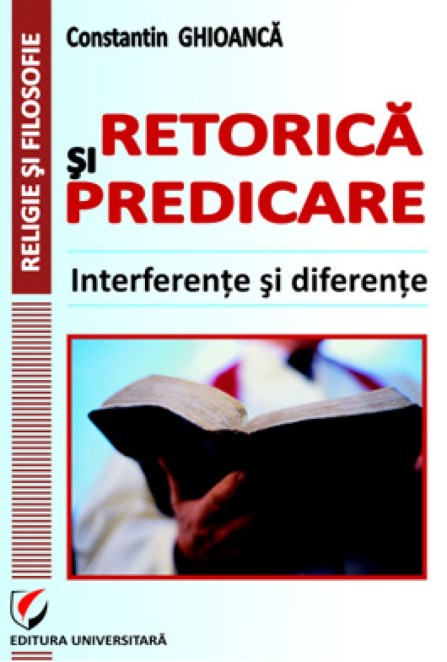
Pentru cuprinsul cărții dați click pe copertă.
http://bisericaadonai.ro/diverse/
Constantin GHIOANCĂ, slujește ca pastor în Biserica Creștină Baptistă „Adonai” din București.
În anul 2012 a obținut doctoratul în teologie (specializarea, homiletică) la Facultatea de Teologie Baptista din Universitatea București, în anul 2009 a obținut diploma de masterat în teologie la aceeași instituție de învățământ și în anul 2007 a fost licențiat în teologie în cadrul Institutului Teologic Baptist din București.
Actualmente este student la un program de masterat în asistență socială la Facultatea de Sociologie și Psihologie din Universitatea de Vest, Timișoara.
Este căsătorit cu Cristina și împreună au fost binecuvântați de Dumnezeu cu doi copii: Teofil și Elias.
Autorul a mai publicat și următoarele lucrări:
Bisericile emergente vestice din perspectiva baptista romanească, Cluj-Napoca: Editura Risoprint, 2010.
Predicarea creștină în perioada postmodernă, București: Editura Universitara, 2007.
http://www.editurauniversitara.ro
Cartea costă 20 lei și poate fi comandată contactându-l pe autor la adresa costelghioanca@yahoo.com
Partajează asta:

James A. Patterson, Superficial views of evil in the era of early Church
În cadrul temei Dumnezeu și problema răului, profesorul James Patterson a vorbit despre ereziile din timpul bisericii primare (arianismul și pelagianismul).
Comunicarea profesorului Bruce Little cu tema God and gratuitous evil a fost publicată AICI
James A. Patterson, Superficial views of evil in the era of early Church
James A. Patterson, Superficial views of evil in the era of early Church (2)
James A. Patterson, Superficial views of evil in the era of early Church (3)
James A. Patterson, Superficial views of evil in the era of early Church (4)
James A. Patterson, Superficial views of evil in the era of early Church (5) întrebări și răspunsuri
Partajează asta:

David Gushee, Ethic and morality (Etică și moralitate în viața publică – sesiunea III) 4 martie 2013)
Ethic and morality reprezintă cel de-al treilea seminar susținut la București de profesorul David Gushee în cadrul conferinței Etică și moralitate în viața publică. O perspectivă creștină.
Primele două seminarii au fost publicate AICI și AICI
David Gushee, Ethic and morality
David Gushee, Ethic and morality (2)
David Gushee, Ethic and morality (3)
David Gushee, Ethic and morality (4)
Articole pe aceeași temă
Etică și moralitate în viața publică. O perspectivă creștină
Andreea Boroancă despre Conferința Etică și moralitate în viața publică, din perspectivă creștină
David Gushee, Kingdom ethics (Etică și moralitate în viața publică)– sesiunea I (4 martie 2013)
DAVID GUSHEE, KINGDOM ETHICS (ETICĂ ȘI MORALITATE ÎN VIAȚA PUBLICĂ) SESIUNEA II (4 MARTIE 2013)