Politologul Daniel Barbu a fost numit consilier prezidenţial

Foto: Agerpres
Ziarul Adevărul, precum și alte publicații centrale sau locale anunțau ieri, 7 august 2012, faptul că profesorul universitar și politologul Daniel Barbu a fost numit consilier prezidențial de către președintele interimar Crin Antonescu, urmând să preia departamentul pentru Analiză Politică.
Conform informațiilor publicate pe pagina ziarului Gândul, profesorul Daniel Barbu s-a născut pe 21 mai 1957, are experienţă în domeniul politicii, fiind publicist, eseist, jurnalist şi profesor la Facultatea de Şiinţe Politice, din cadrul Universităţii București.
Conform ziuaveche.ro, Daniel Barbu este doctor în istorie și filosofie. În trecut, acesta a deținut funcția de decan al Facultății de Științe Politice şi pe cea de director al Institutului de Cercetări Politice al Universității din București (1999-2011). Daniel Barbu a mai lucrat în Administraţia Prezidenţială, în perioada 1997-1998, când a fost consilier de stat, pe vremea preşedintelui Emil Constantinescu. În 2000, a fost decorat cu Ordinul Naţional Steaua României, pentru activitatea în domeniul învățământului superior.
Partajează asta:

William Wilberforce (1759 -1833): The Politician
 William Wilberforce was an English politician who became the voice of the abolition movement in Parliament. He was a slightly built man, about five foot three in height, and suffered from bouts of bad health.
He was born in Hull, into a rich merchant family. As a child, whilst living with his uncle in London, he was taken to hearJohn Newton preach. It made a great impression on him but he returned home and soon became part of fashionable society, attending the theatre and races, where he watched his own horse run.
He enrolled at Cambridge University and became friends with William Pitt. At the age of 21, Wilberforce was elected to Parliament. He was well suited to politics as he was an extremely eloquent speaker and very witty. In 1783, he met James Ramsay and, for the first time, discussed slavery. Around 1884-6, he underwent a gradual but ‘intense religious conversion’ whilst travelling with a friend. He considered leaving Parliament but his friend and mentor, John Newton, advised him againt this, so, instead, he decided to serve God in public life.
After his conversion to evangelical Christianity, he gave up his racehorse, gambling and attendance at clubs. Although a serious young man, he was still fun to be with and, despite some of his friends thinking his new found belief was a madness, a childhood friend remarked, „If this be madness, I hope that it will bite us all!”
His new beliefs affected his public life. Before, he had usually voted with Pitt but now he was guided by his conscience. He and his evangelical friends were nicknamed „the Saints” by upper class circles but he won widespread respect. He championed many causes but it was the fight against the Slave Trade and slavery that he worked most tirelessly for. His interest was rekindled by a letter from Sir Charles Middleton, suggesting he should represent the cause in Parliament. William Pitt also encouraged him to take up the cause.
In early 1787, Thomas Clarkson called upon Wilberforce with a copy of his Essay on Slavery. This was the first time the two men had met, and a collaboration was formed which lasted over fifty years. The skills of the two men complimented each other. Wilberforce was able to turn the vague sentiment amongst the more privileged in society, into real opposition and rise above party politics to obtain support from many in Parliament.
From 1789, Wilberforce regularly introduced bills in Parliament to ban the Slave Trade. He was fiercely opposed by those making fortunes from the trade, who used all kinds of delaying tactics. The first time a bill was introduced, Wilberforce lost the debate by 163 votes to 88 but he never gave up. A bill to cease the trade was passed by the House of Commons in 1792 – but with the amendment that the ban should be ‘gradual’, which those with an interest in the trade interpreted as ‘never’.
In his late 30’s, Wilberforce married Barbara Spooner (also an evangelical Christian). He remained devoted to her throughout his life. Finally on 25th March 1807, the Abolition of the Slave Trade Act abolished the Slave Trade in the British colonies. It was carried by 267 votes. The house rose to its feet and cheered wildly. (see Letter from Clarkson)
However, this was not a vote to abolish slavery as a whole throughout the Empire, just the trade in enslaved people. William Wilberforce continued to work for the abolition of all slavery within the British Colonies. He joined the ‘Society for Gradual Abolition’ and, when the campaign intensified again in the 1820’s and 30′, he did as much as his failing health would allow. In 1821 he requested that Thomas Fowell Buxton take over the leadership of the campaign in the Commons and resigned his parliamentary seat in 1824, after a serious illness. By May, 1830, when two thousand people met in London at Freemasons’ Hall, Wilberforce was stooped with age and wearing a metal girdle to prevent him slumping.
Despite the groundswell of public opinion, Parliament still refused to ban slavery, until parliamentary reform removed many of its supporters. Despite this, it was still not clear that Parliament would act. Wilberforce wrote a last petition. The Parliamentary debate lasted three months. On the 26th July, 1833, the Abolition of Slavery bill passed its third reading in the House of Commons. A messenger rushed to Wilberforce’s house. They told him that slavery in British colonies would finally be abolished. Just three days later, on 29th July, William Wilberforce died.
Hear extract 1 from Wilberforce 1789 speech to the house
Hear extract 2 from Wilberforce 1789 speech to the house
Hear extract 3 from Wilberforce 1789 speech to the house
Source: http://abolition.e2bn.org
Articole relaționate
William Wilberforce – Biography
Partajează asta:

William Wilberforce – Biography

William Wilberforce, only son of Robert Wilberforce (1728–1768) and Elizabeth Bird (1730–1798), was born in Kingston upon Hull on 24th August 1759. William’s father, who was a wealthy merchant, died when he was seven years old and for a time was brought up by an uncle and aunt.
William came under the influence of his aunt, who was a strong supporter ofJohn Wesley and the Methodist movement. According to his biographer,John Wolffe: „Meanwhile his aunt Hannah, an admirer of George Whitefield and friendly with the Methodists, influenced him towards evangelicalism. His grandfather and mother, however, took fright, and brought him back to live in Hull, where every effort was made to distract him from such enthusiastic religion.”
At seventeen Wilberforce was sent to St. John’s College. Following the deaths of his grandfather in 1776 and his childless uncle William in 1777, Wilberforce was an extremely wealthy man. Wilberforce was shocked by the behaviour of his fellow students at the University of Cambridge and later wrote: „I was introduced on the very first night of my arrival to as licentious a set of men as can well be conceived. They drank hard, and their conversation was even worse than their lives.” One of Wilberforce’s friends at university was William Pitt, who was later to become Britain’s youngest ever Prime Minister.
Following the deaths of his grandfather in 1776 and his childless uncle William in 1777, Wilberforce was an extremely wealthy man. After leaving university he showed no interest in the family business, and while still at Cambridge he decided to pursue a political career and at the age of twenty, he decided to become a candidate in the forthcoming parliamentary election in Kingston upon Hill in September 1780. His opponent was Charles Watson-Wentworth, a rich and powerful member of the nobility, and Wilberforce had to spend nearly £9,000 to become elected. In the House of Commons Wilberforce supported the the Tory government led by William Pitt.
The historian, Ellen Gibson Wilson, has pointed out: „Wilberforce was little over five feet tall, a frail and elfin figure who in his later years weighed well under 100 pounds. His charm was legendary, his conversation delightful, his oratory impressive. He dressed in the colourful finery of the day and adorned any salon with his amiable manner. Yet his object in life – no less than the transformation of a corrupt society through serious religion – was solemn… Wilberforce, although he rejected a party label, was deeply conservative and a loyal supporter of the government led by his friend William Pitt.”
In 1784 Wilberforce became converted to Evangelical Christianity. He joined the Clapham Set, a group of evangelical members of the Anglican Church, centered around Henry Venn, rector of Clapham Church inLondon. As a result of this conversion, Wilberforce became interested in the subject of social reform. Other members included Hannah More, Granville Sharp, Henry Thornton, Zachary Macaulay, James Stephen,Edward James Eliot, Thomas Gisbourne, John Shore and Charles Grant.
In June 1786 Thomas Clarkson published Essay on the Slavery and Commerce of the Human Species, Particularly the African. As Ellen Gibson Wilson has pointed out: „A substantial book (256 pages), it traced the history of slavery to its decline in Europe and arrival in Africa, made a powerful indictment of the slave system as it operated in the West Indian colonies and attacked the slave trade supporting it. In reading it, one is struck by its raw emotion as much as by its strong reasoning.” William Smith argued that the book was a turning-point for the slave trade abolition movement and made the case „unanswerably, and I should have thought, irresistibly”.
In 1787 Thomas Clarkson, William Dillwyn and Granville Sharp formed the Society for the Abolition of the Slave Trade. Although Sharp and Clarkson were both Anglicans, nine out of the twelve members on the committee, were Quakers. This included John Barton (1755-1789); George Harrison (1747-1827); Samuel Hoare Jr. (1751-1825); Joseph Hooper (1732-1789); John Lloyd (1750-1811); Joseph Woods (1738-1812); James Phillips (1745-1799) and Richard Phillips (1756-1836). Influential figures such as Charles Fox, John Wesley, Josiah Wedgwood, James Ramsay, and William Smith gave their support to the campaign. Clarkson was appointed secretary, Sharp as chairman and Hoare as treasurer.
Clarkson approached another sympathiser, Charles Middleton, the MP for Rochester, to represent the group in the House of Commons. He rejected the idea and instead suggested the name of William Wilberforce, who „not only displayed very superior talents of great eloquence, but was a decided and powerful advocate of the cause of truth and virtue.” Lady Middleton wrote to Wilberforce who replied: „I feel the great importance of the subject and I think myself unequal to the task allotted to me, but yet I will not positively decline it.” Wilberforce’s nephew, George Stephen, was surprised by this choice as he considered him a lazy man: „He worked out nothing for himself; he was destitute of system, and desultory in his habits; he depended on others for information, and he required an intellectual walking stick.”
Charles Fox was unsure of Wilberforce’s commitment to the anti-slavery campaign. He wrote to Thomas Walker: „There are many reasons why I am glad (Wilberforce) has undertaken it rather than I, and I think as you do, that I can be very useful in preventing him from betraying the cause, if he should be so inclined, which I own I suspect. Nothing, I think but such a disposition, or a want of judgment scarcely credible, could induce him to throw cold water upon petitions. It is from them and other demonstrations of the opinion without doors that I look for success.”
In May 1788, Charles Fox precipitated the first parliamentary debate on the issue. He denounced the „disgraceful traffic” which ought not to be regulated but destroyed. He was supported by Edmund Burke who warned MPs not to let committees of the privy council do their work for them. William Dolben described shipboard horrors of slaves chained hand and foot, stowed like „herrings in a barrel” and stricken with „putrid and fatal disorders” which infected crews as well. With the support of Wilberforce Samuel Whitbread,Charles Middleton and William Smith, Dolben put forward a bill to regulate conditions on board slave ships. The legislation was initially rejected by the House of Lords but after William Pitt threatened to resign as prime minister, the bill passed 56 to 5 and received royal assent on 11th July.
Wilberforce also became involved in other areas of social reform. In August 1789 Wilberforce stayed withHannah More at her cottage in Blagdon, and on visiting the nearby village of Cheddar and according toWilliam Roberts, the author of Memoirs of the Life and Correspondence of Mrs. Hannah More (1834): they were appalled to find „incredible multitudes of poor, plunged in an excess of vice, poverty, and ignorance beyond what one would suppose possible in a civilized and Christian country”. As a result of this experience, More rented a house at Cheddar and engaged teachers to instruct the children in reading the Bible and the catechism. The school soon had 300 pupils and over the next ten years the More sisters opened another twelve schools in the area where the main objective was „to train up the lower classes to habits of industry and virtue”.
Michael Jordan, the author of The Great Abolition Sham (2005) has pointed out that More shared Wilberforce’s reactionary political views: „More set up local schools in order to equip impoverished pupils with an elementary grasp of reading. This, however, was where her concern for their education effectively ended, because she did not offer her charges the additional skill of writing. To be able to read was to open a door to good ideas and sound morality (most of which was provided by Hannah More through a series of religious pamphlets); writing, on the other hand, was to be discouraged, since it would open the way to rising above one’s natural station.”
Wilberforce’s biographer, John Wolffe, has argued: „Following the publication of the privy council report on 25 April 1789, Wilberforce marked his own delayed formal entry into the parliamentary campaign on 12 May with a closely reasoned speech of three and a half hours, using its evidence to describe the effects of the trade on Africa and the appalling conditions of the middle passage. He argued that abolition would lead to an improvement in the conditions of slaves already in the West Indies, and sought to answer the economic arguments of his opponents. For him, however, the fundamental issue was one of morality and justice. TheSociety for the Abolition of the Slave Trade was very pleased with the speech and sent its thanks for his „unparalleled assiduity and perseverance”.
The House of Commons agreed to establish a committee to look into the slave trade. Wilberforce said he did not intend to introduce new testimony as the case against the trade was already in the public record. Ellen Gibson Wilson, a leading historian on the slave trade has argued: „Everyone thought the hearing would be brief, perhaps one sitting. Instead, the slaving interests prolonged it so skilfully that when the House adjourned on 23 June, their witnesses were still testifying.”
James Ramsay, the veteran campaigner against the slave trade, was now extremely ill. He wrote to Thomas Clarkson on 10th July 1789: „Whether the bill goes through the House or not, the discussion attending it will have a most beneficial effect. The whole of this business I think now to be in such a train as to enable me to bid farewell to the present scene with the satisfaction of not having lived in vain.” Ten days later Ramsay died from a gastric haemorrhage. The vote on the slave trade was postponed to 1790.
Wilberforce initially welcomed the French Revolution as he believed that the new government would abolish the country’s slave trade. He wrote to Abbé de la Jeard on 17th July 1789 commenting that „I sympathize warmly in what is going forward in your country.” Wilberforce intended to visit France but he was persuaded by friends that it would be dangerous for an English politician to be in the country during a revolution. Wilberforce therefore asked Clarkson to visit Paris on behalf of himself and the Society for the Abolition of the Slave Trade.
Clarkson was welcomed by the French abolitionists and later that month the government published A Declaration of the Rights of Man asserting that all men were born and remained free and equal. However, the visit was a failure as Clarkson could not persuade the French National Assembly to discuss the abolition of the slave trade. Marquis de Lafayette said „he hoped the day was near at hand, when two great nations, which had been hitherto distinguished only for their hostility would unite in so sublime a measure (abolition) and that they would follow up their union by another, still more lovely, for the preservation of eternal and universal peace.”
On his return to England Thomas Clarkson continued to gather information for the campaign against theslave-trade. Over the next four months he covered over 7,000 miles. During this period he could only find twenty men willing to testify before the House of Commons. He later recalled: „I was disgusted… to find how little men were disposed to make sacrifices for so great a cause.” There were some seamen who were willing to make the trip to London. One captain told Clarkson: „I had rather live on bread and water, and tell what I know of the slave trade, than live in the greatest affluence and withhold it.”
Wilberforce believed that the support for the French Revolution by the leading members of the Society for the Abolition of Slave Trade was creating difficulties for his attempts to bring an end to the slave trade in theHouse of Commons. He told Thomas Clarkson: „I wanted much to see you to tell you to keep clear from the subject of the French Revolution and I hope you will.” Isaac Milner, after a long talk with Clarkson, commented to Wilberforce: „I wish him better health, and better notions in politics; no government can stand on such principles as he maintains. I am very sorry for it, because I see plainly advantage is taken of such cases as his, in order to represent the friends of Abolition as levellers.”
On 18th April 1791 Wilberforce introduced a bill to abolish the slave trade. Wilberforce was supported byWilliam Pitt, William Smith, Charles Fox, Richard Brinsley Sheridan, William Grenville and Henry Brougham. The opposition was led by Lord John Russell and Colonel Banastre Tarleton, the MP for Liverpool. One observer commented that it was „a war of the pigmies against the giants of the House”. However, on 19th April, the motion was defeated by 163 to 88.
In March 1796, Wilberforce’s proposal to abolish the slave trade was defeated in the House of Commons by only four votes. At least a dozen abolitionist MPs were out of town or at the new comic opera in London. Wilberforce wrote in his diary: „Enough at the Opera to have carried it. I am permanently hurt about the Slave Trade.” Thomas Clarkson commented: „To have all our endeavours blasted by the vote of a single night is both vexatious and discouraging.” It was a terrible blow to Clarkson and he decided to take a rest from campaigning.
In 1804, Clarkson returned to his campaign against the slave trade and toured the country on horseback obtaining new evidence and maintaining support for the campaigners in Parliament. A new generation of activists such as Henry Brougham, Zachary Macaulay and James Stephen, helped to galvanize older members of the Society for the Abolition of the Slave Trade.
William Wilberforce introduced an abolition bill on 30th May 1804. It passed all stages in the House of Commons and on 28th June it moved to the House of Lords. The Whig leader in the Lords, Lord Grenville, said as so many „friends of abolition had already gone home” the bill would be defeated and advised Wilberforce to leave the vote to the following year. Wilberforce agreed and later commented „that in the House of Lords a bill from the House of Commons is in a destitute and orphan state, unless it has some peer to adopt and take the conduct of it”.
In 1805 the bill was once again presented to the House of Commons. This time the pro-slave trade MPs were better organised and it was defeated by seven votes. Wilberforce blamed „Great canvassing of our enemies and several of our friends absent through forgetfulness, or accident, or engagements preferred from lukewarmness.” Clarkson now toured the country reactivating local committees against the slave trade in an attempt to drum up the support needed to get the legislation through parliament.
In February, 1806 Lord Grenville was invited by the king to form a new Whig administration. Grenville, was a strong opponent of the slave trade. Grenville was determined to bring an end to British involvement in the trade. Thomas Clarkson sent a circular to all supporters of the Society for the Abolition of the Slave Trade claiming that „we have rather more friends in the Cabinet than formerly” and suggested „spontaneous” lobbying of MPs.
Grenville’s Foreign Secretary, Charles Fox, led the campaign in the House of Commons to ban the slave trade in captured colonies. Clarkson commented that Fox was „determined upon the abolition of it (the slave trade) as the highest glory of his administration, and as the greatest earthly blessing which it was the power of the Government to bestow.” This time there was little opposition and it was passed by an overwhelming 114 to 15.
In the House of Lords Lord Greenville made a passionate speech where he argued that the trade was „contrary to the principles of justice, humanity and sound policy” and criticised fellow members for „not having abolished the trade long ago”. When the vote was taken the bill was passed in the House of Lords by 41 votes to 20.
In January 1807 Lord Grenville introduced a bill that would stop the trade to British colonies on grounds of „justice, humanity and sound policy”. Ellen Gibson Wilson has pointed out: „Lord Grenville masterminded the victory which had eluded the abolitionist for so long… He opposed a delaying inquiry but several last-ditch petitions came from West Indian, London and Liverpool shipping and planting spokesmen…. He was determined to succeed and his canvassing of support had been meticulous.” Grenville addressed the Lords for three hours on 4th February and when the vote was taken it was passed by 100 to 34.
Wilberforce commented: „How popular Abolition is, just now! God can turn the hearts of men”. During the debate in the House of Commons the solicitor-general, Samuel Romilly, paid a fulsome tribute to Wilberforce’s unremitting advocacy in Parliament. The trade was abolished by a resounding 283 to 16. According to Clarkson, it was the largest majority recorded on any issue where the House divided. Romilly felt it to be „the most glorious event, and the happiest for mankind, that has ever taken place since human affairs have been recorded.”
Under the terms of the Abolition of the Slave Trade Act (1807) British captains who were caught continuing the trade were fined £100 for every slave found on board. However, this law did not stop the British slave trade. If slave-ships were in danger of being captured by the British navy, captains often reduced the fines they had to pay by ordering the slaves to be thrown into the sea.
In 1807 Thomas Clarkson published his book History of the Abolition of the African Slave Trade. He dedicated it to the nine of the twelve members of Lord Grenville’s Cabinet who supported the Abolition of the Slave Trade Act and to the memories of William Pitt and Charles Fox. Clarkson played a generous tribute to the work of Wilberforce: „For what, for example, could I myself have done if I had not derived so much assistance from the committee? What could Mr Wilberforce have done in parliament, if I… had not collected that great body of evidence, to which there was such a constant appeal? And what could the committee have done without the parliamentary aid of Mr Wilberforce?”
Some people involved in the anti-slave trade campaign such as Thomas Fowell Buxton, argued that the only way to end the suffering of the slaves was to make slavery illegal. Wilberforce disagreed, he believed that at this time slaves were not ready to be granted their freedom. He pointed out in a pamphlet that he wrote in 1807 that: „It would be wrong to emancipate (the slaves). To grant freedom to them immediately, would be to insure not only their masters’ ruin, but their own. They must (first) be trained and educated for freedom.”
In July, 1807, members of the Society for the Abolition of Slave Trade established the African Institution, an organization that was committed to watch over the execution of the law, seek a ban on the slave trade by foreign powers and to promote the „civilization and happiness” of Africa. The Duke of Gloucester became the first president and members of the committee included Wilberforce, Thomas Clarkson, Henry Brougham,James Stephen, Granville Sharp and Zachary Macaulay.
Wayne Ackerson, the author of The African Institution and the Antislavery Movement in Great Britain (2005) has argued: „The African Institution was a pivotal abolitionist and antislavery group in Britain during the early nineteenth century, and its members included royalty, prominent lawyers, Members of Parliament, and noted reformers such as William Wilberforce, Thomas Clarkson, and Zachary Macaulay. Focusing on the spread of Western civilization to Africa, the abolition of the foreign slave trade, and improving the lives of slaves in British colonies, the group’s influence extended far into Britain’s diplomatic relations in addition to the government’s domestic affairs. The African Institution carried the torch for antislavery reform for twenty years and paved the way for later humanitarian efforts in Great Britain.”
Wilberforce made it clear that he considered the African Institution should do what it could to convert Africans to Christianity. In 1811 he wrote: „In truth there is a peculiar call on our sensibility in the present instance, for in proportion as the lot of slaves is hard in the world, we ought to rejoice in every opportunity of bringing them under their present sufferings, and secure for them a rich compensation of reversionary happiness.”
In 1808 the Clapham Set decided to transfer the Sierra Leone Company to the crown, the British government accepted Wilberforce’s suggestion that Thomas Perronet Thompson would be a suitable governor. He introduced an extensive range of reforms and made serious allegations against the colony’s former administrators. Stephen Tomkins, the author of William Wilberforce (2007) has argued: „He (Perronet Thompson) single-handedly abolished apprenticeship and freed the slaves. He filed scandalised reports to the colonial office. Wilberforce told him he was being rash and hasty, and he and his colleagues voted unanimously for his dismissal. Wilberforce advised him to go quietly for the sake of his career.”
In the General Election following the passing of the Abolition of the Slave Trade Act Wilberforce was challenged by a political opponent. He won but the hard contest had left him „thin and old beyond his years”. In 1811 he decided to give up the county seat for reasons of health. Lord Calthorpe offered him a pocket borough at Bramber and he was returned from there in 1812 without having to leave his holiday home.
Francis Burdett was a supporter of Wilberforce’s campaign against the slave trade. In 1816 he attacked Wilberforce when he refused to complain about the suspension of Habeas Corpus, during the campaign forparliamentary reform. Burdett commented: „How happened it that the honourable and religious member was not shocked at Englishmen being taken up under this act and treated like African slaves?” Wilberforce replied that Burdett was opposing the government in a deliberate scheme to destroy the liberty and happiness of the people.”
In 1823 Thomas Clarkson, Thomas Fowell Buxton, William Allen, James Cropper and Zachary Macaulayformed the Society for the Mitigation and Gradual Abolition of Slavery. Buxton eventually persuaded Wilberforce to join his campaign but as he had retired from the House of Commons in 1825, he did not play an important part in persuading Parliament to bring an end to slavery.
At the conference in May 1830, the Society for the Mitigation and Gradual Abolition of Slavery agreed to drop the words „gradual abolition” from its title. It also agreed to support the plan put forward by Sarah Wedgwoodfor a new campaign to bring about immediate abolition. Wilberforce, who had always been reluctant to campaign against slavery, agreed to promote the organisation. Thomas Clarkson praised Wilberforce for taking this brave move. He replied: „I cannot but look back to those happy days when we began our labours together; or rather when we worked together – for he began before me – and we made the first step towards that great object, the completion of which is the purpose of our assembling this day.”
William Wilberforce died on 29th July, 1833. One month later, Parliament passed the Slavery Abolition Actthat gave all slaves in the British Empire their freedom. When Thomas Clarkson heard the news he locked the door of his study and his wife heard him „in an agony of grief weeping and uttering loud lamentations.”
Source: http://www.spartacus.schoolnet.co.uk
Partajează asta:

România lui Neagu Djuvara
România lui Neagu Djuvara (part1/4)
*
România lui Neagu Djuvara (part2/4)
*
România lui Neagu Djuvara (part3/4)
*
România lui Neagu Djuvara (part4/4)
*
Partajează asta:



Care sunt diferenţele dintre referendumul din 2007 şi cel din 2012?
Articol preluat de pe http://legestart.ro
Referendumul din 29 iulie pentru demiterea preşedintelui Traian Băsescu necesită pentru validare prezenţa la urne a 9.154.307 de alegători, în timp ce, la scrutinul similar din 2007, prezenţa a fost de 8.135.272 de persoane, însă de data aceasta programul de vot a fost prelungit cu patru ore, informează Mediafax.
De această dată, vor fi peste 1000 de secţii de votare în plus faţă de 2007, cu un cost suplimentar pentru organizare de 35 de milioane de lei.
Peste 1068 de secţii de votare în plus şi program prelungit de 4 ore
Numărul de alegătorilor înscrişi în listele electorale la referendumul din 2007 s-a ridicat la 18.301.309 de persoane, intervalul orar pentru votare fiind de la 08.00 la 20.00, spre deosebire de referendumul din 29 iulie, când urnele se vor deschide la ora 07.00 şi se vor închide la ora 23.00.
În 2007, numărul secţiilor de votare s-a ridicat la 17.480, dintre care 1.220 de secţii în Bucureşti, iar 186 de secţii de votare în diaspora.
La referendumul de duminică sunt anunţate 18.548 de secţii de votare, dintre care 1235 în Capitală şi 306 în străinătate.
Acelaşi tip de buletin de vot, în format A5, a fost stabilit atât la referendumul din 2007, cât şi la cel din 2012. De asemenea, în cazul proceselor verbale care centralizează rezultatul votului, acestea sunt similare cu cele din momentul referendumului de demitere a preşedintelui din 2007.
Fără declaraţii pe propria răspundere la vot
Atât la referendumul din 29 iulie, cât şi la scrutinul din 2007, este posibil votul la orice secţie de votare de pe teritoriul ţării, fie pe pe lista electorală permanentă, în cazul în care alegătorul se află în localitatea de domiciliu, fie pe lista suplimentară. Totuşi, în 2007 Guvernul a introdus obligativitatea completării unei declaraţii pe propria răspundere, în care alegătorul să menţioneze că nu a mai votat în altă secţie de votare, în timp ce la referendumul din 2012 acest lucru nu a fost solicitat de către Guvern.
 Cu toate acestea, după scrutinul din 19 mai 2007,Autoritatea Electorală Permanentă a semnalat într-un raport de activitate faptul că procedeul de depistare a votului multiplu a fost aproape imposibil. AEP a depistat la acel moment doar 3 persoane care au votat de mai multe ori.
Principalele motive au fost legate de faptul că “în declaraţiile alegătorilor, în loc de Codul Numeric Personal au fost completate seria şi numărul actului de identitate, nume şi prenume, cifre care nu reprezentau codul numeric personal (12,14,15 cifre în loc de 13 cifre câte sunt cuprinse în structura codului numeric personal) sau nu s-a completat nimic”.
De asemenea, AEP semnalase că în multe cazuri nu fuseseră completate nici declaraţiile pe propria răspundere, iar “unele liste electorale suplimentare sunt scrise indescifrabil”, ori “s-au trecut informaţiile de pe acelaşi act de identitate (serie şi număr) la mai multe persoane înscrise într-o listă electorală suplimentară”.
În ceea ce priveşte durata campaniei electorale pentru cele două referendumuri, acesta este similară. Practic, în 2007 durata alocată bătăliei electorale a fost de trei săptămâni şi trei zile, respectiv din 24 aprilie, până în 18 mai. Pentru referendumul din 29 iulie campania electorală a este de exact trei săptămâni, începând pe 7 iulie, şi finalizându-se pe 28 iulie.
Organizarea referendumului, cu peste 35 de milioane de lei mai scumpă
Bugetul alocat de Guvern pentru organizarea referendumului din 29 iulie se ridică la 95,6 de milioane de lei, spre deosebire de costurile pentru organizarea scrutinului 2007, care au ajuns la 60 de milioane lei.
Referendumul din 2007, cu prezenţă sub 50% la urne
În cazul referendumului pentru demiterea preşedintelui din 2007 s-au prezentat la urne 8.135.272 de oameni, fiind înregistrată o prezenţă de 44,45%. Au fost înregistrate 2.013.099 (24,75%) de voturi pentru demiterea lui Traian Băsescu şi 6.059.315 (74,48%) împotriva demiterii sale.
În diasporă au fost exprimate 75.027 de voturi, 70.044 fiind împotriva demiterii, 4.741 pentru demitere şi 242 de voturi nule. În total, la referendumul din 2007, 62.858 de voturi au fost declarate nule.
Dacă scrutinul din urmă cu cinci ani a fost validat de Curtea Constituţională, chiar şi cu o prezenţă la vot de sub 50%, de această dată, în urma modificării Legii referendumului, trebuie să se prezinte la urne peste 50% dintre cetăţenii cu drept de vot înregistraţi în listele electorale.
Mai precis, din totalul de 18.308.612 de alegători înscrişi în listele electorale, potrivit Ministerului de Interne, vor trebui să se prezinte la urne 9.154.307 de persoane pentru validarea scrutinului.
O altă deosebire este aceea că prezenţa la referendumul de duminică ar putea fi influenţată de apelul PDL şi al preşedintelui suspendat Traian Băsescu la boicotarea scrutinului.
În cazul în care la urne se prezintă mai puţin de jumătate din alegători, scrutinul este declarat invalid de către Curtea Constituţională, iar, potrivit Hotărârii Parlamentului din 6 iulie privind convocarea referendumului, Legislativul “va lua act de hotărârea acesteia şi va decide asupra procedurii de urmat”.
Citeşte aici Legea prin care a fost aprobată OUG pentru modificarea Legii referendumului!
Surse: Mediafax, Monitorul Oficial
Partajează asta:

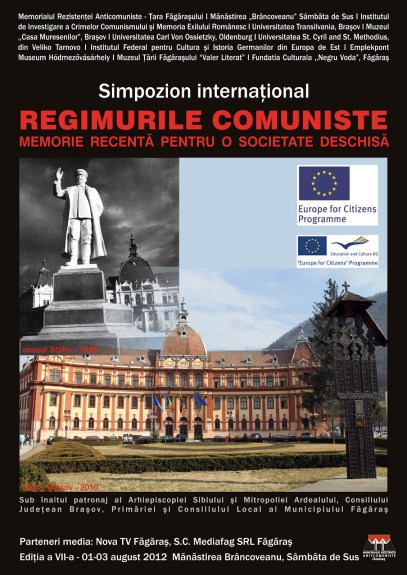
Programul ediţiei a VII-a a Simpozionului Internaţional de la Făgăraş – Sâmbăta de Sus: „Regimurile comuniste – memorie recentă pentru o societate deschisă”
Partajează asta:

Raportul președintelui Consiliului de Miniștri, Dr. Petru Groza, despre Creştinii după Evanghelie
Ca să vedem cum ne-a afectat pe noi, trebuie amintit că în 1933 creştinii după Evanghelie deveneau asociaţie

Petru Groza – Romanian politician, best know as Prime Minister of the first Communist Party-dominated governments under Soviet occupation during the early stages of the Communist regime in Romania. (Photo credit: Wikipedia)
religioasă (Decizia Nr.114.119/24 august 1933, şi din 1939 cu două ramuri), pentru ca în timpul războiului regimul Ion Antonescu să îl interzică (Legile Nr.927/29 Octombrie 1942, pentru modificarea şi abrogarea unor dispoziţiuni din Legea pentru regimul general al cultelor şi Nr.431/9 iulie 1943, pentru desfiinţarea asociaţiilor religioase). Ca urmare a acestei decizii Adunările au fost închise. Paradoxal noul regim, deşi de sorginte oarecum comunistă, le-a recunoscut asociaţie religioasă în 1944 (Legea Nr.548/31 octombrie 1944) pentru ca în 1945 să le ridice la statutul de cult religios (Legea Nr.883/9 noiembrie 1946).
În demersurile efectuate pentru ca Adunările Creştine după Evanghelie să primească statutul de cult religios, Petru Groza, deţinând poziţia de preşedinte al Cabinetului de Miniştri şi Ministru interimar al cultelor, înaintează M.S. Regele Mihai I un raport în care reliefează apariţia şi evoluţia creştinilor după Evanghelie în România. Ca urmare a acestui raport, prin intermediul a șase articole Legea Nr. 883, publicată în Monitorul Oficial Nr.261 din 9 noiembrie 1946 semnată de Regele Mihai I şi contrasemnată de ministrul cultelor, la vremea aceea, Petru Groza recunoştea şi reglementa Cultul Creştin după Evanghelie. La momentul respectiv a fost aprobat și statutul de organizare și funcționare al cultului, care avea 15 articole şi era semnat de delegaţia compusă din Alexandru Panaitescu şi Gheorghe Oprea-Teodorescu.
Raportul domnului Preşedinte al Consiliului de Miniştrii şi ministrul cultelor ad-interim către M.S. Regele,
Confesiunea Creştină după Evanghelie a luat fiinţă în ţara noastră, în anul 1899, prin doi misionari din Elveţia care au reuşit să cristalizeze începuturile de mai înainte ale acestor confesiuni şi să le îndrume spre doctrina şi organizarea de credinţă cunoscute în Elveţia, în Franţa, în Anglia, Germania etc., sub denumirea „Grupul Evanghelic al Adunărilor Creştine Libere”.
În 1939, Confesiunea Creştină după Evanghelie a absorbit prin fuzionare şi mişcarea Creştinilor după Scriptură, iniţiată de fostul preot ortodox Teodor Popescu.
Sub regimul legii pentru regimul general al cultelor din 1928, Confesiunea Creştină după Evanghelie a funcţionat tot timpul sub formă de asociaţie religioasă, bucurându-se de anumite drepturi şi libertăţi de manifestare religioasă ca şi Baptiştii şi Adventiştii de ziua a şaptea, pe baza succesivelor deciziuni ministeriale care reglementau funcţionarea asociaţiunilor religioase.
Întru cât credincioşii creştini după Evanghelie sunt destul de numeroşi şi sunt răspândiţi şi organizaţi în cea mai mare parte a ţării şi întru cât Ministrul Cultelor, la cererea acestora a cercetat mărturisirea de credinţă şi normele de organizare arătate în Statutul prezentat de Delegaţia Adunărilor Asociaţiei „Creştini după Evanghelie” şi a găsit că acest statut nu conţine nimic ce ar putea aduce atingere ordinei publice, bunelor moravuri şi legilor de organizare ale statului, îndeplinire fiind astfel condiţiunile cerute de art.22 din legea pentru regimul general al cultelor, în cadrul actualelor norme de guvernare democratică şi în baza hotărârilor Consiliului de Miniştrii, luate în şedinţa extraordinară dela 8 ianuarie 1946, care asigură libertatea în materie de credinţă religioasă, am întocmit alăturatul proiect de decret-lege prin care se recunoaşte Asociaţia Creştinilor după Evanghelie cu sediul în Ploieşti, str. Cheia Nr.18, calitatea de cult, reglementându-se, din punct de vedere legal, funcţionarea lui, aşa cum s-a făcut şi cu Asociaţiile Religioase ale Creştinilor Baptişti şi Adventişti de ziua a şaptea, devenite cult prin decretul-lege Nr.553 din 1944 şi prin legea Nr.407 din 1946.
Pentru aceste consideraţiuni şi pe baza autorizării date prin jurnalul Consiliului de Miniştrii Nr.1592 din 1946, în mod respectuos, am onoarea a supune aprobării şi Înaltei semnături a Maiestăţii Voastre, alăturatul proiect de decret-lege pentru reglementarea Cultului Creştin după Evanghelie din România,
Al Maiestăţii Voastre,
Preşedintele Consiliului de Miniştrii şi ministru cultelor ad-interim,
Dr. Petru Groza
Partajează asta:

Poziția BOR față de situația evanghelicilor în anul 1943
O monstră despre cum vedea Biserica Ortodoxă Română situația evanghelicilor în perioada celui de-al doilea război mondial.
În cazul de față am preluat un articol din ziarul Foia Diacezană din anul 1943
Deși desființarea sectelor s’a făcut printr-un decret-lege la 29 Dec. 1942, au rămas destule uşi prin care aceşti nenorociţi îşi mai scoteau capul’. Monitorul Oficial Nr. 157 din 9 Iulie a. c. publică un decret-lege prin care sunt desfiinţate şi toate instituțiunile, şcolare, filantropice etc. Interesant e că decretul-lege, art. 3, are următorul conţinut:
„Asociaţiunile religioase sectante, care au existat în România la 29 Dec. 1942, şi acele care au fost autorizate ulterior (sublinierea e a noastră N. R.) sau sunt simulate sub forme personale juridice, fără scop lucrativ sau altele, sunt şi rămân desfiinţate de drept.”
O bună parte din decretul-lege se ocupă de procedura ce urmează a se aplica în legătură cu reluarea bunurilor de la sectanți de către Stat sau alte instituţiuni. Sperăm că de acum va înceta şi mărinimia unora din cadrele învățământului față de fiii sectarilor!
***, „Sectele desființate” în Foaia Diacezană, Organ oficial al eparhiei ortodoxe române a Cransebeșului, Anul LVI, Caransebeș 25 iulie 1943, Nr. 30, p. 7.
Partajează asta:
Încrederea românilor în Biserică, posibile explicaţii
Mircea Kivu (sociloog) pentru Adevărul
Cam de când se fac sondaje de opinie în România, Biserica este instituţia care se bucură de cea mai mare încredere. Românii par a fi, cel puţin după standardele occidentale, un popor extrem de religios. O atestă şi faptul că proporţiile înregistrate la ultimul recensământ publicat în dreptul categoriilor „fără religie” şi „atei” însumează, în România, cea mai mică valoare din Uniunea Europeană (0,1%). Cu alte cuvinte, nu greşim mult dacă afirmăm că „toţi românii sunt religioşi”. În Parlamentul României se jură cu mâna pe Biblie, icoanele sunt omniprezente în şcolile de stat.
Dacă însă priveşti bulucelile şi înghiontelile deloc creştineşti de la fiecare expunere de moaşte sau distribuire de apă sfinţită („daţi numai câte una, să se ajungă la toată lumea!”), apar unele semne de întrebare. Întrebaţi de reporterii insistenţi, oamenii spun că se roagă pentru sănătatea lor şi a copiilor, pentru o viaţă mai bună, să-şi păstreze/recapete slujba/iubitul şi alte asemenea împliniri, mai mult sau mai puţin nobile.
În general, participantul la asemenea manifestări aşteaptă ca, în schimbul unei anevoioase prestaţii, să primească un ce beneficiu. Uite, Doamne, eu postesc, stau la rând, tremur de frig, îmi julesc genunchii; Tu, în schimb, alină durerile provocate fiului meu de boala căreia medicii nu-i dau de leac, convinge patronul să‑mi mărească leafa, găseşte un bărbat bun pentru fiica mea. E un fel de troc cu divinitatea, asemănător în esenţă mai degrabă cu jertfele aduse de vânătorii amazonieni înainte de a pleca la vânătoare. Întreaga poveste e redusă la o simplă relaţie funcţională (acţionez – se produce efectul dorit). Aş spune deci că aserţiunea corectă nu e că românii sunt religioşi, ci mai degrabă mistici.
O altă ipoteză care ar putea explica plasarea bisericii în topul instituţiilor care se bucură de încredere, urmată de obicei de armată, ar putea porni de la tipul de organizaţie reprezentată. Biserica, ca şi armata, sunt organizaţii cu ierarhii stricte, impuse de la vârf către bază, în care ordinul este executat fără şovăire („nu cerceta…”). Dacă coroborăm aceste elemente cu tipul de conducător preferat (şi votat) de regulă în România, despotul luminat, avansăm către ideea că, din păcate, conaţionalii noştri manifestă, chiar dacă nu o declară direct, o periculoasă apetenţă către totalitarism.







 Istorie Evanghelica