Bisericile Creștine Baptiste din Romania 1948-1965, recenzie în Analele Universității din Craiova 1/2013

În cadrul Analelor Universității din Craiova, seria Istorie, Bogdan Emanuel Răduț, istoric și autor al unor cărți privind istoria evanghelicilor în comunism, a publicat o recenzie a cărții mele, Bisericile Creștine Baptiste din România între persecuție, acomodare și rezistență, 1948-1965, recenzie pe care o public și eu mai jos preluată de pe blogul autorului http://emyradut.blogspot.ro/2013/06/marius-silvesan-baptiste-christian.html.
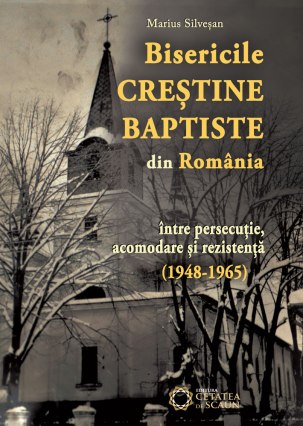 Marius Silveşan, The Baptiste Christian Churches from Romania among persecution, accommodation and resistance (1948-1965), Cetatea de Scaun Publishing Press, Târgovişte, 2012, 410 pages.
Bogdan Emanuel Răduţ
Partajează asta:

Dezbaterile CSIC – Biserica Ortodoxă Română sub comunism
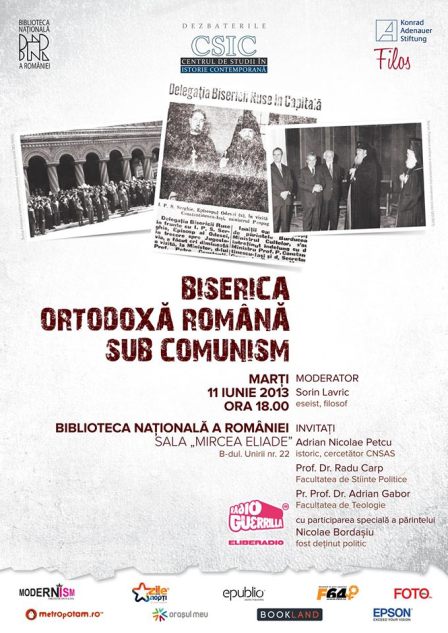
Centrul de Studii în Istorie Contemporană
Care erau opţiunile ierarhiei Bisericii Ortodoxe Române în gestionarea relaţiei cu statul după 1945?
Cum a colaborat şi cum a rezistat Biserica sub regimul comunist ateu?
La aceste întrebări vor căută să răspundă invitaţii celei de-a doua întâlniri din seria Dezbaterilor CSIC: Adrian Nicolae Petcu (cercetător CNSAS), prof. univ. dr. Radu Carp (Facultatea de Ştiinţe Politice) şi pr. prof. univ. dr. Adrian Gabor (Facultatea de Teologie). Cu participarea extraordinară a pr. prof. Nicolae Bordaşiu, fost deţinut politic. Moderatorul dezbaterii va fi, şi de această dată, filosoful Sorin Lavric.
Scopul principal al Dezbaterilor CSIC îl reprezintă readucerea în discuţia publică a unor subiecte controversate, care modelează societatea contemporană, precum şi prezentarea unor puncte de vedere diferite asupra lor, într-o atmosferă echilibrată, argumentată şi de bun simţ. Întâlnirea va porni de la o prezentare generală a temei supuse dezbaterii, urmând a continua pe câteva direcţii sugerate de către organizatori şi moderator.
Evenimentul va avea loc marţi, 11 iunie, începând cu ora 18.00, la Biblioteca Naţională a României (Bd Unirii nr. 22), sala Mircea Eliade.
Proiectul se desfăşoară cu sprijinul Fundaţiei Konrad Adenauer România şi al Grupului Filos. Recomandat de Radio Guerrilla.
Intrarea publicului este liberă.
Partajează asta:

Separation of Church and State: Prager University
„The Separation of Church and State.” Probably no phrase has had more impact on American history in the last fifty years than this one. Where did it come from? Who coined it? And, what does it mean? Distinguished law professor, John Eastman, has some surprising answers.
Într-adevăr, subiectul relației Biserică-Stat este unul important care merită atenția nu numai a specialiștilor, ci a creștinilor practicanți în general. Prin această afirmație am în vedere direcția în care a fost dusă ideea separării bisericii de stat în SUA și consecințele ei. Aceste aspecte le veți descoperii, conștientiza urmărind prelegerea profesorului John Eastman.
 Relația biserică-stat în România (comunistă) este un subiect pe care l-am abordat și eu în cartea Bisericile Creștine Baptiste din România între persecuție, acomodare și rezistență 1948-1965, însă din altă perspectivă, una adaptată mediului politic românesc al acelor vremuri. Totuși, după cum știți această idee a separării bisericii de stat a stârnit vii dezbateri în mediul evanghelic românesc încă din anii comunismului. Personal militez pentru o separare a bisericii de stat (deși la modul concret aceasta există într-o mai mică măsură decât afirmăm unii dintre noi) înțelegând prin aceasta dreptul de a-mi practica religia și de a alege în ce măsură mă voi implica sau nu la nivel instituțional într-o relație cu statul.
Nu îmi propun aici să arăt mijloacele prin care statul controlează legal activitatea bisericii ci am dorit doar să evidențiez că biserica are un rol în societate, acela de a fi sare și lumină.
Partajează asta:

The Most Important Verse in the Bible: Prager University
În cadrul acestei prelegeri, Dennis Prager vine cu o viziune nouă asupra celui mai important verset din Biblie. Acesta afirmă dar și argumentează că cel mai important verset din Biblie este Geneza 1:1 datorită faptului că Dumnezeu a fost de la început, El a creat totul, El se află deasupra tuturor aspectelor (ființe, lucruri), inclusiv a naturii. El este Domnul creației căruia merită să I ne închinăm și să-I dăm slavă și cinste.
Pentru a înțelege argumentația profesorului Dennsi Prager urmăriți prelegerea de 5 minute.
Partajează asta:



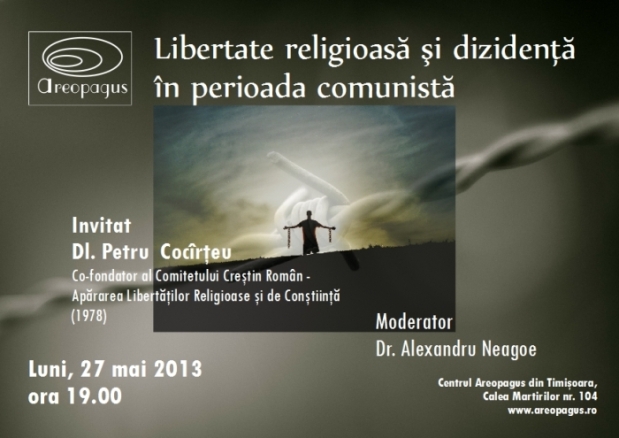
Petru Cocirteu – Libertate religioasă şi dizidenţă în perioada comunistă
Dragi prieteni,
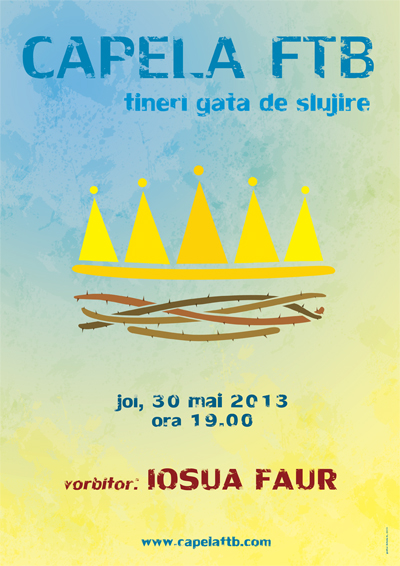
Vă invităm luni, 27 mai, de la ora 19.00, la o masă rotundă având ca temă Libertate religioasă şi dizidenţă în perioada comunistă. Invitatul special al serii este domnul Petru Cocîrţeu, cunoscut pentru eforturile depuse, în perioada comunistă, pentru apărarea libertăţilor religioase ale credincioşilor din România.
În aprilie 1978, în Bucureşti, împreună cu alţi lideri religioşi, studenţi, intelectuali şi muncitori, pune bazele organizaţiei interconfesionale Comitetul Creştin Român – Apărarea Libertăţilor Religioase şi de Conştiinţă, afiliată la Solidaritatea Creştină Internaţională cu sediul la Zürich, având totodată reprezentanţă în Naţiunile Unite. La 15 octombrie 1978 este arestat şi condamnat la 1 an de închisoare pentru activitate religioasă şi de conştiinţă, iar în ianuarie 1979 devine membru al organizaţiei Solidaritatea Creştină Internaţională. La 8 februarie 1981,împreună cu familia părăseşte ţara, obligat de regimul communist, fiind considerat persona non grata, iar în 1981 devine membru al organizaţiei Amnesty International de la Geneva. Printre poziţiile ocupate de domnul Petru Cocîrţeu a fost şi cea de Chairman al Academiei Româno-Americane de Ştiinţă şi Artă.
Vă aşteptăm cu drag la acest eveniment.
Cu preţuire,
Paulian Petric
Coordonator – Departamentul educaţional
Centrul Areopagus Timişoara
www.areopagus.ro
Partajează asta:

Mărturia pastorului Paul Negruț. Când vocea Duhului Sfânt sfidează logica !
Mărturia pastorului Paul Negruț. În cadrul acestei mărturii acesta vorbește despre perioada adolescenței, răzvrătirea față de Dumnezeu, dar și intervenția supranaturală a divinității în viața sa, intervenție fără de care el nu ar fi reușit la psihologie medicală.
Partajează asta:

Iași: Conferința Rolul religiei în prăbușirea comunismului
Vineri, 24 mai 2013, Rev. Canon dr. Michael Bourdeaux va susţine la Iaşi conferinţa
Rolul religiei în prăbușirea comunismului

Centrul de Studii asupra Comunismului şi Postcomunismului (CSCP) în parteneriat cu Institutul de Investigare a Crimelor Comunismului şi Memoria Exilului Românesc (IICCMER), Fundaţia Konrad Adenauer și Facultatea de Istorie a Universității „Alexandru Ioan Cuza” din Iași vă invită la conferinţa Rolul religiei în prăbușirea comunismului, susţinută de Rev. Canon dr. Michael Bourdeaux*.
Evenimentul va avea loc vineri, 24 mai 2013, orele 17.00, la Universitatea „Alexandru Ioan Cuza” din Iaşi, în Corpul H (Casa Catargi), Sala H1, Bd. Carol I, nr. 11, Iaşi.
* Michael Bourdeaux este Canon Emeritus al Bisericii Angliei, specialist în istoria Rusiei și în chestiuni religioase. După ce a studiat în URSS, în anii ’50, și-a dedicat viața cercetării situației creștinilor din țările comuniste. În acest scop a și fondat, în 1969, Centre for the Study of Religion and Communism, devenit apoi cunoscut sub numele de Keston College sau Keston Institute. Stabilindu-și sediul la Oxford, Marea Britanie, așadar într-un binecunoscut loc al excelenței academice, institutul s-a remarcat prin cercetările făcute de o echipă care lucra profesionist, în același timp neascunzându-și empatia cu creștinii persecutați în țările comuniste, în special cu cei din URSS și din estul Europei. Cum s-a spus, cu îndreptățire, Keston Institute a devenit „vocea celor fără voce”. În timp și pentru susținerea activităților specifice, dar și pentru prezervarea surselor, a datelor istorice, a mărturiilor ș.a.m.d. s-a constituit o arhivă impresionantă, o bibliotecă bine dotată, au fost publicate cărți și a fost editată o revistă (Religion in Communist Lands, din 1973; în 1992 si-a schimbat numele inReligion, State and Society), devenite de referință pentru înțelegerea problemelor religioase în țările aflate sub dominația totalitarismului de esență marxist-leninistă. Puțini oameni au
făcut atât de mult pentru informarea opiniei publice occidentale despre viața creștinilor din țări care păreau uitate și pentru susținerea libertății relligioase în acele spații lipsite decenii la rând de libertăți, într-un timp în care nu mulți credeau că regimurile comuniste vor avea un sfârșit.
Rev. Michael Bourdeaux a publicat numeroase cărți și articole. Dintre volumele sale amintim: Opium of the people: the Christian religion in the USSR (1965), Religious Ferment in Russia: Protestant opposition to Soviet policy (Macmillan, 1968), Faith on Trial in Russia (Hodder&Stoughton, 1971), Risen Indeed: Lessons in Faith from the USSR (Darton, Longman and Todd, 1983), Gorbachev, Glasnost & the Gospel (Hodder& Stoughton, 1990), The Gospel’s Triumph over Communism (1991) etc. Pentru activitatea sa, rev. Bourdeaux a primit în 1984 prestigiosul Premiu Templeton.
http://www.studiulcomunismului.ro via http://danutm.wordpress.com
Partajează asta:

Hristos a înviat!







 Istorie Evanghelica