Mihail Neamțu la lansarea cărții Excludere și îmbrățișare (12.06.14)
Mihail Neamțu vorbește despre problemele pe care le implică iertarea și provocarea de a nu răspunde iertării. De asemenea, acesta aduce în discuție probleme din perioada comunistă și postcomunistă.
Mihail Neamțu realizează în prelegerea sa o prezentare interesantă a unei situații prin care a trecut I.D.Sârbu și relația sa cu A.E. Baconsky.
Partajează asta:

Fotografii și scurte impresii de la lansarea în limba română a cărții „Excludere și îmbrățișare ” scrisă de Prof. Miroslav Volf
Joi, 12 iunie 2014 a avut loc la Biblioteca Națională a României lansarea cărții Excludere și îmbrățișare a Prof. Miroslav Volf. La acest eveniment au participat pe lângă autorul cărții, teologi și oameni de cultură. Dintre aceștia amintesc: Mihail Neamțu om de cultură, dar și om politic care a lansat o provocare Prof. Volf, dar și sălii: Ce se întâmplă atunci când refuzul îmbrățișării, adică excluderea, salvează viața unui om? Întrebarea are ca exemplu un caz real din România comunistă.
Alături de Mihail Neamțu la eveniment au mai participat profesorul universitar Corneliu Constantineanu, rectorul Institutului Teologic Penticostal din București care a adus în atenția audienței problematica cărții, a mulțumit Bibliotecii Naționale pentru deschiderea avută față de acest eveniment, fiind și moderatorul evenimentului.
Profesorul și teologul Silviu Tatu a fost traducătorul acestei întâlniri.
Am mai remarcat prezența lui Cristian Bădiliță, a profesorului Marcel Măcelaru, a traducătoarei, Mihaela Gingirov, a directorului Editurii Casa Cărții, Vasile Garbian, a editorilor Dragoș Ștefănică din partea Editurii Pleroma și a lui Teofil Stanciu din partea Editurii Casa Cărții.
La eveniment a fost prezent și Alin Cristea, jurnalist independent și editor al blogului România Evanghelică.
Cartea tratează problema iertării, a alterității, a culturii.
Partajează asta:

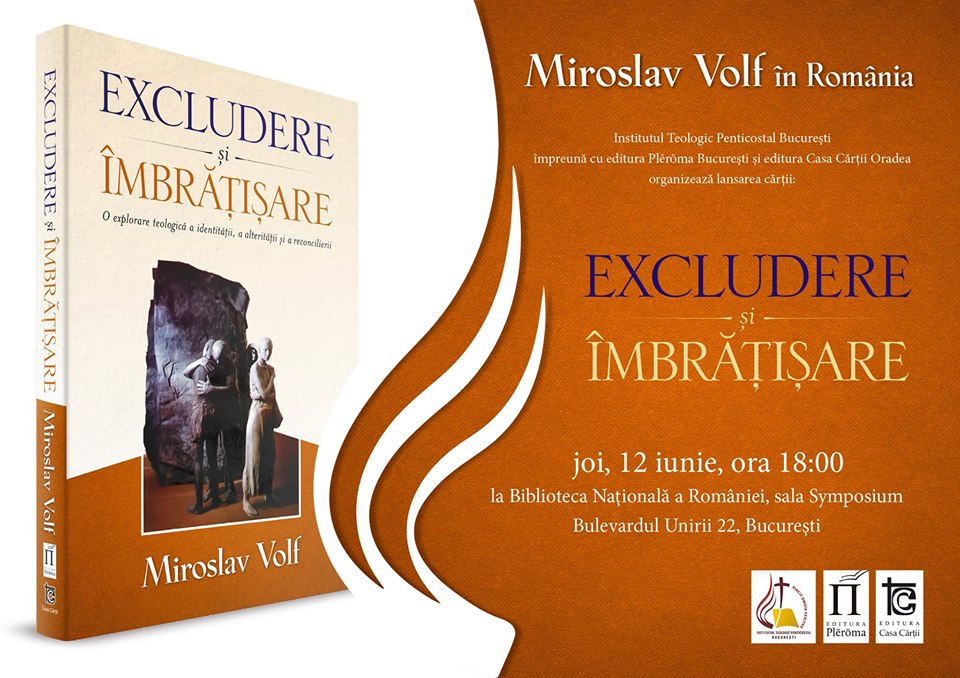
Lansare de carte: Miroslav Volf, Excludere și îmbrățișare (12 iunie 2014)
Joi, 12 iunie 2014, de la ora 18 la Biblioteca Națională a României se va lansa cartea Excludere și îmbrățișare scrisă de teologul Miroslav Volf.
Chiar dacă nu suntem de acord cu tot ce scrie acest teolog sau cu ideile lui asta nu înseamnă că trebuie să-l excludem din lecturile noastre.
Partajează asta:

Jurnal teologic – Vol. 13, Nr. 1 / 2014
Vezi aici
COLDA, Teodor-Ioan. ‘Utopia libertății religioase în România postbelică. Baptiștii din România în perioada de tranziție de la Monarhie la Republică (1945-1953) II / The Utopia of Religious Freedom in Postbelic Romania. Romanian Baptists in transition from Monarchy to Republic (1945-1953) II.’ Jurnal teologic Vol 13, Nr 1 (2014): 157-189.
Baptist Theological Institute of Bucharest; Academic Visitor Attached to Ballioll College, University of Oxford
Abstract
In this paper the author tries to give a fair description and interpretation of the life of Baptist Churches in the period of transition from Monarchy to Republic in postbellic Romania, based on many unprecedented archive documents. The main focus of the paper is the problem of religious freedom in this very shifty period. Because of the persecution endured between the two world wars and during the nationalist and fascist regime of Antonescu, the self proclaimed absolute leader of Romania between 1940 and 1944, the Romanian Baptists tried to cope with the new situation established in their country at the end of the war, which seemed to be far better than before. Religious freedom was granted for all, first by His Royal Majesty King Michael and afterwards by the communists who managed to force the King into exile and transformed Romania into a republic. Though the communists were granting religious freedom through a new constitution they weren’t really committed to the idea of freedom, because of their proletarian revolutionary believes. This reluctance to offer religious freedom was encouraged by historical precedents in which the Orthodox Church managed to drive the state into a sinister partnership of persecuting those who were considered sects, dangerous for an Orthodox nation. In these circumstances, and tired from being persecuted, Baptist leaders and Baptist churches were forced into an unusual relationship with the communists. First it seemed that there couldn’t be any wrong or any danger in having a relationship with the state which is willing to grant religious freedom even for religious minorities. But in an atheistic and communist state religious freedom becomes a utopia.
Keywords: Baptist, Orthodox, Church, State, Persecution, Communism, Second World War
Celelalte articole din jurnal sunt:
SABOU, Sorin. ‘Human Nature and Moral Principles.’ Jurnal teologic Vol 13, Nr 1 (2014): 5-16.
BABAN, Octavian. ‘„Cuvântul este aproape de tine“: teologia invocării cerului și mării ca martori ai credinței și ai prezenței divine / The Word is Near You: The Theology of Invoking the Heavens and the Sea as Witness of Faith and Divine Presence.’ Jurnal teologic Vol 13, Nr 1 (2014): 17-43.
BARTOȘ, Emil. ‘Note apologetice despre învierea trupească / Apologetical Notes on Bodily Resurrection.’ Jurnal teologic Vol 13, Nr 1 (2014): 44-79.
SCHEETZ, Jordan M. ‘Cannonical Approaches, New Trajectories, and the Book of Daniel.’Jurnal teologic Vol 13, Nr 1 (2014): 81-110.
SWEIS, Khaldoun. ‘Is a Fetus a Human Person?: Thinking Deeply on a Complex and Politically Charged Question.’ Jurnal teologic Vol 13, Nr 1 (2014): 111-127.
RUSU, Timotei. ‘Amenințări laice ale conducerii bisericii / The Secular Threats upon the Church Government.’ Jurnal teologic Vol 13, Nr 1 (2014): 129-155.
GHIOANCĂ, Constantin. ‘Predicarea expozitivă și relevanța ei contemporană / Expository Preaching and its Contemporary Relevance.’ Jurnal teologic Vol 13, Nr 1 (2014): 191-205.
FRANDEȘ, Dorin. ‘Sonorul: un aspect marginalizat în lectura și predicarea Bibliei / Sound: a Marginalized Issue in the Reading and Preaching of the Bible.’ Jurnal teologicVol 13, Nr 1 (2014): 207-217.
Partajează asta:

Areopagus: Seria „Repere…” – Înțelesul epistolelor: Coloseni – Pastor Bebe Ciaușu

Miercuri, 30 aprilie, de la ora 19, Centrul Areopagus din Timișoara vă invită la cea de-a treia întâlnire din cadrul seriei „Repere în interpretarea Sfintei Scripturi”. Invitatul acestui eveniment este pastorul Bebe Ciauşu, iar tema studiată va fi „Înţelesul epistolelor: Epistola lui Pavel către Coloseni”. În cadrul acestei întâlniri va fi prezentată şi lucrarea (în două volume) semnată de invitatul întâlnirii şi intitulată Centralitatea lui Cristos.
http://areopagus.ro/educatie/#REPERE
Partajează asta:

9 Things You Should Know About the Council of Trent
Yesterday (4 December) marked the 450th anniversary of the closing of the Council of Trent (1545-1563), one of the most significant series of meetings in Christian history. Here are nine things evangelicals should know about the Council and the decrees that it issued:
 1. The Council of Trent was the most important movement of the Catholic Counter-Reformation, the Catholic Church’s first significant reply to the growing Protestants Reformation. The primary purpose of the council was tocondemn and refute the beliefs of the Protestants, such as Martin Luther and John Calvin, and also to make the set of beliefs in Catholicism even clearer.Approximately forty clergymen, mainly Catholic bishops, were in attendance during the twenty-five times over the next eighteen years that the Council convened.
2. Protestants endorse justification by faith alone (sola fide) apart from anything (including good works), a position the Catholic Church condemned as heresy. During the the sixth session, the Council issued a decree saying that, „If any one saith, that the justice received is not preserved and also increased before God through good works; but that the said works are merely the fruits and signs of Justification obtained, but not a cause of the increase thereof; let him be anathema.”
3. The Protestant Reformers rejected the Apocrypha as part of the biblical canon. (The term Apocrypha (Gr., hidden) is a collection of ancient Jewish writings and is the title given to these books, which were written between 300 and 30 B.C., in the era between the Old and New Testaments.) During the the fourth session, the Council issued a decreedamning anyone who rejected these books:
. . . if any one receive not, as sacred and canonical, the said books entire with all their parts, as they have been used to be read in the Catholic Church, and as they are contained in the old Latin vulgate edition; and knowingly and deliberately contemn the traditions aforesaid; let him be anathema.
Many doctrines unique to Catholicism, such as the teachings of purgatory, prayers for the dead, and salvation by works, are found in these books.
4. During the Protestant Reformation, the doctrine of transubstantiation was heavily criticized as an Aristotelian „pseudophilosophy.” The 13th session reaffirmed and defined transubstantiation as „that wonderful and singular conversion of the whole substance of the bread into the Body, and of the whole substance of the wine into the Blood – the species only of the bread and wine remaining – which conversion indeed the Catholic Church most aptly calls Transubstantiation.”
5. Protestants claimed that the only source and norm for the Christian faith was Holy Scripture (the canonical Bible without the Apocrypha). The doctrine of Sola Scripturawas rejected at Trent. The Council affirmed two sources of special revelation: Holy Scripture (e.g., all the books included in the Latin Vulgate version) and traditions of the church (including the „unwritten traditions”).
6. In Catholic theology, an indulgence is a remission of temporal punishment due to sin, the guilt of which has been forgiven. Under Catholic teaching, every sin must be purifiedeither here on earth or after death in a state called purgatory. The selling of indulgences was not part of official Catholic teaching, though in Martin Luther’s era, the practice had become common. (Luther was appalled by the sermon of an indulgence vendor named John Tetzel who said, „As soon as the coin in the coffer rings, the soul from purgatory springs.”) The Council called for the reform of the practice, yet damned those who „say that indulgences are useless or that the Church does not have the power to grant them.”
7. In Catholic theology, purgatory is a place or condition of temporal punishment for those who denied yet were not free from „venial” sins (a lesser sin that does not result in a complete separation from God and eternal damnation in hell). The council affirmed the doctrine of purgatory and damned anyone who claimed „that after the grace of justification has been received the guilt is so remitted and the debt of eternal punishment so blotted out for any repentant sinner, that no debt of temporal punishment remains to be paid.”
8. In the 24 session, the council issued decrees on marriage which affirmed the excellence of celibacy, condemned concubinage, and made the validity of marriage dependent upon the wedding taking place before a priest and two witnesses. In the case of a divorce, the right of the innocent party to marry again was denied so long as the other party was alive, even if the other party had committed adultery.
9. At the request of Pope Gregory XIII, the Council approved a plan to correct the errors to the Julian calendar that would allow for a more consistent and accurate scheduling of the feast of Easter. The reform included reducing the number of leap years in four centuries from 100 to 97. Although Protestant countries in Europe initially refused to adopt the „Gregorian calendar” (also known as the Western or Christian calendar), it eventually became the most widely accepted and used civil calendar in the world.
(Note: The declarations and anathemas of the Council of Trent have never been revoked. The decrees of the Council of Trent are confirmed by both the Second Vatican Council (1962-1965) and the official „Catechism of the Catholic Church” (1992).)
Partajează asta:


Stephen Etches, Christian Doctrine – Ro
Cu permisiunea autorului pun la dispoziția celor interesați o carte despre doctrinele creștine. Cartea poate fi descărcată și distribuită de către cei interesați printr-un click pe imaginea de mai jos.
Traducerea și adaptarea teologică a textului pentru limba română : Costel &Cristina Ghioancă
Partajează asta:

Relația dintre Evanghelie și cultură
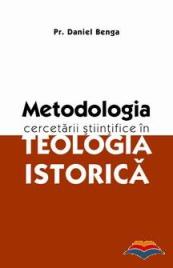
Printre interesele mele se numără și aspectele legate de metodologia cercetării și a realizării unei lucrări științifice. La recomandarea bunului meu prieten, Dragoș Predescu, am cumpărat cu ceva timp în urmă și citit cartea părintelui profesor Daniel Benga, Metodologia cercetării științifice în Teologia istorică, Editura Sofia, București, 2005, 224 pagini. Recomand această lucrare tuturor celor interesați de tema amintită mai sus și în mod particular de teologia istorică.
Revenind de curând asupra textului am revăzut o însemnare care m-a ajutat să înțeleg mai clar faptul că între Evanghelie și cultură există o relație de interdependență. Profesorul Daniel Benga menționa că „între Evanghelie și cultură există o dialectică. Cultura nu poate rămâne în afara Evangheliei deoarece nu are sens în ea însăși, chiar dacă uneori poate exprima unele adevăruri cu privire la spiritul uman. Evanghelia este singura care poate transfigura cultura. La rândul ei, Evanghelia nu poate ajunge la persoanele umane decât prin intermediul culturii, avându-se în vedere contextul cultural specific fiecărui neam. Altfel spus, cultura fără Evanghelie rămâne pe pământ, iar Evanghelia fără cultură nu poate fi comunicată oamenilor.”
Partajează asta:

Recomandări editoriale (6) – Pr. Daniel Benga, Metodologia cercetării științifice în teologia istorică

Pe coperta 4 stau scrise următoarele: „Aceasta lucrare de metodologie încearcă să descrie, într-un mod sistematic, principalele norme și principii după care ar trebui sa se desfășoare cercetarea științifică în teologie. Deși se limitează la prezentarea criteriilor de cercetare în cadrul teologiei istorice, principiile enunțate pot fi utilizate cu succes atât în cadrul celorlalte discipline teologice, cât și în sfera științelor umaniste.
Normele metodice devin azi cu atât mai utile, cu cât trăim într-o lume aflată într-o rapidă schimbare și evoluție științifică și tehnologică, în care teologia este provocată din ce în ce mai des sper a-și prezenta punctul de vedere. Numai asimilarea și actualizarea creatoare a cunoștințelor dobândite în cadrul studiului teologiei vor permite tinerelor generații de teologi să-și facă vocea auzită în contextul lumii moderne.”
Părintele Daniel Benga a mai publicat în anul 2003 la Editura Sofia lucrarea Mari reformatori luterani și Biserica Ortodoxă. Contribuții la tipologia relațiilor luterano-ortoxe din secolul al XVI -lea.







 Istorie Evanghelica